


Your Ultimate Guide to the Portable Off-Grid System (Sistema Off Grid Portatil)
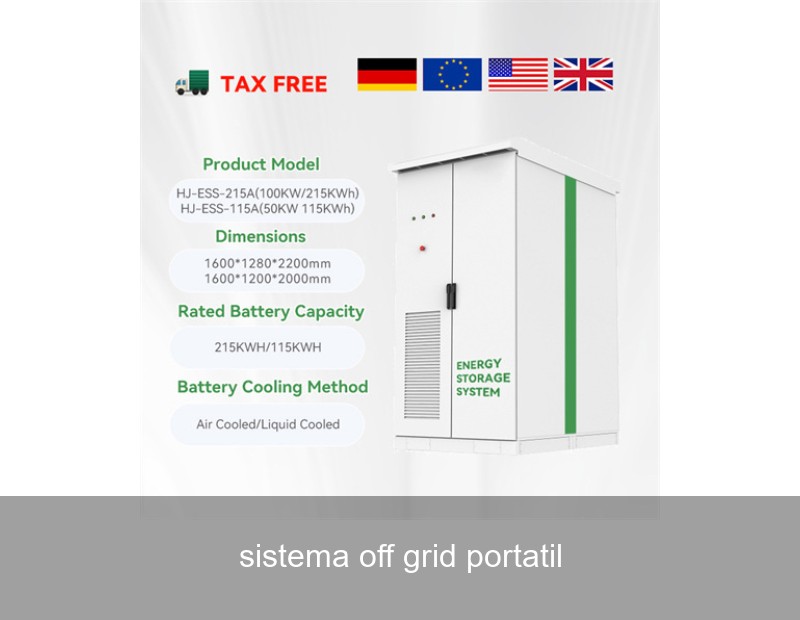
Imagine having reliable, clean power anywhere you go—whether you're at a remote job site, enjoying a weekend camping trip, or ensuring your home has backup during an outage. This is the promise of the portable off-grid system, or sistema off grid portatil. In an era where energy independence and mobility are increasingly valued, these compact power stations are revolutionizing how we access electricity. Unlike traditional, fixed solar installations, a portable off-grid system integrates a battery, inverter, charge controller, and often solar panels into a single, transportable unit. For businesses, adventurers, and homeowners alike, it represents freedom from the grid and fossil fuel generators. As a leader in advanced energy storage, Highjoule understands this shift deeply. Founded in 2005, we've been at the forefront of developing smart, efficient, and sustainable power solutions, and our expertise now extends into the portable realm, ensuring you get industrial-grade reliability in a mobile package.
Table of Contents
- What Exactly is a Portable Off-Grid System?
- Why Portable Off-Grid Power is Booming: Data & Drivers
- The Anatomy of a Reliable System: Key Components Explained
- Real-World Power: A Case Study from the California Wilderness
- Choosing the Right Portable Off-Grid System for Your Needs
- Highjoule's Approach: Engineering Trust into Portable Power
- The Future of Portable Power: What's Next?
What Exactly is a Portable Off-Grid System?
Let's break it down. A sistema off grid portatil is a self-contained energy solution designed to generate, store, and deliver AC and DC power without any connection to the main utility grid. Think of it as a personal, miniature power plant you can take with you. The core idea is integration and mobility. Key components are housed in a rugged, often wheeled casing, making setup as simple as rolling it out and plugging in your devices or connecting solar panels.

Image Source: Unsplash (Representative image of portable power use)
It differs from a simple "power bank" in its capacity, output power, and ability to be recharged via solar panels. It's also distinct from a permanent home off-grid system, which is designed for decades of stationary service. The portable version sits perfectly in the middle, offering substantial power for temporary or mobile applications.
Why Portable Off-Grid Power is Booming: Data & Drivers
The market for these systems isn't just growing; it's exploding. But what's behind this surge? Several powerful trends are converging.
Phenomenon: People and businesses are seeking resilience and autonomy like never before.
Data: According to a report by Grand View Research, the global portable power station market size was valued at USD 3.9 billion in 2022 and is expected to expand at a compound annual growth rate (CAGR) of 8.3% from 2023 to 2030. This growth is significantly driven by increasing outdoor recreational activities, frequent power outages due to extreme weather events, and the demand for silent, fume-free alternatives to gas generators (Source: Grand View Research).
Case Drivers:
- Climate & Grid Instability: In the US and Europe, wildfires, storms, and heatwaves are causing more frequent and prolonged blackouts. A portable system provides essential backup for sump pumps, medical devices, and refrigeration.
- The Rise of Remote Work & Adventure: The ability to work from anywhere requires reliable power for laptops and internet gear. Similarly, the outdoor recreation market wants to power lights, cookers, and cameras without noise or pollution.
- Technological Advancements: The heart of any good system is its battery. The shift from lead-acid to Lithium Iron Phosphate (LFP) batteries has been a game-changer. LFP batteries, like those used in Highjoule's systems, offer longer lifespans (3,000+ cycles), superior safety, and better performance in a wider temperature range.
The Anatomy of a Reliable System: Key Components Explained
Not all portable power stations are created equal. A robust sistema off grid portatil is defined by the quality and synergy of its parts.
| Component | Function | What to Look For |
|---|---|---|
| Battery (The Fuel Tank) | Stores electrical energy for later use. | Lithium Iron Phosphate (LFP) chemistry for safety and longevity. Capacity measured in Watt-hours (Wh). A higher Wh means more runtime. |
| Inverter (The Translator) | Converts stored DC battery power to AC power for standard appliances. | Pure Sine Wave output (not modified sine wave) to safely run sensitive electronics like laptops and medical devices. Rated power in Watts (W). |
| Charge Controller (The Brain) | Manages the flow of electricity from solar panels to the battery, preventing overcharging. | Maximum Photovoltaic (PV) Input Voltage and Power rating. A higher rating allows connection of more or higher-voltage solar panels for faster recharging. |
| Solar Panels (The Fuel Pump) | Capture sunlight and convert it to DC electricity. | Foldable, durable designs with high conversion efficiency. Monocrystalline panels are typically the most efficient for portable use. |
When these components are matched and engineered to work in harmony, you get a system that is not only powerful but also durable and safe. This is where Highjoule's decades of experience in large-scale commercial and residential energy storage directly informs our portable solutions. We apply the same rigorous battery management system (BMS) logic and robust thermal management to our portable line, ensuring stability and performance you can count on, whether you're in the Alps or your backyard.
Real-World Power: A Case Study from the California Wilderness
Let's move from theory to practice. A compelling example comes from a wildlife research NGO operating in the Sierra Nevada mountains of California.
Challenge: The team operates a remote field station for 4-5 day stints to monitor endangered species. Their legacy power solution was a noisy, smelly gasoline generator. It limited their ability to place sensors near animal habitats, required dangerous fuel transport, and broke the tranquility of the wilderness. They needed silent, renewable power to run communication gear, GPS equipment, camera traps, and small scientific instruments (total continuous load ~150W, with peaks to 400W).
Solution: In 2023, they deployed a high-capacity portable off-grid system centered on a 2kWh LFP battery unit with a 1500W pure sine wave inverter, paired with 400W of foldable solar panels. The system was specifically chosen for its rugged IP54 rating and wide operating temperature range.
Results & Data:
- Fuel & Cost Savings: Eliminated 15 gallons of gasoline per month, saving approximately $75/month and 340 lbs of CO2 emissions.
- Operational Uptime: Achieved 100% power availability during daylight hours and throughout the night, with the solar panels fully recharging the system in 5-6 hours of sunlight.
- Impact on Research: "The silence was transformative," reported the lead researcher. "We were able to place audio recording equipment much closer to study sites without disturbance, capturing data that was previously impossible to get."

Image Source: Unsplash (Representative image of remote solar power use)
This case underscores that a well-designed sistema off grid portatil is more than a convenience; it's a tool that enables critical work and reduces environmental impact.
Choosing the Right Portable Off-Grid System for Your Needs
So, how do you select the perfect system? Ask yourself these key questions:
- What will I power? List all devices, their wattage, and estimated runtime. Calculate total Watt-hours (Device Watts x Hours of use).
- How fast do I need to recharge? If you're off-grid for days, solar input is crucial. Match the panel wattage to the battery capacity for a reasonable recharge time (e.g., a 400W panel can theoretically recharge a 1000Wh battery in 2.5 hours of ideal sun).
- Where will I use it? Consider weight, handles/wheels, and the ingress protection (IP) rating for dust and water resistance.
- How important is longevity? Invest in LFP chemistry. While the upfront cost might be higher, the 3,000+ cycle life means it will outlast other chemistries by years.
Highjoule's Approach: Engineering Trust into Portable Power
At Highjoule, our journey in stationary energy storage for homes, businesses, and microgrids has taught us one paramount lesson: reliability is non-negotiable. We bring this philosophy to our portable systems. While we offer a range of stationary solutions, our engineering focus on safety and intelligence is directly applicable.
Our portable power stations are built with:
- Grade-A LFP Cells: Sourced from tier-1 suppliers, ensuring the highest energy density and cycle life.
- Advanced Battery Management System (BMS): This is the guardian of your system. Our BMS provides cell-level monitoring, protecting against overcharge, over-discharge, short circuits, and extreme temperatures.
- Seamless Solar Integration: Our systems are designed to work optimally with high-efficiency solar panels, featuring MPPT (Maximum Power Point Tracking) charge controllers that squeeze every possible watt from the sun.
- Scalable Design: Understanding that needs grow, some of our portable models can be linked for increased capacity, mirroring the modular approach we use in our larger residential and commercial storage products.
For us, a sistema off grid portatil isn't just a product; it's an extension of our mission to provide intelligent, sustainable power wherever it's needed.
The Future of Portable Power: What's Next?
The trajectory is clear: more power, smarter systems, and deeper integration. We're looking at:
- AI-Driven Energy Management: Future systems could predict your usage patterns and automatically optimize charging from solar or grid to be ready for your next trip or outage.
- Vehicle-to-Load (V2L) and Integration: Your electric vehicle's massive battery could become a backup source for your portable system, or vice-versa, creating a truly interconnected energy ecosystem. Highjoule is actively researching these integration pathways.
- Even Safer, Denser Batteries: Solid-state batteries are on the horizon, promising even greater safety and energy density, which could shrink the size and weight of future units.
The portable off-grid revolution is just beginning. It empowers a lifestyle and provides security that is increasingly essential in our dynamic world.
Ready to Unplug with Confidence?
The freedom of a sistema off grid portatil is undeniable. But it hinges on choosing a system engineered for reliability, not just convenience. As you consider your path to energy independence, what's the first adventure or essential need you would power with your own portable, clean energy source?
 Inquiry
 Online Chat