


Understanding Battery Energy Storage Systems (BESS): The Key to a Resilient and Renewable Grid
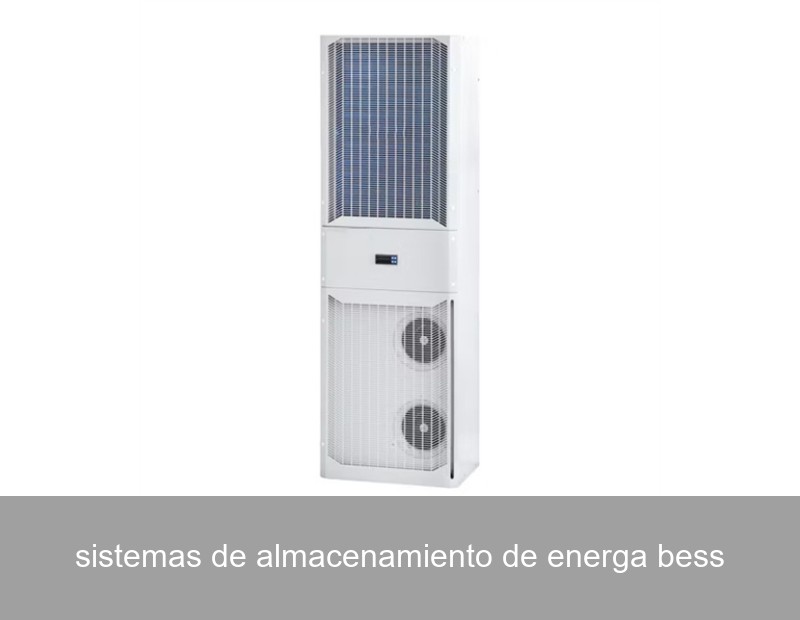
Have you ever wondered how we can keep the lights on when the sun isn't shining or the wind isn't blowing? This is the central challenge of our clean energy transition, and the answer increasingly lies in sophisticated Battery Energy Storage Systems (BESS). More than just large-scale batteries, a BESS is an integrated solution that captures energy for use at a later time, providing critical stability, flexibility, and reliability to modern electrical grids. For businesses, communities, and utilities navigating the shift from fossil fuels, understanding BESS technology is no longer optional—it's essential for energy independence and sustainability.
Table of Contents
- What is a Battery Energy Storage System (BESS)?
- The Driving Forces: Why BESS Demand is Skyrocketing
- Inside the Box: Key Components of a Modern BESS
- Beyond Backup: Core Applications and Tangible Benefits
- A Real-World Case Study: BESS in Action
- Choosing the Right BESS Partner: What to Look For
- The Future Horizon: What's Next for Energy Storage?
What is a Battery Energy Storage System (BESS)?
At its core, a Battery Energy Storage System is a technology that stores electrical energy in battery form for later discharge. Think of it as a massive, intelligent power bank for an entire building, factory, or even a segment of the public grid. But a commercial or utility-scale BESS is far more complex than the battery in your phone. It comprises not just the battery cells themselves, but also a sophisticated suite of power conversion systems (PCS), battery management systems (BMS), thermal management systems, and energy management software (EMS) that work in concert.
This integrated intelligence is what separates a true BESS from a simple battery bank. The EMS acts as the "brain," making real-time decisions on when to store energy (often when renewable generation is high or electricity prices are low) and when to dispatch it (when demand peaks or grid power is expensive/unreliable). This capability turns intermittent power sources like solar and wind into dependable, dispatchable assets.
The Driving Forces: Why BESS Demand is Skyrocketing
The global surge in BESS deployment isn't happening in a vacuum. It's a direct response to several powerful, converging trends:
- The Renewable Energy Rollout: As wind and solar capacity grows, their variable nature introduces grid instability. BESS provides the essential balancing act, smoothing out fluctuations and storing excess generation.
- Grid Modernization and Resilience: Aging infrastructure and increasing extreme weather events highlight grid vulnerability. BESS can provide local backup power and grid services, enhancing resilience for communities and critical facilities.
- Economic Incentives and Legislation: Policies like the U.S. Inflation Reduction Act (IRA) and Europe's Green Deal are creating powerful financial incentives for storage investments, making projects more viable than ever.
- Rising Energy Costs and Volatility: For commercial and industrial users, energy is a major operational cost. A BESS allows for "arbitrage"—buying cheap power to use during expensive peak periods—directly cutting energy bills.

Image Source: Unsplash - A solar farm integrated with battery storage, showcasing the synergy of renewables and BESS.
Inside the Box: Key Components of a Modern BESS
To appreciate the value of a high-quality system, it helps to understand its main parts. Here’s a breakdown:
| Component | Function | Why It Matters |
|---|---|---|
| Battery Rack & Cells | The core energy storage medium (e.g., Lithium-Ion LFP). | Determines total energy capacity (kWh) and lifecycle. Lithium Iron Phosphate (LFP) chemistry is now preferred for its safety, longevity, and lack of cobalt. |
| Power Conversion System (PCS) | Converts DC battery power to AC grid power and vice versa. | Its efficiency and speed dictate how quickly and effectively energy can be stored or discharged, impacting overall system performance and ROI. |
| Battery Management System (BMS) | Monitors cell voltage, temperature, and state of charge for safety and health. | Critical for safety, preventing thermal runaway, and maximizing battery life by ensuring balanced charging and discharging. |
| Energy Management System (EMS) | The software "brain" that controls system operation based on algorithms and market signals. | This is where intelligence lives. A smart EMS maximizes financial returns and grid support by optimizing every charge/discharge cycle. |
Companies like Highjoule excel by not only sourcing top-tier components but by perfecting their integration. Our HPS Series for commercial and industrial applications, for instance, features a seamlessly integrated design with our proprietary OptiCore EMS. This ensures all components communicate flawlessly, delivering peak efficiency, safety, and a level of system intelligence that generic solutions simply can't match.
Beyond Backup: Core Applications and Tangible Benefits
The versatility of BESS is its superpower. Its applications translate into direct, measurable benefits:
- Peak Shaving & Cost Savings: By discharging stored energy during periods of high utility demand charges, businesses can significantly reduce their highest monthly power costs. This is often the fastest path to ROI.
- Renewable Integration & Self-Consumption: For a facility with solar PV, a BESS stores excess daytime solar energy for use at night, dramatically increasing the percentage of renewable energy consumed on-site—sometimes from 30% to over 70%.
- Grid Services & Revenue Generation: In many markets, BESS can provide valuable services to the grid operator, such as frequency regulation or voltage support, creating a new revenue stream for the system owner.
- Backup Power & Resilience: While not all BESS are designed for long-term backup, they can provide seamless, instantaneous power during grid outages, protecting critical operations and data.
A Real-World Case Study: BESS in Action
Let's move from theory to practice. A compelling example comes from a manufacturing plant in Bavaria, Germany. The plant had invested heavily in rooftop solar but was still facing steep "peak demand" charges from the grid, especially during morning startup and late-afternoon operations. Their solar generation often peaked at midday when overall facility demand was lower, leading to wasted potential.
The Solution: The plant partnered with Highjoule to install a 1.2 MWh / 600 kW BESS, integrated with their existing solar array and controlled by Highjoule's OptiCore EMS. The system was programmed with two primary goals: maximize self-consumption of solar power and aggressively shave peak demand.
The Results (12-Month Period):
- Energy Cost Reduction: Peak demand charges were reduced by 28% annually.
- Renewable Self-Consumption: The site's consumption of its own solar power increased from 35% to 81%.
- Grid Support: The system participates in a local flexibility market, generating ancillary service revenue that further accelerates payback.
- Carbon Footprint: Scope 2 emissions related to grid electricity purchases decreased by an estimated 40%.
This case, documented in a report by the Fraunhofer Institute for Solar Energy Systems, illustrates the multi-faceted value proposition of a well-engineered BESS. It's not just one benefit, but a combination of savings, sustainability, and new income that makes the investment compelling.
Choosing the Right BESS Partner: What to Look For
With many vendors entering the market, selection is crucial. Your BESS is a long-term asset, and its performance over 15-20 years matters more than just the upfront cost. Key considerations include:
- Safety First: Insist on chemistries with proven safety records like LFP. Ask about certifications (UL, IEC), fire suppression systems, and the supplier's safety protocols.
- Technology & Integration: Does the provider offer a truly integrated, AC-coupled solution, or are they simply reselling generic components? Deep system integration is key to reliability and performance.
- Software Intelligence: The EMS is the value-driver. Can it be easily configured for multiple use cases? Does it allow for remote monitoring and control? Is it future-proof to adapt to new market rules?
- Proven Track Record: Look for a partner with a strong portfolio of operational projects and long-term expertise. Since 2005, Highjoule has deployed over 2 GWh of storage capacity across 30+ countries, building a reputation for robust, intelligent systems backed by 24/7 global support.

Image Source: Unsplash - A technician monitoring a modern BESS control interface, highlighting the importance of intelligent software.
The Future Horizon: What's Next for Energy Storage?
The evolution of BESS is rapid. We're seeing trends towards longer-duration storage (8+ hours) to support multi-day grid resilience, the exploration of alternative chemistries like sodium-ion, and the increasing role of AI and machine learning in EMS for predictive optimization. Furthermore, the concept of virtual power plants (VPPs)—where networks of distributed BESS, solar, and flexible loads are aggregated to act like a single power plant—is becoming a commercial reality. This democratizes the grid, allowing businesses and homeowners to become active participants in energy markets.
At Highjoule, we're already engineering for this future. Our systems are designed with software-upgradable platforms and open API architectures, ensuring our clients' investments are protected and can evolve alongside market and technological advances. Whether it's for a residential community seeking energy security, an industrial facility targeting cost control, or a utility-scale microgrid project, the principle remains: a smart, adaptable BESS is the cornerstone of a modern energy strategy.
Given the clear trajectory towards decentralized and renewable-powered grids, what is the first step your organization should take to evaluate its readiness for battery energy storage? Could a site audit reveal unexpected opportunities for savings and resilience that you haven't yet quantified?
 Inquiry
 Online Chat