


Sizing Battery for Solar System: The Key to Unlocking True Energy Independence
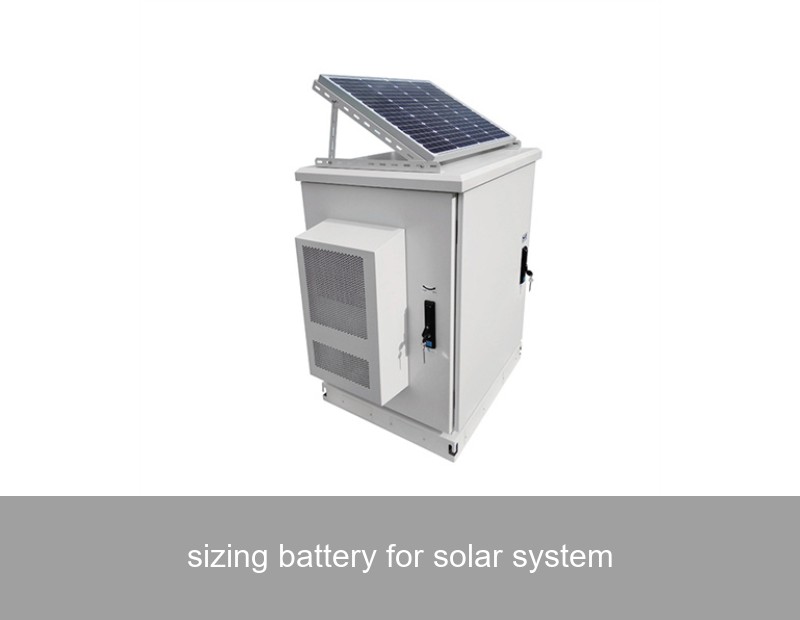
You've made the brilliant decision to invest in solar panels. The sun beams down, your meter spins backwards, and you feel a surge of eco-friendly pride. But then dusk falls, and you're back drawing power from the grid. This common experience highlights a crucial next step: sizing a battery for your solar system. Getting this right isn't just about adding a box to your wall; it's about designing a personalized energy ecosystem that maximizes your investment, resilience, and sustainability. Let's navigate the process together.
Table of Contents
The Phenomenon: Why Solar Alone Isn't Enough
Most residential and commercial solar systems are connected to the grid. During sunny afternoons, they often produce more electricity than the property consumes. This excess is fed back to the utility, frequently under net metering schemes. However, this model has limitations: utility rates and policies change, and when the sun isn't shining, you remain dependent. The mismatch between solar production peaks (midday) and energy consumption peaks (evenings) is a fundamental challenge. This is where sizing a battery for your solar system becomes critical. A correctly sized battery acts as a personal energy reservoir, capturing that midday surplus for use at night, during peak rate periods, or in a power outage, transforming your system from a cost-saver to a resilience provider.
The Core Data: What Determines Battery Size?
Sizing isn't a one-number-fits-all game. It's a balance of four key data points:
- Your Energy Consumption: Specifically, your nighttime or backup load. Analyze your utility bill to find daily kWh usage, but then identify which circuits (refrigeration, lighting, critical machinery, etc.) you want to power during an outage.
- Solar Production & Surplus: How much excess energy does your solar array typically generate? A system too small for your panels will waste potential storage; one too large may never fully charge.
- Days of Autonomy: How many consecutive cloudy days do you want to weather without grid support? For most, 1-2 days is standard; for off-grid or high-resilience needs, it may be 3 or more.
- Depth of Discharge (DoD) & Efficiency: Batteries shouldn't be drained 100%. Lithium-ion batteries, like those in Highjoule systems, often have a recommended DoD of 90-95%. Also, account for ~5-10% energy loss in the storage and conversion process.
| Factor | Question to Ask | Impact on Sizing |
|---|---|---|
| Daily Backup Need | "What essential appliances must run during an outage, and for how long?" | Directly defines the required usable energy capacity (kWh). |
| Solar Surplus | "How much excess solar energy do I typically produce on a sunny day?" | Determines how quickly the battery can be recharged from solar alone. |
| Utility Rate Structure | "Do I have time-of-use rates or demand charges?" | May favor larger batteries for peak shaving and cost avoidance. |
| Future Plans | "Will I add an EV or heat pump in the next 5 years?" | Suggests sizing with a buffer for increased future energy demand. |
The Calculation Simplified
A basic formula is: Required Battery Capacity (kWh) = (Daily Critical Load in kWh) x (Desired Days of Autonomy) / (Battery DoD). For example, 10 kWh of critical load for 1 day with a 90% DoD battery requires roughly 11.1 kWh of total capacity. This is a starting point; professional software and analysis account for weather patterns, seasonal load changes, and system efficiency curves.
A Real Case Study: From Theory to Practice in California
Consider a mid-sized winery in Sonoma County, California. Their challenge wasn't just outages, but crippling Public Safety Power Shutoffs (PSPS) during fire season, threatening fermentation tanks and critical cooling. Their data: 40 kWh daily critical load, desire for 2 days of autonomy, and significant midday solar surplus from their 100kW rooftop array.
An undersized 20 kWh battery would have left them vulnerable. An oversized 100 kWh system was cost-prohibitive. The solution was a modular battery system sized at 48 kWh, with an inverter capable of managing critical loads and allowing for future expansion. This sizing allowed them to:
- Weather a 48-hour PSPS event without disruption.
- Shift energy usage to avoid peak time-of-use rates, saving an estimated $4,200 annually.
- Maintain precise climate control for wine production, protecting product worth hundreds of thousands of dollars.
Image: A commercial solar installation at an agricultural site. Credit: Unsplash (Representative image)

This case underscores that sizing a battery for a solar system is a strategic business decision, balancing risk mitigation with financial return.
The Highjoule Difference: Intelligent Sizing for Modern Needs
At Highjoule, we understand that precise sizing is the foundation of a successful storage project. Our approach goes beyond simple calculators. We leverage advanced modeling software that integrates historical weather data, precise load profiles, and local utility rate structures to simulate thousands of scenarios. This ensures our recommendation isn't just technically sound, but economically optimized.
Our product suite supports perfect sizing flexibility. For residential and commercial clients, the Highjoule H-Series modular lithium-ion battery systems allow you to start with a core unit and expand capacity as your needs evolve. This "right-size and grow" model future-proofs your investment. Paired with our intelligent energy management system (EMS), the battery isn't just storage—it's an active grid participant, automatically discharging during expensive peak periods and charging during low-cost or high-solar times.
For larger-scale industrial or microgrid applications, our Highjoule M-Grid solutions involve a deep feasibility study. We analyze not just load, but generation mix (solar, wind, gensets) to create a hybrid system where battery storage is sized to optimize fuel savings, increase renewable penetration, and ensure grid stability. Our systems are designed for the rigorous demands of global markets, including Europe and North America, with full compliance to UL, IEC, and other regional standards.
Common Pitfalls and Professional Insights
Even with the right data, mistakes happen. Here’s what to avoid:
- Oversizing for Rare Events: Sizing a battery for the worst-case storm that happens once a decade can lead to a stranded asset. It's often more economical to size for 95% of events and have a backup plan (like a generator) for the extreme 5%.
- Ignoring Climate: Battery performance is temperature-sensitive. Sizing for a home in Arizona requires different considerations (heat degradation) than one in Norway (cold-weather capacity reduction). Highjoule systems include integrated thermal management for consistent performance.
- Forgetting About Inverter Capacity: The battery stores energy (kWh), but the inverter determines how much power (kW) can be delivered at once. A battery sized perfectly for 20 kWh of backup won't run a 10 kW load if the inverter is only 5 kW. This power rating is as critical as energy capacity.
- Navigating Regulations: In many regions, local codes and utility interconnection agreements place limits on system size or require specific equipment. A qualified installer like Highjoule's partner network navigates this for you.
The Role of Software and AI
The future of sizing a battery for a solar system is intelligent. Advanced platforms now use machine learning to predict consumption patterns and optimize battery dispatch in real-time. This means the "size" becomes dynamic in function, extracting maximum value from every kilowatt-hour stored. Highjoule's EMS incorporates these predictive algorithms, ensuring your system adapts to your life, not the other way around.
Image: A homeowner monitoring solar and battery system performance. Credit: Unsplash (Representative image)

Your Next Step Towards Energy Autonomy
Sizing a battery for your solar system is the definitive step from passive consumer to active prosumer. It's a technical process, but its outcome is profoundly personal: security, savings, and sustainability. The most important action you can take is to move from generic estimates to a personalized analysis. Gather your last 12 months of utility bills, list your critical loads, and define what energy independence truly means for your home or business.
What specific energy goal—be it eliminating peak charges, ensuring a medical device never loses power, or creating a zero-carbon microgrid—will guide your perfect battery size?
 Inquiry
 Online Chat