


Understanding Snel Energy Ltd: How Much Can You Save with Modern Battery Storage?
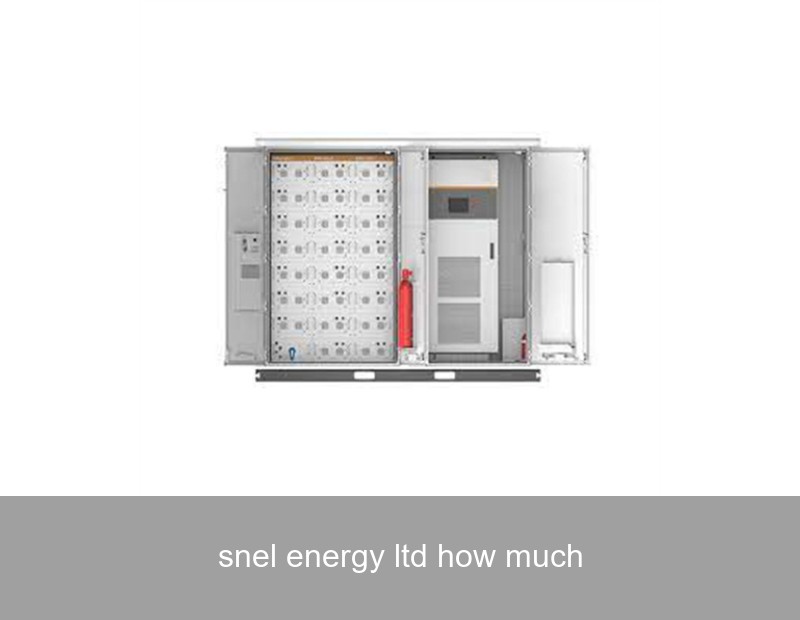
If you've been researching energy solutions in Europe or the US, you've likely come across names like Snel Energy Ltd. And the immediate question that follows is often: "Snel Energy Ltd, how much does it cost, and how much can it truly save me?" This is a brilliant starting point. It shows a shift from simply accepting energy bills to actively seeking control. The real question behind "how much" isn't just about price—it's about value, return on investment, and long-term energy independence. In this article, we'll break down the costs and savings of modern energy storage, using real data and case studies, to help you understand what "how much" really means for your home or business.
Table of Contents
The Phenomenon: Rising Bills and Grid Uncertainty
Across Europe and North America, homeowners and business managers are facing a dual challenge. First, energy prices are volatile and trending upward. Second, the electrical grid, while reliable in many areas, is facing new pressures from extreme weather events and the transition to renewable sources. This phenomenon creates a tangible business risk and household budget anxiety. You're not just paying for electricity; you're paying for uncertainty. This is where battery energy storage systems (BESS) step in, transforming a passive expense into an active asset. They allow you to store energy when it's cheap (or from your solar panels) and use it when it's expensive or during a power outage.

Image: A modern home integrated with solar and storage. The battery unit, often compact and wall-mounted, is key to unlocking savings.
The Data: Quantifying the "How Much"
Let's move from phenomenon to hard numbers. The cost of a battery storage system varies based on capacity, power rating, and technology. As of 2024, a typical residential system in the US or Europe might range from $8,000 to $20,000 installed, before incentives. But the critical metric isn't the sticker price—it's the levelized cost of storage (LCOS) and the payback period.
Consider this breakdown for a 10 kWh system (enough to power critical loads in an average home for 24+ hours):
| Cost Component | Estimated Range (USD/EUR) | Notes |
|---|---|---|
| Battery Hardware (10 kWh) | $5,000 - $8,000 | Lithium iron phosphate (LFP) is the leading safe, long-life tech. |
| Inverter & Integration | $2,000 - $4,000 | The "brain" that manages charging, discharging, and grid interaction. |
| Installation & Permitting | $1,500 - $3,000 | Varies greatly by region and system complexity. |
| Potential Total (Pre-Incentive) | $8,500 - $15,000 |
Now, for savings. In Germany or California, where time-of-use (TOU) rate differentials can be significant, a well-utilized storage system can save $800-$1,500 annually on electricity bills. When paired with solar, the savings and self-consumption increase dramatically. Furthermore, programs like the US Residential Clean Energy Credit or various European subsidies can reduce net cost by 30% or more. Suddenly, a 6-10 year payback period becomes very realistic, on a system with a 15+ year lifespan.
The Case Study: A Real-World Example from Germany
Let's make this concrete. A medium-sized manufacturing SME in Bavaria, Germany, was facing annual electricity costs of €85,000, with a significant portion consumed during peak daytime rates. Their existing 100 kW rooftop solar array was covering only about 15% of their daytime load due to simultaneous consumption.
The Action: They installed a 120 kWh Highjoule Industrial H-Stack battery system. This system is designed for commercial duty cycles and features advanced energy management software to autonomously optimize for price arbitrage and self-consumption.
The Results (12 Months Post-Installation):
- Bill Savings: €18,500 saved through peak shaving and increased solar self-consumption.
- Grid Service Revenue: The system participated in a local grid flexibility program, earning €2,300.
- ROI Improvement: The combined €20,800 annual financial benefit accelerated the projected payback period to under 5 years.
- Resilience: The system provides 2 hours of backup for critical processes, mitigating downtime risk.
This case moves the question from "Snel Energy Ltd, how much does it cost?" to "How much value can a smart storage system deliver?" The answer encompassed direct savings, new revenue, and risk mitigation.
The Solution: Highjoule's Intelligent Storage Systems
As a global leader since 2005, Highjoule specializes in translating this potential into tangible results. Our systems are built not just as battery containers, but as integrated energy intelligence platforms. For residential clients, our HomePower series offers scalable, safe LFP battery systems with an intuitive app that lets you track savings and control your home's energy flow. For commercial and industrial clients, our C&I Matrix solutions provide modular, high-power storage that can be tailored for demand charge reduction, solar smoothing, or emergency backup.
What sets Highjoule apart is our software. Our AegisAI Energy Management System continuously analyzes weather forecasts, electricity tariffs, and your consumption patterns. It doesn't just store and release energy; it optimizes it for your specific financial and operational goals. Whether you're in rainy Seattle or sunny Spain, the system learns and adapts to maximize your return.

Image: The interior of a large-scale battery storage system. Safety, thermal management, and control electronics are crucial for commercial-grade performance.
Key Features of a High-Value Storage System
- Chemistry: Lithium Iron Phosphate (LFP) for safety, longevity (6,000+ cycles), and stable performance.
- Scalability: Start with what you need and add capacity as your needs grow.
- Grid Services Ready: Capable of participating in utility programs for additional revenue (where available).
- Warranty & Support: A comprehensive 10-year warranty, backed by global remote monitoring and support.
Making the Choice: Factors Beyond the Initial Price
So, when evaluating "Snel Energy Ltd, how much," or any provider, look beyond the initial quote. Consider the total cost of ownership and the partner's expertise. A cheaper system with inferior battery chemistry or weak software will deliver lower savings and may need replacement sooner. Ask potential providers:
- Can you model a projected savings and payback analysis for my specific location and consumption data?
- What is the degradation profile and end-of-life capacity guarantee for the battery?
- How does the energy management software integrate with my existing solar or future EV charger?
- Can you provide references from similar projects in my region?
Highjoule's consultants work with you to answer these questions upfront, providing transparent simulations based on real-world data from thousands of installations worldwide. We believe an informed customer makes the best partner.
Looking Ahead: The Role of Policy and Markets
The financial equation for storage is also shaped by policy. The US Inflation Reduction Act and the EU's REPowerEU plan are creating powerful tailwinds. Furthermore, as noted by independent energy analysts like the International Energy Agency, the continued decline in battery costs and the rise of virtual power plants (VPPs) will make storage an even more ubiquitous tool for grid stability and consumer savings in the coming decade.

Image: The ultimate goal: empowerment. Modern energy systems give users visibility and control over their power usage and costs.
Given the rapid evolution of energy markets and technology, what specific energy challenge—whether it's unpredictable demand charges, solar self-consumption, or simply seeking backup power—is motivating you to ask "how much" today?
 Inquiry
 Online Chat