


The Solar Car Charger for Home: Your Key to Truly Green Driving
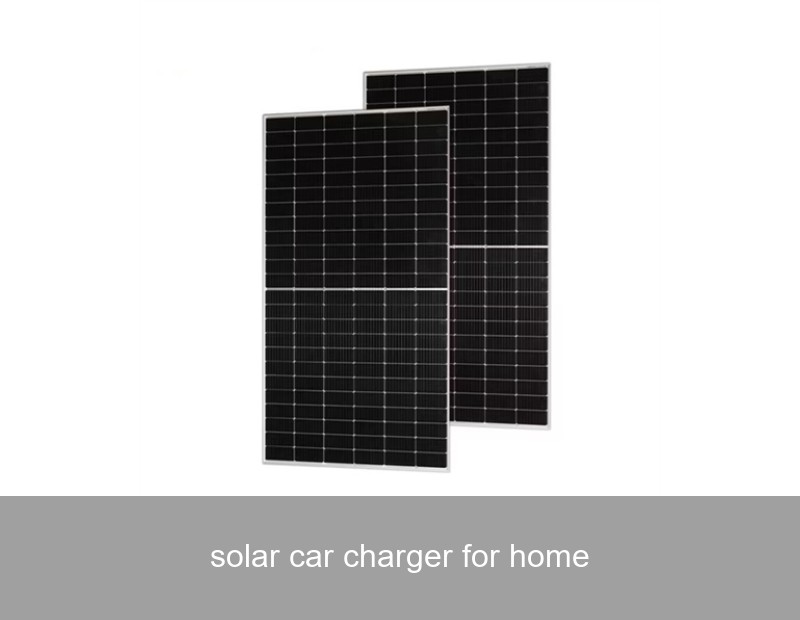
You've made the switch to an electric vehicle (EV). You're doing your part for the planet, enjoying the quiet ride and instant torque. But have you ever stopped to think about what's *powering* your car? If you're plugging into the standard grid, the answer might not be as green as you think. The true next step in sustainable living isn't just driving an EV—it's fueling it with the sun. This is where the concept of a solar car charger for home transforms from a niche idea into a powerful, practical solution for energy independence.
Imagine this: the sun shines on your roof, your solar panels convert that energy, and it flows directly into your car's battery. No grid dependency, no fluctuating fossil-fuel-based electricity costs, just clean, silent, and personal power. This isn't a distant future fantasy; it's a system you can install today. Let's explore how this integrated ecosystem works and why it's becoming an essential consideration for eco-conscious homeowners in Europe and the US.
What Exactly is a Solar Car Charger for Home?
First, let's clarify the terminology. A "solar car charger for home" isn't typically a single, magic box. It's an intelligent system that connects three key components:
- Your Rooftop Solar PV Array: The primary energy harvesters. Your Home Energy Storage (a Battery): The crucial heart of the system. This battery stores excess solar energy produced during the day for use at night or during cloudy periods.
- Your Smart EV Charger: The connected device that manages the flow of electricity from your solar panels and/or battery to your vehicle.
The real intelligence lies in how these components communicate. A sophisticated energy management system (like those built into Highjoule's solutions) prioritizes power. It will direct solar energy to power your home first, charge your home battery second, and then use any surplus to charge your EV. This maximizes self-consumption and minimizes grid draw.

Image Source: Unsplash - A complete home solar and EV charging setup.
The Core Challenge: Sun vs. Schedule
Here's the central puzzle: the sun peaks in the middle of the day. Most people, however, charge their cars overnight when they're home from work. Without a home battery, any "solar charging" done at night is actually grid electricity—the solar energy you produced hours earlier was sent back to the utility. A true solar car charger for home setup solves this mismatch with storage.
The Numbers Don't Lie: Economics and Environmental Impact
Let's talk data. The financial and environmental logic is compelling.
| Consideration | Grid-Only EV Charging | Solar + Battery EV Charging |
|---|---|---|
| Cost per "Fill-up" | Subject to volatile utility rates (e.g., $0.15 - $0.40/kWh in the US). | Effectively locked in at your solar system's low "levelized cost" (often $0.05-$0.08/kWh after incentives). |
| Carbon Footprint | Depends on grid mix (e.g., ~0.85 lbs CO2/kWh US avg., much lower in EU but variable). Source: U.S. EIA | Near-zero operational emissions. Truly clean miles. |
| Energy Independence | Low. Vulnerable to outages and price hikes. | High. Creates a personal microgrid for your home and transport. |
| System Payback | N/A (ongoing cost) | Typically 7-12 years, then decades of nearly free fuel. |
Furthermore, with policies like the US Inflation Reduction Act (IRA) offering significant tax credits for both solar, storage, and EV chargers, the upfront investment is more accessible than ever. In Europe, similar subsidies and the urgent drive for energy sovereignty post-2022 make the equation even more attractive.
A Real-World Case Study: The Smith Family in Hamburg
Let's move from theory to a tangible example. The Smith family (name changed for privacy) in Hamburg, Germany, installed a 8.2 kW solar array coupled with a 13.5 kWh Highjoule H2 home battery system and a smart 11 kW EV charger in early 2023.
- Goal: Power their home and charge their Volkswagen ID.4 primarily with solar, reducing grid reliance and hedging against extreme energy prices.
- Setup: Their Highjoule energy management system is configured for "EV Priority Charging" during solar peaks.
- 12-Month Results:
- Self-Consumption Rate: Increased from 35% (solar only) to 82% (with battery & EV charging).
- EV Solar-Powered Miles: Over 85% of their 15,000 km annual driving was powered directly by their sun.
- Grid Electricity Import: Reduced by 78% compared to the previous year.
- Estimated Annual Savings: ~€1,800 on combined electricity and "fuel" costs.
"The system just works," Mr. Smith noted. "I look at my app and see the green line showing solar power going straight into the car. It feels like a closed loop. During the winter, the battery covers our evening load, and we top up the car with cheaper overnight rates, but from spring to autumn, we're almost off-grid for daily needs."
Building Your Solar-Powered EV Ecosystem: Key Components
To create a robust solar car charger for home system, you need to think holistically.
1. The Solar Array (Your Fuel Factory)
Size matters. You now have a new, significant load—your EV. A typical rule of thumb is to add 1-1.5 kW of solar capacity for every 1,000 miles you drive annually. A professional installer will perform a detailed analysis.
2. The Home Battery (Your Energy Bank)
This is the linchpin. A high-quality battery storage system does more than just store solar excess. It provides backup power during outages (keeping your lights and your EV charger on) and allows for intelligent load shifting. Modern lithium iron phosphate (LFP) batteries, known for safety and long cycle life, are the industry standard.

Image Source: Unsplash - Modern home battery storage system.
3. The Smart EV Charger (Your Intelligent Hose)
Forget the "dumb" Level 1 cord. A smart Level 2 charger (7.4 kW to 22 kW) is essential. Look for features like:
- Dynamic load balancing to protect your home's main fuse.
- Solar-aware charging that can start/stop based on real-time solar production.
- App integration for scheduling and monitoring.
- Compatibility with open standards like OCPP for future-proofing.
Highjoule: Your Partner in Sustainable Energy Independence
This is where Highjoule's expertise becomes critical. Since 2005, we've evolved from a battery innovator to a provider of complete, intelligent energy ecosystems. We understand that a solar car charger for home isn't just about selling hardware; it's about delivering a seamless, efficient experience.
Our H-Series Residential Energy Storage Systems are the ideal core for this setup. With their modular design, you can start with a capacity that fits your budget and expand later. Their integrated energy management system is pre-configured to communicate with leading solar inverters and smart EV chargers, creating that vital "brain" for your system.
For larger applications, like commercial fleets or multi-unit dwellings, our Industrial & Microgrid Solutions scale this same principle. We design systems that can manage solar arrays, massive storage banks, and multiple DC fast chargers, all while optimizing for cost and carbon footprint. Whether it's a single-family home in California or a small business in Spain wanting to charge its delivery vans with its warehouse roof solar, Highjoule provides the technology to make it reliable and profitable.
Our services extend beyond the box. We offer comprehensive energy audits, system design support, and remote monitoring to ensure your investment performs optimally for decades. Source: NREL on EV-Grid Integration.
Common Questions Answered
Can I charge my EV with solar during a blackout?
Only if you have a home battery system with backup functionality (like Highjoule's H2 with Secure Power Supply). Most solar systems shut off during a grid outage for safety. A battery keeps a designated circuit—which can include your EV charger—powered.
Is my roof suitable for enough solar panels to power my home and car?
A south-facing (Northern Hemisphere) roof with minimal shading is ideal, but east-west setups are also highly effective. The key is a professional site assessment using satellite imagery and shading analysis tools.
What's the typical payback period?
With current incentives in the US and Europe, combined systems (solar + storage + EV charger) often see paybacks between 8-12 years, heavily dependent on local energy costs, driving habits, and available subsidies.

Image Source: Unsplash - Monitoring your solar and EV charging system via app.
Ready to Unplug from the Grid?
The journey to true energy independence is a series of connected decisions: the solar panels, the battery, the electric vehicle. The solar car charger for home is the final link that closes the loop, turning your house into a personal energy station. It's a statement of resilience, economic savvy, and environmental stewardship.
What will your first 100% solar-powered mile feel like? The technology is here, proven, and more accessible than ever. The question is no longer "if" it's possible, but "when" you'll choose to make it your reality.
Is your home ready to become both your garage and your gas station? Let's explore what that transformation could look like for you.
 Inquiry
 Online Chat