


Solar Cell Plant for Sale: Your Gateway to Energy Independence and Revenue
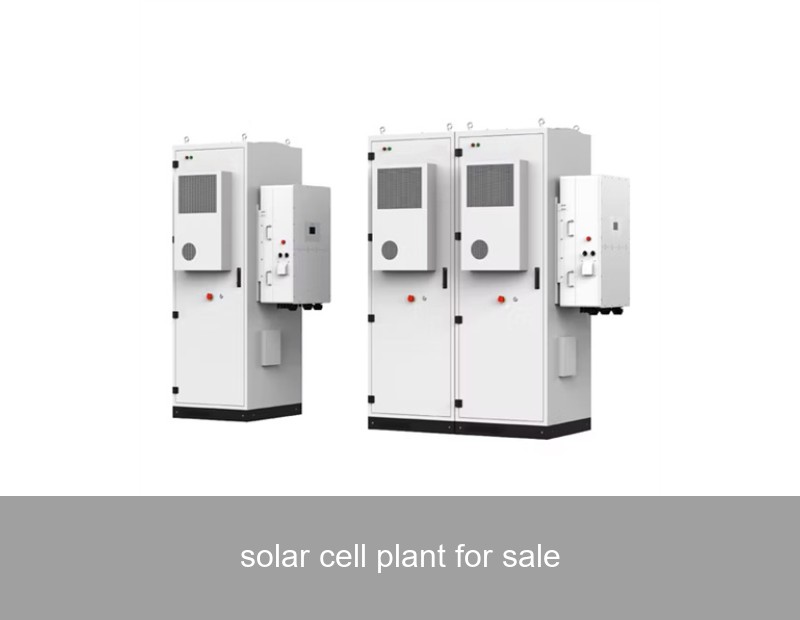
Have you ever looked at a vast, empty rooftop or a sun-drenched parcel of land and wondered, "Could this generate power?" For an increasing number of businesses, municipalities, and energy entrepreneurs, that thought is evolving into a concrete question: Is a solar cell plant for sale the right investment for me? The market is shifting. It's no longer just about buying solar panels; it's about procuring a complete, operational power generation asset. This article explores the modern landscape of acquiring a solar cell plant, the crucial factors for success, and why the integration of storage is becoming non-negotiable.
Understanding the Shift: From Panels to Power Plants
Gone are the days when solar procurement simply meant comparing module wattage and inverter specs. Today, the term "solar cell plant for sale" typically refers to a turnkey or near-operational photovoltaic (PV) system. This isn't a box of components; it's a fully engineered solution designed to deliver a specific kilowatt-hour output over decades. The driver? The urgent need for energy cost predictability, sustainability goals, and new revenue streams in the face of volatile fossil fuel markets. According to the International Energy Agency (IEA), solar PV is set to dominate global capacity additions, with markets in Europe and North America accelerating rapidly due to supportive policies and economic advantages.

Image Source: Unsplash - A modern, utility-scale solar plant represents a significant capital asset.
The Rise of the Turnkey Solar Cell Plant
What exactly are you buying? A modern turnkey solar offering bundles everything into a single, predictable package:
- Engineering, Procurement, and Construction (EPC): All design, permitting, equipment sourcing, and construction.
- Grid Connection & Interconnection Agreements: Navigating the complex process of linking to the utility grid.
- Performance Modeling & Guarantees: Detailed forecasts of energy production, often backed by performance guarantees.
- O&M (Operations & Maintenance) Packages: Long-term service plans to ensure optimal output and system health.
This model de-risks the project for the buyer, transforming a complex engineering feat into a manageable asset acquisition.
Key Considerations When Evaluating a Solar Cell Plant for Sale
Before committing, a thorough due diligence process is critical. Here are the pillars of a smart evaluation:
| Consideration | Key Questions | Why It Matters |
|---|---|---|
| Site & Resource | What is the historical solar irradiance? Are there shading issues? What is the land/roof condition and orientation? | Directly determines energy yield and project economics. |
| Technology & Equipment | What panel and inverter brands are used? What are their degradation rates and warranties? | Impacts efficiency, longevity, and long-term maintenance costs. |
| Regulatory & Financial | What are the local feed-in tariffs or net metering rules? What tax incentives (e.g., ITC in the US) apply? Is a PPA (Power Purchase Agreement) in place? | Defines the revenue model and return on investment timeline. |
| Grid Integration | What is the capacity of the local grid? Are there curtailment risks? | Affects how much power you can actually sell or use. |
Case Study: A Spanish Industrial Success Story
Consider a concrete example from Southern Spain. A mid-sized ceramic tile manufacturer faced escalating energy costs, threatening its competitiveness. Instead of just installing rooftop panels, they purchased a 2.1 MW ground-mounted solar cell plant located adjacent to their factory. The numbers tell a compelling story:
- Annual Generation: 3.2 GWh
- Self-Consumption Rate: ~85% of plant output used directly in the factory.
- Cost Savings: Reduced annual energy bills by an estimated €290,000 from day one.
- Payback Period: Achieved in under 7 years, thanks to strong solar resources and favorable self-consumption regulations.
The project transformed a variable operational cost into a fixed, depreciable asset, providing both financial and environmental stability. This mirrors a broader European trend where EU solar strategies actively promote such industrial decarbonization.
Beyond Generation: The Critical Role of Storage
Here's the pivotal insight: a solar cell plant alone, while valuable, is no longer the pinnacle of energy intelligence. Solar generation is intermittent—it stops at night and fluctuates with clouds. This is where advanced battery energy storage systems (BESS) become the game-changer. Think of storage as the essential partner to your solar asset.
Integrating a BESS allows you to:
- Maximize Self-Consumption: Store excess midday solar energy to use in the evening, dramatically increasing the percentage of your own solar power you consume.
- Provide Grid Services: In many markets (like the US ERCOT or UK grids), stored energy can be sold to stabilize the grid, creating an additional revenue stream.
- Ensure Backup Power: Maintain critical operations during grid outages, a feature increasingly valuable for industrial and commercial facilities.

Image Source: Unsplash - A containerized battery storage system, key to modern energy management.
Highjoule's Role in Your Solar Journey
This is precisely where Highjoule, as a global leader in advanced energy storage since 2005, adds immense value. While we don't sell turnkey solar plants, we are the critical partner that ensures your solar investment works harder and smarter. When you acquire or operate a solar cell plant for sale, pairing it with a Highjoule storage system unlocks its full potential.
Our IntelliBESS platform for commercial and industrial applications is designed for seamless integration with new or existing solar arrays. It's more than just batteries; it's an intelligent energy management system that automatically decides when to store, when to discharge, and when to participate in grid markets based on your economic and resilience goals. For larger-scale or microgrid projects, our containerized MegaBESS solutions provide utility-grade storage that can turn a solar plant into a fully dispatchable power source.
The Future is Integrated
The conversation is evolving from "Where can I find a solar cell plant for sale?" to "How do I build a resilient, profitable, and intelligent energy asset?" The most forward-thinking projects now consider solar and storage as a single, integrated system from the outset. This hybrid approach future-proofs your investment against changing regulations, maximizes financial returns, and provides true energy autonomy.
So, as you evaluate your next step towards energy independence, we leave you with this question: Is your strategy merely to generate green power, or is it to control and optimize your entire energy ecosystem for the next 25 years?
 Inquiry
 Online Chat