


Solar Charger Connection: Your Gateway to Energy Independence and Cost Savings
Have you ever looked at your rising electricity bill and then at the sunny sky, wondering how to connect the two? You're not alone. Across homes in Europe and the US, a quiet revolution is happening on rooftops and in backyards. It's powered by the solar charger connection—the critical link that transforms free sunlight into usable power for your home, business, or electric vehicle. But what seems like a simple plug-and-play setup is actually the heart of a modern energy system. A poorly designed connection can mean lost efficiency, potential safety risks, and a longer payback period. Let's demystify this crucial component and explore how getting it right unlocks true energy freedom.
Table of Contents
- The Phenomenon: More Than Just Panels on a Roof
- The Data: Quantifying the Connection Advantage
- Key Components of a Robust Solar Charger Connection
- A Real-World Case: The Munich Bakery's Recipe for Success
- Beyond the Basics: Smart Connections and System Intelligence
- Making the Right Choice for Your Solar Charger Connection
The Phenomenon: More Than Just Panels on a Roof
The common perception of solar power stops at the panels. However, the panels are just the beginning. The real magic happens in the solar charger connection, which encompasses the inverter, charge controller, wiring, and increasingly, the battery storage system. This is where DC (Direct Current) from the panels is converted to AC (Alternating Current) for your home, managed for optimal battery health, and integrated with the grid. A weak link here can cripple an otherwise excellent solar array. Think of it as the difference between a garden hose and a precision irrigation system; both deliver water, but one does it efficiently, without waste, and exactly where and when it's needed.

Image: Precision connections are vital for system safety and efficiency. Source: Unsplash
The Data: Quantifying the Connection Advantage
Why fuss over connections and components? The numbers speak for themselves. According to the National Renewable Energy Laboratory (NREL), system losses from mismatched components, poor wiring, and suboptimal charging strategies can reduce a solar PV system's output by 5% to 25%. That's a quarter of your potential savings, literally disappearing into thin air. Conversely, a high-efficiency, well-integrated system with smart solar charger connections to storage can increase self-consumption of solar energy from a typical 30-50% to over 80%. This directly slashes the amount of expensive grid power you need to buy, accelerating your return on investment.
Key Components of a Robust Solar Charger Connection
Understanding the key players in your connection ecosystem is the first step to a superior system.
- The Solar Inverter: The brain of the power conversion. Modern hybrid inverters can manage power flow from panels, to battery, to home, and to the grid simultaneously.
- The Charge Controller (for battery systems): Often integrated into modern inverters or battery systems, it precisely regulates the voltage and current flowing into your batteries, preventing overcharging and extending battery life dramatically.
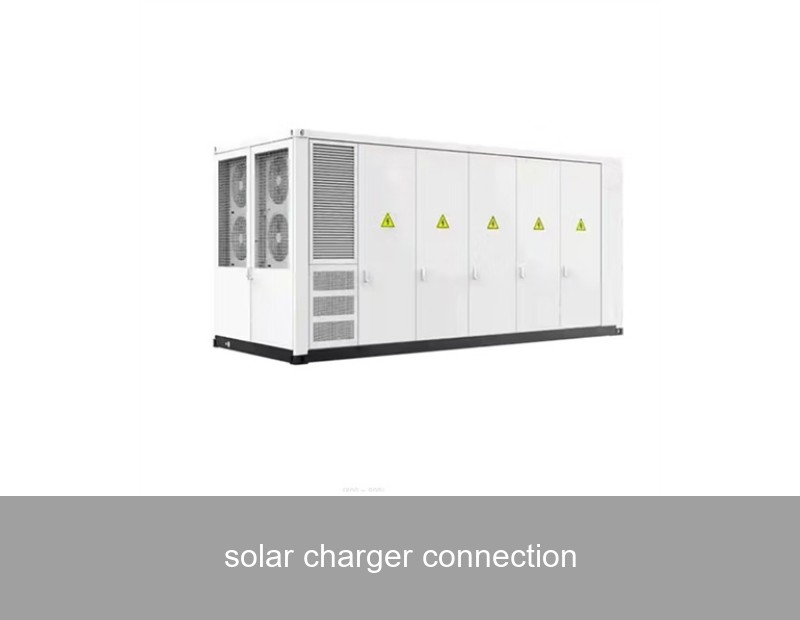
- Battery Storage System: This is the game-changer. It's no longer just about using solar as it's produced; it's about storing it. A high-quality battery system, like the Highjoule H-ESS Series, features built-in, high-efficiency battery management and power conversion systems. This creates a seamless and intelligent solar charger connection that prioritizes your home's usage, protects your battery investment, and provides backup power during outages.
- System Monitoring & Management: The nervous system. Advanced software allows you to track production, consumption, and storage in real-time, often from a smartphone app, giving you total control over your energy.
| Component | Traditional Role | Smart, Integrated Role |
|---|---|---|
| Inverter | Converts DC to AC | Manages multi-flow energy, integrates storage, grid services |
| Battery Connection | Simple charging/discharging | AI-optimized cycles, health monitoring, scalable capacity |
| User Interface | Basic production meter | Real-time app, energy forecasts, automated cost-saving modes |
A Real-World Case: The Munich Bakery's Recipe for Success
Let's bring this to life with a story from our target market. A family-run bakery in Munich, Germany, installed a 50kW solar array in 2020. While their daytime production was good, high evening energy use for cleaning and preparation, coupled with low German feed-in tariffs, meant their savings were limited. Their solar charger connection ended at the inverter, sending excess power to the grid for a small return.
In 2023, they partnered with Highjoule to retrofit a Highjoule H-ESS Commercial 50 battery storage system. The integration created a new, intelligent connection hub. Now, the system:
- Stores midday solar surplus instead of exporting it cheaply.
- Powers the bakery's ovens and chillers during the high-price evening peak, slashing demand charges.
- Provides critical backup, keeping refrigeration running during a winter grid outage, preventing thousands of euros in inventory loss.
The Result? Their self-consumption rate jumped from 48% to 94%. They reduced their grid energy purchases by 72% and are on track to achieve a full return on their storage investment in under 6 years, all thanks to upgrading the intelligence of their solar charger connection point. This isn't just theory; it's a tangible, data-driven outcome (Fraunhofer ISE studies consistently show similar results for commercial storage).

Image: Businesses can achieve major savings with smart energy connections. Source: Unsplash
Beyond the Basics: Smart Connections and System Intelligence
The future of the solar charger connection lies in intelligence and interoperability. It's moving from a simple hardware link to a dynamic, software-defined energy manager. Highjoule's systems, for instance, use adaptive learning algorithms to understand your energy habits. They can automatically decide the most economical moment to charge from excess solar, discharge to avoid peak tariffs, or even participate in grid-balancing programs where available, creating a potential revenue stream.
This level of smart management requires deeply integrated components designed to work as one system, not just bundled together. It ensures safety, maximizes hardware lifespan, and delivers the promised financial benefits. For the homeowner or business owner, this complexity is hidden behind a simple, intuitive interface—the ultimate goal of a sophisticated solar charger connection.
Making the Right Choice for Your Solar Charger Connection
So, how do you ensure your system is built on a strong connection foundation?
- Prioritize System Integration: Choose solutions where the inverter, battery, and management software are designed together, like Highjoule's all-in-one residential EcoNode or commercial H-ESS platforms. This avoids compatibility headaches and performance gaps.
- Think Scalability: Your energy needs may grow. Can your system's connection point easily accommodate more batteries or additional solar panels in the future?
- Demand Smart Features: Look for systems with real-time monitoring, customizable operating modes (e.g., "maximize self-consumption," "backup priority"), and software-upgradable features.
- Partner with Experts: Work with certified installers who understand the nuances of system integration and can provide a holistic solution, not just individual components.
Your Energy Future, Connected
The journey to energy independence is built on more than just solar panels. It's built on the intelligence, reliability, and efficiency of the solar charger connection that ties everything together. By focusing on this critical nexus, you transform a simple generation setup into a resilient, money-saving, and future-proof home energy ecosystem.
What will your first question be when an installer proposes a solar system—will you ask about the panels' wattage, or will you delve deeper and ask, "How will the system intelligently connect and manage *all* my energy sources and needs?"
 Inquiry
 Online Chat