


Solar Energy Storage Cabinet in Uganda: Unlocking Reliable Power for Growth
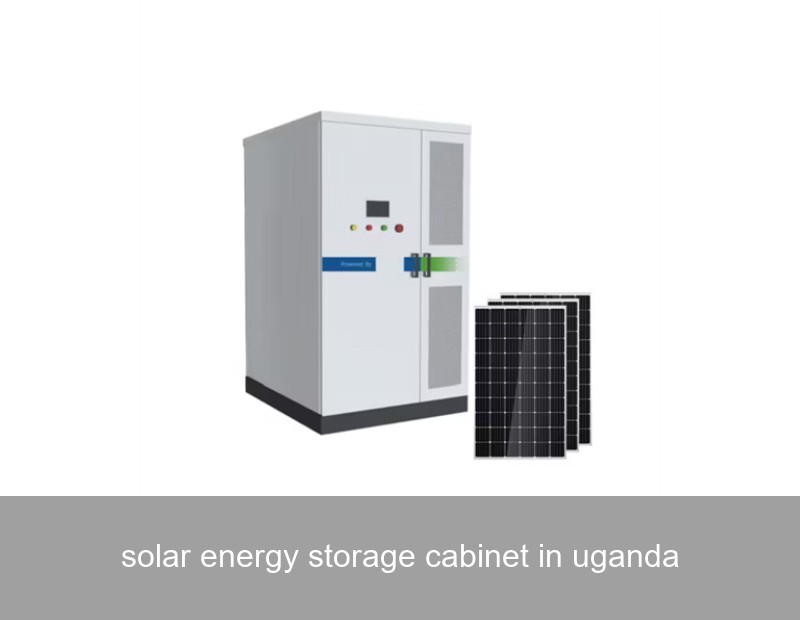
Imagine running a clinic where vaccines spoil due to a blackout, or a small factory where production grinds to a halt daily. This is the stark reality for many businesses and institutions across Uganda, despite the country being blessed with abundant sunshine. The solution to this paradox is increasingly found in a robust, integrated system: the solar energy storage cabinet. More than just a battery box, this technology is becoming a cornerstone for energy independence, economic resilience, and sustainable development in Uganda and similar markets. Let's explore how this intelligent piece of engineering works and why it's a game-changer.
The Uganda Challenge: More Sun, Unreliable Power
Uganda's energy grid, like many in growing economies, faces challenges with reliability and reach. While access is improving, power outages and fluctuations remain common, hindering business productivity, healthcare delivery, and education. Conversely, Uganda has tremendous solar potential, with an average of 5.1 kWh/m²/day of solar irradiation. The missing link has been a way to capture this daytime bounty and use it precisely when needed—at night, during outages, or at peak grid tariff times. This is where the integrated solar energy storage cabinet enters the picture.
What Exactly is a Solar Energy Storage Cabinet?
Think of it as the heart and brain of a modern solar power system. A solar energy storage cabinet is not a single device but a pre-assembled, wall-mounted or floor-standing unit that intelligently integrates the critical components for storing and managing solar electricity. It's a compact power hub designed for safety, efficiency, and ease of installation. Unlike scattered components, a cabinet-based system offers a neat, protected, and managed solution, which is crucial for commercial and industrial applications where reliability and safety are non-negotiable.

A modern energy storage cabinet provides a safe, integrated solution for managing power. (Image: Unsplash)
Key Components of a Modern Storage Cabinet
So, what's inside this crucial cabinet? A high-quality system typically integrates:
- Battery Modules: The core storage, usually Lithium Iron Phosphate (LiFePO4) for their long life, safety, and excellent performance in varied climates.
- Battery Management System (BMS): The guardian that monitors cell voltage, temperature, and health, ensuring safety and prolonging battery life.
- Hybrid Inverter/Charger: The intelligent commander. It converts solar DC power to AC for use, manages charging from solar or the grid, and seamlessly switches between power sources during an outage.
- Energy Management System (EMS): The brain for optimization. It can be programmed to use stored solar energy during expensive peak grid hours, maximizing financial savings.
- Safety & Protection: Integrated circuit breakers, surge protection, and thermal management systems all housed in a robust, often lockable, enclosure.
Why Integration Matters
Having these components in one tested cabinet, from a single provider like Highjoule, eliminates compatibility issues, simplifies installation and maintenance, and provides a single point of warranty and support. This plug-and-play philosophy is vital for deploying reliable systems at scale.
Beyond Backup: The Real Value Unlocked
The value of a solar storage cabinet in a context like Uganda extends far beyond emergency backup.
| Challenge | How a Storage Cabinet Solves It | Outcome |
|---|---|---|
| Unreliable Grid (Outages) | Provides instantaneous backup power, keeping critical operations running. | Business Continuity |
| High & Rising Grid Tariffs | Stores cheap solar energy to use during expensive peak evening hours ("peak shaving"). | Reduced Operating Costs |
| Limited or No Grid Access | Forms the core of an off-grid or microgrid system for entire communities or facilities. | Energy Access & Development |
| Voltage Fluctuations | Conditions and stabilizes power, protecting sensitive equipment (e.g., medical, lab devices). | Asset Protection |
Case Study: A Makerere University Research Lab
Let's look at a real-world application. A research laboratory at Makerere University was facing critical challenges: frequent power cuts were disrupting long-running experiments, damaging sensitive equipment, and causing data loss. Relying on a diesel generator was noisy, polluting, and expensive to run.
The Solution: The lab installed a 20 kW solar array paired with a 40 kWh solar energy storage cabinet system. The cabinet was chosen for its compact footprint and integrated, lab-safe design.
- Uptime: Lab operational uptime increased from ~85% to over 99.5%.
- Cost Savings: Diesel fuel consumption was reduced by 90%, saving over $4,000 annually.
- Emission Reduction: Carbon emissions from the lab's backup power were cut by an estimated 12 tonnes per year.
- Research Integrity: Critical freezer storage and sensitive instrumentation now have clean, uninterrupted power.
This case mirrors benefits seen in telecom towers, agro-processing plants, and rural health centers, proving the technology's transformative potential.
Choosing the Right System: What to Look For
Not all storage solutions are created equal. For demanding environments, consider:
- Battery Chemistry: LiFePO4 is highly recommended for its thermal stability and cycle life.
- Climate Resilience: The cabinet should be rated for high ambient temperatures and humidity.
- Scalability: Can you easily add more battery modules later if your needs grow?
- Smart Capabilities: Look for systems with remote monitoring and programmable energy management.
- Local Support: Ensure the provider has a network for installation, training, and after-sales service.
How Highjoule Powers Sustainable Solutions
At Highjoule, with nearly two decades of experience as a global leader in advanced energy storage, we design our products for precisely these scenarios. Our Highjoule Cube Series commercial storage cabinets are engineered for reliability and intelligence. They feature our proprietary, UL-certified LiFePO4 battery modules, a built-in high-efficiency hybrid inverter, and our cloud-based Hi-Connect EMS platform. This allows facility managers in Kampala or Mbale to monitor system performance, schedule discharge cycles for peak savings, and receive maintenance alerts—all from a smartphone. We partner with certified local integrators across regions to ensure our systems are not just delivered but are properly installed and supported, empowering businesses, healthcare facilities, and communities to build their energy resilience on a foundation of sunshine.

Professional monitoring and maintenance are key to long-term system performance. (Image: Unsplash)
The Future of Energy in Uganda
The journey towards a stable and sustainable energy future for Uganda is being paved with innovation. As solar panel costs continue to fall and storage technology like advanced cabinets becomes more efficient and affordable, the economic case for solar-plus-storage grows stronger every day. It's a shift from viewing energy as a sporadic utility to treating it as a predictable, self-managed asset.
A Thought to Leave You With
If your business or institution in Uganda is planning its energy strategy for the next decade, what would be the true cost of *not* investing in a system that turns predictable sunshine into reliable, affordable, and clean power 24/7?
 Inquiry
 Online Chat