


From Sunlight to Socket: How a Modern Solar Generator with Panels Powers Your Independence
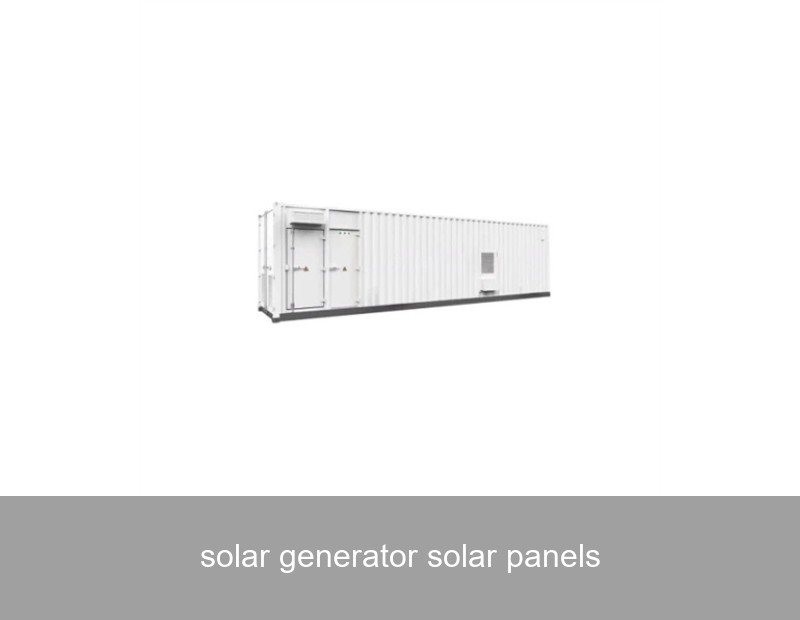
Imagine a powerful storm knocks out the grid in your neighborhood. While others are left in the dark, your home's lights stay on, your refrigerator hums, and your Wi-Fi remains connected. This isn't magic; it's the reality made possible by a fully integrated solar generator solar panels system. Today, we're moving beyond simple portable power stations. A modern "solar generator" is a sophisticated, all-in-one energy ecosystem: high-efficiency solar panels capture the sun's bounty, and a smart battery storage system seamlessly manages that power for use anytime—day or night. For homeowners and businesses across Europe and the US, this technology is revolutionizing how we think about energy security, cost, and sustainability.
Table of Contents
- The Phenomenon: Energy Anxiety Meets Solar Potential
- The Data: Why Coupling Solar Panels with Storage is a Game-Changer
- The Case Study: A Bavarian Farm's Journey to Energy Resilience
- The Components: Anatomy of a High-Performance Solar Generator System
- The Highjoule Approach: Intelligent Storage for Intelligent Energy Use
- The Future: What's Next for Solar-Powered Independence?
The Phenomenon: Energy Anxiety Meets Solar Potential
You've likely felt it: a nagging concern about rising electricity bills, or a headline about grid instability during a heatwave. This "energy anxiety" is a growing reality. Simultaneously, rooftop solar panels have become a common sight, symbolizing a step toward self-sufficiency. But here's the catch: traditional solar panel systems often send excess power back to the grid during the day when you're not home to use it, leaving you still dependent on the grid at night. This is where the critical link comes in. The true potential of your solar panels is unlocked only when paired with a dedicated storage solution—the heart of a true solar generator.

This pairing transforms your solar array from a partial solution into a comprehensive personal power plant. It's the difference between having a water collector that overflows when it rains but is empty in a drought, and having a collector connected to a large tank that ensures a constant supply.
The Data: Why Coupling Solar Panels with Storage is a Game-Changer
The numbers speak volumes about the synergy between solar panels and battery storage. Let's break it down:
| Metric | Solar Panels Only | Solar Panels + Battery Storage |
|---|---|---|
| Self-Consumption | Typically 30-50%* | Can exceed 70-80%* |
| Grid Independence During Outage | Zero (System shuts off for safety) | High (Essential loads powered for hours or days) |
| Bill Savings Potential | Moderate (Depends on net metering) | Maximized (Avoid peak-time tariffs) |
| ROI Timeline | Shorter | Longer, but with greater long-term value & security |
*Figures are illustrative estimates based on average household consumption patterns. Actual results vary by location, system size, and usage.
A key driver in markets like California, Germany, and the UK is the changing economics of net metering (selling power back to the grid). As feed-in tariffs become less favorable[1], storing your solar energy for personal use becomes financially smarter. Furthermore, the International Energy Agency (IEA) reports that global solar PV capacity is set to triple by 2027, making the question of how to best use that energy more pressing than ever[2].
The Case Study: A Bavarian Farm's Journey to Energy Resilience
Let's look at a real-world example from southern Germany. The Huber family runs a medium-sized dairy farm with high energy needs for cooling, ventilation, and automated feeding systems. They installed a 45 kW rooftop solar system in 2019, but found they were exporting over 60% of their generation on sunny summer days, only to buy expensive power in the evening.
The Challenge: High grid dependency, vulnerability to outages affecting livestock welfare, and rising energy costs.
The Solution: In 2022, they integrated a Highjoule HES-30 commercial energy storage system with their existing solar panels. This 30 kWh battery system was configured for peak shaving and backup power.
The Results (12-month period post-installation):
- Grid Import Reduced by 78%: Their self-consumption of solar power jumped from 35% to over 85%.
- Cost Savings: Annual energy expenditure dropped by approximately €5,200, improving the ROI of their entire solar investment.
- Resilience Achieved: During a regional grid fault in winter, the system automatically islanded, powering the essential farm loads for 11 hours without interruption, safeguarding their operations.
"Our solar panels finally work for us, around the clock," said Mr. Huber. "The storage system isn't just a battery; it's the brain that makes our solar investment truly intelligent and reliable."
The Components: Anatomy of a High-Performance Solar Generator System
Understanding the key parts demystifies the technology. A complete solar generator system consists of:
- Solar Panels (The Fuel Source): Modern monocrystalline panels with efficiencies over 21% are the standard. They convert sunlight into direct current (DC) electricity.
- Inverter/Charger (The Translator & Manager): This is a critical component. A hybrid inverter converts the DC from panels and batteries into usable AC for your home. It also intelligently manages the flow of energy—sending power to the house, to the battery, or to the grid.
- Battery Storage (The Energy Bank): Lithium Iron Phosphate (LiFePO4) batteries are now the preferred choice for safety, longevity (often over 6,000 cycles), and stable performance. This is where your surplus solar energy is stored.
- Energy Management System (The Brain): Advanced software that learns your consumption patterns, weather forecasts, and utility rate schedules to optimize when to charge, discharge, or export energy.

The Highjoule Approach: Intelligent Storage for Intelligent Energy Use
This is where Highjoule's expertise transforms components into a seamless solution. As a leader since 2005, we don't just supply batteries; we provide integrated, smart storage systems that make your solar generator solar panels combination perform at its peak.
Our HES (Home Energy Stack) and CES (Commercial Energy Stack) product lines are designed for this exact purpose. They feature:
- Scalable Architecture: Start with a base capacity and easily add more battery modules as your needs grow, protecting your initial investment.
- Advanced Battery Chemistry: We utilize top-grade LiFePO4 cells with integrated Battery Management Systems (BMS) for maximum safety, efficiency, and a lifespan designed to outlast your solar panels.
- Grid-Forming Technology: In the event of a blackout, our systems can create a stable "microgrid" for your home, allowing not just essential loads, but often your entire property to run on solar and battery power seamlessly.
- Smart Energy OS: Our intuitive platform gives you full visibility and control. You can set preferences (e.g., "maximize self-consumption" or "prepare for storm backup"), monitor flow in real-time, and receive performance insights—all from your smartphone.
For homeowners in Texas facing volatile grid conditions or businesses in Italy seeking to lock in energy costs, a Highjoule system is the cornerstone of a truly resilient and economical energy strategy.
The Future: What's Next for Solar-Powered Independence?
The journey from sunlight to socket is becoming more intelligent every day. We're seeing the integration of electric vehicle charging, where your EV becomes another mobile storage unit. Virtual Power Plants (VPPs), where networks of home batteries like Highjoule's systems can support the wider grid during times of peak demand, are emerging in the US and Europe, offering participants new revenue streams.
The core principle remains: the value of your solar panels is exponentially increased by the intelligence of the storage system they're paired with. It's no longer just about generating green energy; it's about mastering its use.

So, as you consider your path to energy independence, ask yourself this: Is your current or planned solar system just a daytime contributor, or is it a 24/7 personal power plant waiting for the right key to unlock its full potential?
 Inquiry
 Online Chat