


Your Complete Guide to Choosing the Perfect Solar Inverter Kit for Home Energy Independence
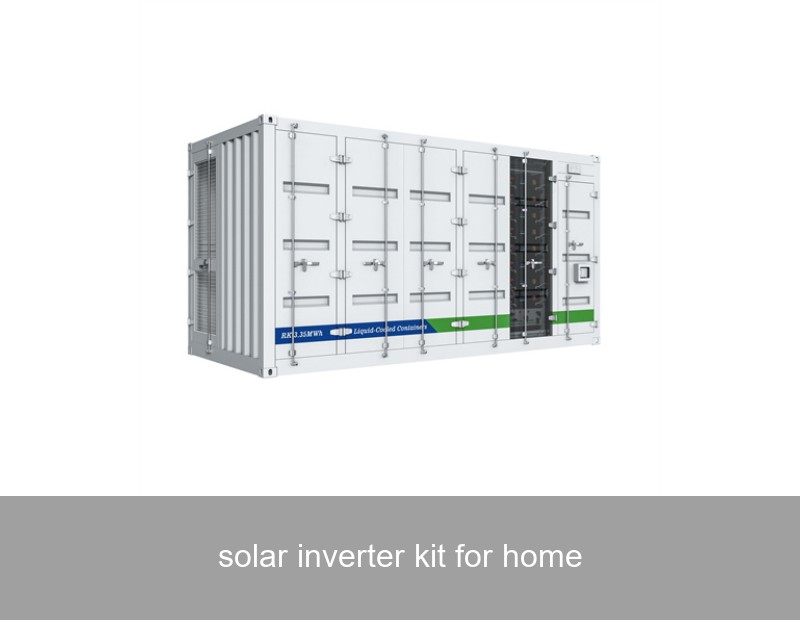
Have you ever watched your electricity bill climb and wondered, "What if I could harness the sun on my roof instead?" You're not alone. Across Europe and the U.S., homeowners are increasingly turning to solar power, not just as an eco-friendly choice, but as a smart financial strategy for long-term energy security. At the heart of any effective home solar system is the solar inverter kit for home use. But with so many options, how do you choose the right one? This guide will demystify the technology, showcase real-world benefits, and introduce you to how Highjoule's intelligent solutions are powering a more resilient and sustainable future, one home at a time.
Table of Contents
What is a Solar Inverter Kit for Home Use?
Let's start with the basics. A solar inverter kit for home is a packaged system that converts sunlight into usable electricity for your household. Think of it as the brain and heart of your solar power setup. While solar panels (the most visible part) capture sunlight, it's the inverter's crucial job to transform the direct current (DC) electricity they produce into the alternating current (AC) that powers your lights, appliances, and devices.
A typical kit goes beyond just the inverter, often including:
- The Inverter: The core component (can be string, micro, or hybrid).
- Solar Panels: A set of photovoltaic modules.
- Mounting System: Racking to securely attach panels to your roof.
- Cabling & Connectors: For safe and efficient electrical connections.
- Monitoring System: Software to track energy production and consumption.
Image Source: Unsplash - Representative image of a residential solar inverter installation.
The Home Energy Revolution: Why Now is the Time
The shift towards home solar isn't just a trend; it's a response to a clear global phenomenon: volatile energy prices and a growing desire for self-sufficiency. In the European Union, the REPowerEU plan aims to massively accelerate renewable rollout, with solar a key pillar. In the U.S., incentives like the federal Investment Tax Credit (ITC) continue to make solar investments highly attractive.
But the data tells the real story. According to the Solar Energy Industries Association (SEIA), the U.S. residential solar market has seen an average annual growth of over 30% in the past decade. The driver? Homeowners are realizing that a quality solar inverter kit for home use is a cornerstone asset that reduces grid dependence, protects against blackouts (when paired with storage), and locks in energy costs for 25+ years.
Key Components of a High-Performance Kit
Not all kits are created equal. Understanding the components ensures you invest in a system built to last and perform.
| Component | Role | What to Look For |
|---|---|---|
| Inverter Type | Converts DC to AC power; manages system performance. | Hybrid Inverters are the future-proof choice. They allow seamless integration of battery storage, enabling energy use at night and during outages. |
| Solar Panels | Capture sunlight. | High efficiency ratings (21%+), strong performance warranties (25+ years), and reputable manufacturers. |
| Monitoring Platform | Provides real-time and historical data on system health and energy flows. | User-friendly app, detailed consumption breakdown, and alert functions for maintenance. |
| Battery Readiness | Determines if you can easily add storage later. | A hybrid or storage-ready inverter is essential. Avoid systems that would require a full inverter replacement to add a battery. |
Real-World Impact: A Case Study from California
Let's move from theory to practice. Consider the Johnson family in Sacramento, California. Facing frequent Public Safety Power Shutoffs (PSPS) due to wildfire risk and rising tiered electricity rates, they installed a comprehensive solar inverter kit for home with integrated battery storage in early 2022.
- System: 8.2 kW solar array paired with a 10 kWh battery system, centered on a high-efficiency hybrid inverter.
- Results (First 12 Months):
- Electricity bill reduced by 92% annually.
- Experienced 5 grid outages totaling 42 hours; home power remained uninterrupted.
- Exported surplus energy to the grid, earning credits under net metering.
- Key Insight: The Johnsons didn't just buy panels; they invested in an integrated energy ecosystem. The intelligent hybrid inverter automatically managed when to charge the battery, power the home, or export to the grid, maximizing their financial and resilience benefits.
The Highjoule Difference: Beyond Basic Conversion
As a global leader in advanced energy storage since 2005, Highjoule understands that a modern solar inverter kit for home must be intelligent, adaptive, and scalable. Our Residential Energy Hub series is engineered for this exact purpose.
Our kits are built around our proprietary hybrid inverter technology, which acts as a true home energy manager. Unlike basic inverters, the Highjoule Energy Hub:
- Prioritizes Self-Consumption: Its AI-driven software learns your household's energy patterns to maximize the use of your solar energy directly in your home, reducing reliance on the grid.
- Ensures Seamless Backup: In the event of a grid failure, the system switches to backup power in milliseconds—so fast that your Wi-Fi won't even drop.
- Offers Scalable Storage: Start with what you need now. Our modular battery design allows you to easily expand storage capacity as your family's needs or electric vehicle charging demands grow.
- Provides Grid Services: In some markets, with homeowner permission, our systems can support grid stability, potentially opening up future revenue streams.

Image Source: Unsplash - Home equipped with a residential solar panel system.
How to Choose the Right Kit for Your Home
Ready to explore your options? Follow this logical ladder to find your ideal solution.
Step 1: Assess Your Energy Profile
Look at your past year's electricity bills. Identify your average monthly consumption (in kWh) and your peak usage. This baseline is critical for sizing your system.
Step 2: Define Your Primary Goal
Is it pure bill savings, backup power for resilience, or maximizing environmental impact? Your goal dictates whether you need a simple grid-tie system or a hybrid kit with storage, like those Highjoule specializes in.
Step 3: Evaluate Your Roof and Location
Consider roof space, orientation, and shading. A south-facing roof with minimal shade in Arizona will produce more than a north-facing one in Germany, affecting system size and inverter choice.
Step 4: Plan for the Future
Are you planning to buy an electric vehicle, add an air conditioner, or expand your family? Future-proof your investment by choosing a scalable system. A Highjoule Energy Hub, for instance, allows for easy battery expansion and can manage increased loads.
Step 5: Partner with a Trusted Expert
The technology is only as good as the design and installation. Work with a certified installer who can model energy production, handle permits, and ensure your system is optimized for your specific needs and local regulations.
The Final Piece: Your Home as a Power Plant
The dream of true energy independence is more accessible than ever. The right solar inverter kit for home use transforms your property from a passive energy consumer into an active, intelligent power plant. It's a shift that empowers you, protects your household, and contributes to a cleaner grid.
What will your first step be towards taking control of your home's energy future? Could your roof be the next to join the energy independence movement?
 Inquiry
 Online Chat