


Illuminating Independence: Your Complete Guide to a Modern Solar Lighting System for Home
it's a stormy evening, the grid goes down, and your street plunges into darkness—except for your home. Your pathways, garden, and security lights remain steadfastly aglow, powered silently by the sun captured during the day. This isn't a scene from the future; it's the everyday reality for a growing number of homeowners across Europe and the U.S. who have embraced a solar lighting system for home. Moving far beyond the simple garden stake lights of yesteryear, today's integrated solar lighting solutions offer a powerful blend of energy independence, security, and sustainability. As energy prices fluctuate and climate awareness grows, turning sunlight into reliable nighttime illumination is no longer just an eco-friendly choice, but a profoundly practical one for modern living.
What is a Modern Solar Lighting System for Home?
Gone are the days of dim, unreliable solar lights. A contemporary solar lighting system for home is an integrated energy solution. At its core, it consists of high-efficiency photovoltaic (PV) panels that convert sunlight into electricity. This DC (direct current) power is then managed by a charge controller, which intelligently regulates the flow to a dedicated battery storage unit. The stored energy is finally converted to the appropriate voltage by an inverter to power efficient LED lighting fixtures, both indoors and outdoors. The true "intelligence" lies in the system's ability to store surplus energy, ensuring lights function perfectly through the night and during periods of low sunlight, providing true off-grid capability or valuable backup during grid outages.

Image Source: Unsplash - Example of solar-integrated modern housing.
Why Your Neighbor is Going Solar: The Unseen Benefits
The initial allure is often the promise of lower electricity bills—and rightly so. But the advantages of a robust solar lighting system for home run much deeper.
- Energy Resilience: With a capable battery backup, your lights stay on during power cuts. This transforms security and safety from a grid-dependent feature to a guaranteed one.
- Reduced Carbon Footprint: By harnessing renewable energy, you directly offset fossil fuel-based grid electricity. The U.S. Department of Energy notes that solar energy significantly reduces greenhouse gas emissions.
- Low Operational Costs & Minimal Maintenance: Once installed, the sun's fuel is free. Modern lithium-based battery systems, like those used by Highjoule, require virtually no maintenance for years.
- Increased Property Value: Studies, including one from the Zillow Group, have shown homes with solar energy systems often sell at a premium compared to non-solar homes.
- Installation Flexibility: Without the need to trench and run extensive conduit from the main grid, solar lights can be placed optimally for security and aesthetics, not just wiring convenience.
Beyond the Panel: Key Components of a Reliable System
Understanding the key parts demystifies the technology and helps you make an informed choice.
| Component | Role | What to Look For |
|---|---|---|
| Solar Panel | Captures sunlight and generates DC electricity. | High monocrystalline efficiency (22%+), durable weatherproof coating. |
| Charge Controller | Protects the battery from overcharging and deep discharge. | MPPT (Maximum Power Point Tracking) technology for up to 30% greater efficiency than PWM types. |
| Battery Storage | Stores energy for use when the sun isn't shining. | Lithium Iron Phosphate (LiFePO4) chemistry for safety, longevity (6,000+ cycles), and stable performance. This is where Highjoule's expertise shines. Our ResiCore residential battery systems are engineered specifically for daily solar cycling, offering compact, safe, and intelligent storage that seamlessly integrates with solar lighting circuits. |
| LED Lighting Fixtures | Provides bright, efficient illumination. | High lumens-per-watt ratio, appropriate IP rating for outdoor use (e.g., IP65 for dust/water resistance), and warm color temperatures for ambiance. |
Where Highjoule Fits Into Your Solar Lighting Vision
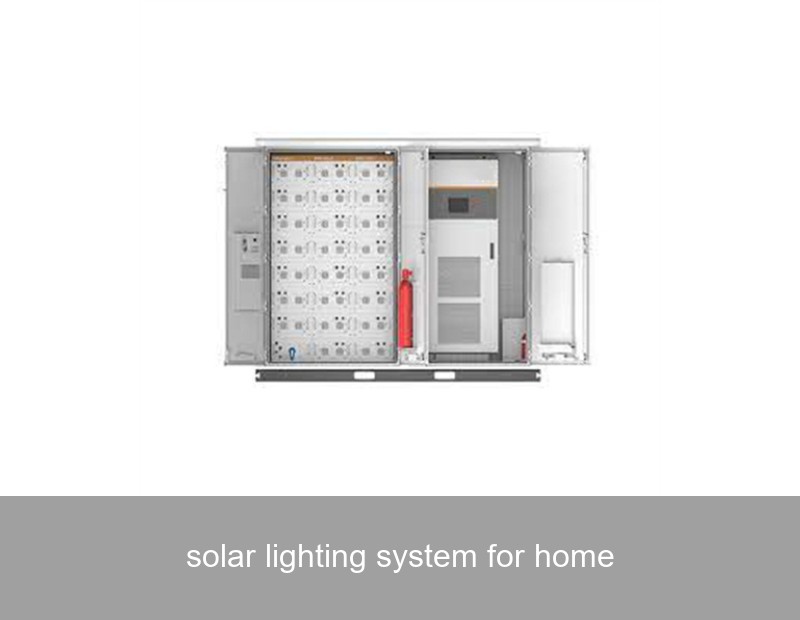
While the panels capture the sun and the lights provide the glow, the heart of a reliable solar lighting system for home is the storage and management system. As a global leader in advanced energy storage since 2005, Highjoule doesn't just supply batteries; we provide the intelligent core. Our ResiCore and SolarNode product lines are designed to be the perfect partner for dedicated solar lighting or whole-home solar-plus-storage systems. With built-in energy management software, they prioritize solar energy for your critical loads (like lighting and security) and ensure every watt of sunlight you capture is used efficiently. For homeowners looking to start with a robust lighting backup or scale up to full energy independence, Highjoule's scalable and safe solutions form the dependable foundation.
From Theory to Light: A Real-World Case Study in Arizona
Let's move from concepts to concrete results. Consider the case of a family in Tucson, Arizona—a region with abundant sun but also a grid prone to strain during summer heatwaves.
- The Challenge: The homeowners wanted fail-safe security and perimeter lighting to enhance safety during frequent, short-duration grid outages, without the high cost and noise of a traditional gasoline generator.
- The Solution: They installed a 2.4 kW dedicated solar array paired with a Highjoule ResiCore 10 battery (10 kWh capacity) to power all exterior LED lighting, a security system, and key indoor circuits. The system was designed for off-grid operation of these loads for over 48 hours.
- The Data-Driven Outcome: In the first year, the system powered the designated loads through 14 recorded grid outages totaling over 32 hours. The household's electricity bill for outdoor lighting dropped to zero. Most importantly, their security lighting had 100% uptime, providing peace of mind that was previously unavailable. Monitoring data showed the battery's state of charge never dropped below 65% during these events, proving significant reserve capacity.

Image Source: Unsplash - Conceptual representation of energy data monitoring.
How to Choose the Right Solar Lighting System for Your Home
Ready to explore your options? Follow this logical step-by-step approach.
- Audit Your Lighting Needs: List all fixtures you want on solar power (e.g., porch lights, pathway lights, security floodlights, indoor emergency lights). Note their wattage and estimated daily usage hours.
- Calculate Your Energy Budget: Multiply the total wattage by hours of use to get daily Watt-hour (Wh) needs. For example, ten 10W LED lights for 5 hours = 500 Wh per day. Your storage must meet this demand.
- Assess Your Solar Potential: Use tools like the NREL PVWatts Calculator to estimate solar generation at your location. Panel size should replenish your daily use plus account for seasonal variations.
- Prioritize Quality Storage: This is your system's cornerstone. Opt for reputable brands with proven LiFePO4 technology. Ensure the battery management system (BMS) has safety certifications for your region.
- Consult a Professional: A certified installer can conduct a site survey, ensure optimal panel placement, and design a system that complies with local codes and regulations. They can also help integrate a dedicated system like Highjoule's to ensure seamless operation and future expandability.
The Bright Future: Where Home Solar Lighting is Headed
The technology is advancing rapidly. We're moving towards even more integrated and intelligent systems. Imagine luminaires with built-in micro-PV panels and batteries, all communicating via a home energy management system. The rise of smart grids and vehicle-to-home (V2H) technology will also allow electric cars to act as backup power sources for home lighting circuits. Companies like Highjoule are at the forefront, developing interconnected storage solutions that don't just power lights but act as a hub for managing all domestic renewable energy flows efficiently and intelligently.
An Open Question to Light Your Way Forward
Given that the sun delivers more energy to the Earth in one hour than humanity uses in an entire year, the potential is literally shining down on us. What is the first step you could take this month to assess how a solar lighting system for home could enhance your energy resilience and redefine your relationship with the power that lights your nights?
 Inquiry
 Online Chat