


Understanding Solar Lighting System Price: A Smart Investment for Your Property
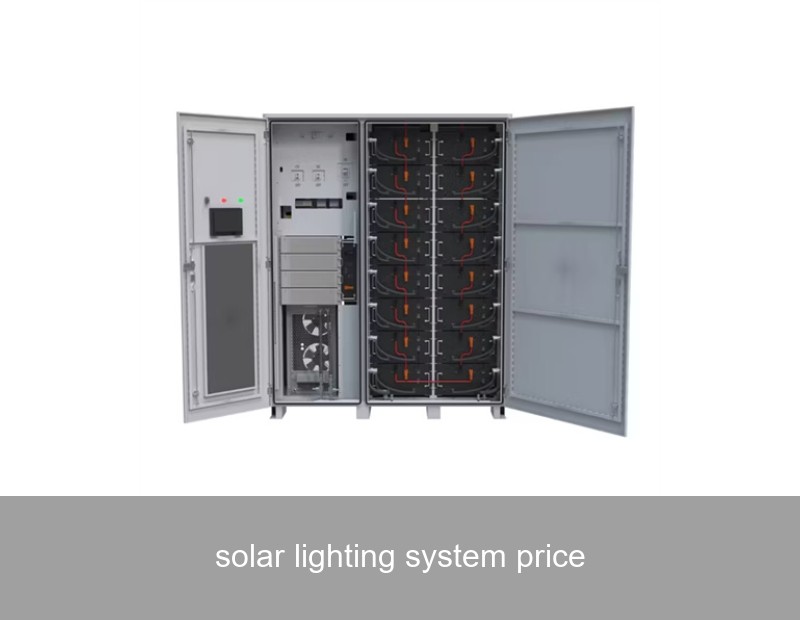
You're considering solar lighting for your home, business, or community project. It's a fantastic idea—reducing your carbon footprint and energy bills simultaneously. But as you start your research, one question quickly takes center stage: what determines a solar lighting system price? The quotes you find online can be confusingly varied, ranging from a few hundred to several thousand dollars. This price disparity isn't random; it's the direct result of the components' quality, the system's intelligence, and the long-term value it delivers. Let's demystify the costs and explore how investing in a robust system, like those engineered by Highjoule, translates to decades of reliable, off-grid illumination.
Table of Contents
- The Real Breakdown: What You're Paying For in a Solar Lighting System
- The Critical Link Between Component Quality and System Price
- Case Study: A Municipal Park's Transition to Solar Lighting
- Looking Beyond the Sticker Price: Total Cost of Ownership (TCO)
- The Highjoule Approach: Intelligent Systems That Maximize Your Investment
- Making the Right Decision for Your Needs
The Real Breakdown: What You're Paying For in a Solar Lighting System
A solar lighting system is far more than just a fancy light bulb. It's a self-contained micro-power plant. The price encapsulates several key components:
- Solar Photovoltaic (PV) Panel: This is your system's fuel source. Panel size (wattage) and efficiency (monocrystalline being top-tier) directly impact cost and charging capability, especially in low-light conditions.
- Energy Storage (The Battery): This is the heart of the system. The battery stores solar energy for use at night. The type (Lead-acid vs. Lithium-ion), capacity (Ah), and lifespan (cycle life) are the most significant cost drivers.
- LED Luminaire: The light fixture itself. Cost varies with brightness (lumens), beam pattern, durability (IK & IP ratings), and smart features like motion sensors.
- Charge Controller & System Intelligence: This is the brain. A basic PWM controller is cheap, but a modern Maximum Power Point Tracking (MPPT) controller, often integrated into a smart energy management system, maximizes efficiency and protects your battery—adding to the upfront cost but saving substantially over time.
- Pole, Hardware, and Installation: Don't overlook structural and labor costs. A sturdy, corrosion-resistant pole and professional installation ensure system longevity and safety.
The Critical Link Between Component Quality and System Price
This is where the solar lighting system price tells its true story. Opting for the cheapest option often means compromising on the very components that define reliability.
Consider the battery. A low-cost, generic lead-acid battery might last 2-3 years in daily cycling, requiring frequent and costly replacements. In contrast, a premium lithium iron phosphate (LiFePO4) battery, while more expensive initially, can last 10+ years and operate efficiently across a wider temperature range. This choice alone dramatically alters the system's Total Cost of Ownership.
Similarly, a smart MPPT controller can harvest up to 30% more solar energy than a basic controller, meaning you can potentially use a slightly smaller, less expensive panel or enjoy longer runtime during winter months. The initial solar lighting system price is higher, but the operational performance is vastly superior.

Image: The quality of components like the solar panel, battery enclosure, and LED fixture are key factors in the system's price and longevity. Source: Unsplash
Case Study: A Municipal Park's Transition to Solar Lighting
Let's look at a real-world example from Southern Europe. A municipality sought to illuminate a 2-kilometer coastal walking path without the prohibitive cost of trenching and grid connection, which was estimated at over €80,000.
They installed 40 standalone solar LED lights. The initial solar lighting system price for the high-specification units was approximately €1,500 per pole (including installation), totaling €60,000—already a saving on grid connection.
| Cost Factor | Cheap System (Hypothetical) | High-Quality System (Installed) |
|---|---|---|
| Initial Investment | ~€40,000 | €60,000 |
| Battery Replacements (Years 1-10) | 2 replacements (~€12,000) | 0 replacements |
| Grid Energy Costs (10 years) | €0 (off-grid) | €0 (off-grid) |
| Maintenance Calls | High (component failures) | Minimal |
| Estimated 10-Year TCO | ~€52,000+ | €60,000 |
The data is clear. The higher initial investment in quality components—specifically lithium batteries and robust electronics—resulted in a lower Total Cost of Ownership over a decade, not to mention uninterrupted service and reduced maintenance headaches. The project also eliminates an estimated 4.2 tons of CO2 emissions annually (EPA Greenhouse Gas Equivalencies Calculator).
Looking Beyond the Sticker Price: Total Cost of Ownership (TCO)
As the case study shows, the smartest way to evaluate solar lighting system price is through the lens of TCO. TCO includes:
- Initial Purchase & Installation: The upfront quote.
- Energy Costs: Zero for true off-grid solar, but a factor for hybrid systems.
- Replacement Parts: Batteries are the most common recurring cost.
- Maintenance & Labor: Costs for servicing, especially at remote sites.
- System Lifespan: A system that lasts 15 years is inherently cheaper per year than one that fails in 5.
A high-quality system commands a higher initial price but typically has a vastly superior TCO, offering true value and peace of mind.
The Highjoule Approach: Intelligent Systems That Maximize Your Investment
At Highjoule, with nearly two decades of expertise in advanced energy storage, we design solar lighting solutions that are engineered for longevity and performance, ensuring your solar lighting system price is an investment, not just an expense.
Our integrated systems leverage our core technology:
- High-Performance LiFePO4 Batteries: We integrate our own market-leading, UL-certified lithium batteries, known for their safety and 10+ year lifespan, directly into our lighting solutions. This eliminates the weak link in most systems.
- Smart Energy Management: Our systems feature intelligent controllers that optimize charging cycles, manage load output, and provide remote monitoring capabilities. This ensures every watt-hour of solar energy is captured and used efficiently, guaranteeing illumination all night, every night.
- Application-Specific Design: Whether it's for security lighting for an industrial yard, ambient lighting for a residential community, or pathway lighting for a public microgrid project, we tailor the solar panel wattage, battery capacity, and luminaire to the specific geographic location and lighting requirements.
For instance, our HL-Series Solar Street Light isn't just a light; it's a reliable, self-sufficient asset. By combining superior components with intelligent software, we deliver a predictable, low-TCO solution that municipalities and businesses across Europe and North America trust.

Image: Modern, reliable solar lighting enhances safety and aesthetics without ongoing energy costs. Source: Unsplash
Making the Right Decision for Your Needs
So, how do you navigate the solar lighting system price landscape? Ask these key questions:
- What is the required nightly runtime and light output (in lumens) for my application?
- What is the local solar insolation (sunlight data) for my site? (Global Solar Atlas)
- What is the battery chemistry and what is its warranted cycle life?
- Does the controller have MPPT technology and thermal management?
- Can the provider offer a detailed TCO projection, not just an initial quote?
Ready to Illuminate Your Space with Sustainable Confidence?
The journey to the right solar lighting solution begins with understanding that the true cost is measured over years, not just at purchase. By prioritizing quality, intelligence, and partnership with an expert provider, your solar lighting project becomes a lasting, valuable investment.
What specific lighting challenge are you looking to solve, and how can a precisely engineered solar solution transform the economics and sustainability of your project?
 Inquiry
 Online Chat