


Your Solar Panel Assembly Business Plan in the Age of Advanced Energy Storage
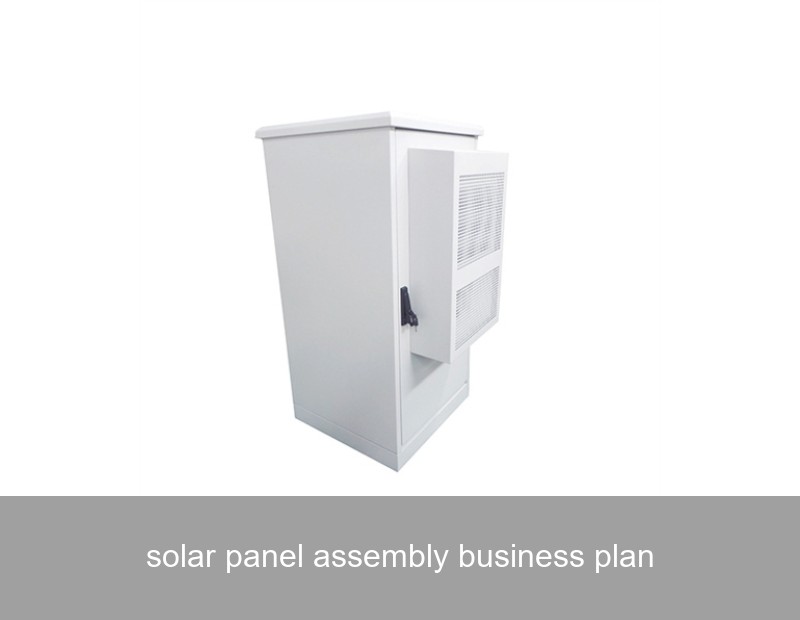
Thinking of starting a solar panel assembly business? That's a brilliant move. The global demand for clean energy is surging, and solar is at the forefront. But here's a crucial insight for your solar panel assembly business plan: today's market doesn't just want panels; it demands complete, intelligent energy systems. Your customers—whether homeowners, factory managers, or farmers—are looking for reliability and independence, not just a lower electricity bill. This is where integrating advanced battery storage from the outset becomes your key competitive advantage. Let's build a future-proof plan together.
Table of Contents
- The New Reality: Beyond Just Solar Generation
- Data Drives the Storage-Integrated Assembly Model
- Case Study: A Bavarian Agri-Solar Business
- Key Components of a Storage-Ready Business Plan
- Why Highjoule is the Ideal Technology Partner
The New Reality: Beyond Just Solar Generation
Gone are the days when a solar installation was a simple, one-way system. The modern energy landscape is defined by intermittency (the sun doesn't always shine) and dynamic pricing. For your assembly business, this presents both a challenge and a monumental opportunity. By planning for energy storage integration from the very beginning, you transition from being a component supplier to becoming a comprehensive energy solution architect. This shift significantly increases your project value, customer lock-in, and long-term service revenue.
Think about it: an assembly business that only provides panels is vulnerable to price wars and simple competition. But a business that designs and assembles systems with built-in intelligence and storage solves the core customer pain point: consistent and controllable clean power. This is the cornerstone of a resilient solar panel assembly business plan.
Data Drives the Storage-Integrated Assembly Model
Let's look at the numbers. According to the International Energy Agency (IEA), global renewable capacity is set to grow by 2.5 times by 2030, with solar PV accounting for three-quarters of this expansion. Concurrently, the energy storage market is exploding. In the U.S. alone, grid-scale battery storage capacity is expected to nearly double in 2024, as reported by the U.S. Energy Information Administration (EIA).
This data isn't just background noise; it's your market signal. The convergence curve of solar and storage is steepening. Customers are becoming educated about concepts like self-consumption, backup power, and time-of-use arbitrage. Your business plan must reflect this convergence. Offering storage isn't an "add-on" anymore; it's becoming a standard expectation for commercial and industrial (C&I) clients and a rapidly growing demand in the residential sector.

Source: Unsplash - A technician installing solar panels, representing the core assembly business.
Case Study: A Bavarian Agri-Solar Business Model
Consider the real-world example of "Grüner Strom GmbH," a mid-sized solar assembly company in southern Germany. In 2022, they pivoted their solar panel assembly business plan to exclusively offer hybrid solar-plus-storage systems for dairy farms and agricultural cooperatives.
The Challenge: Their farm clients had high, consistent energy needs for cooling, milking machines, and ventilation. Solar alone meant exporting excess power at low noon rates and drawing expensive grid power in the morning and evening.
The Solution: Grüner Strom designed standardized, yet customizable, packages featuring their own assembled PV arrays coupled with Highjoule's H-Series Commercial Battery Systems. These systems are known for their robust cycle life and seamless integration capabilities, perfect for harsh farm environments.
The Result: Within 18 months, their average project value increased by 40%. More importantly, they achieved a 92% customer retention rate for annual maintenance and monitoring contracts. One specific dairy farm saw its grid dependence reduced from 65% to 22% annually, translating to a net energy cost saving of €8,500 per year—a figure that powerfully resonates with prospective clients.
Key Components of a Storage-Ready Business Plan
To emulate this success, your plan needs specific, actionable sections beyond the standard financial projections.
1. Technical Assembly & Partnership Strategy
- In-House vs. Partnered Tech: Will you assemble storage enclosures, or partner with a leading provider? Partnering with an established brand like Highjoule mitigates R&D risk and provides instant technology credibility.
- System Design Software: Invest in design tools that simulate both solar production and storage savings, providing clients with clear ROI forecasts.
- Training Protocol: Detail a plan for certifying your installation teams on high-voltage DC systems and battery management software.
2. Market Analysis & Segmentation
| Target Segment | Primary Need | Recommended Highjoule Solution |
|---|---|---|
| Residential Communities | Backup power, bill management, increasing home value. | Highjoule HomeHub: All-in-one inverter + storage with sleek design and simple user app. |
| Small & Medium Enterprises (SMEs) | Demand charge reduction, operational continuity, ESG goals. | Highjoule H-Series modular racks. Scalable from 50kWh to 1MWh, perfect for load shifting. |
| Microgrids & Off-Grid | Complete energy independence, resilience for critical infrastructure. | Highjoule Microgrid Controller paired with H-Series storage for full system orchestration. |
3. Financials with a Storage Lens
- Upfront Cost vs. Lifetime Value: Clearly model the higher upfront cost of a storage-inclusive system against its 15+ year value in savings and security.
- Service Revenue Streams: Highlight recurring revenue from remote monitoring, performance guarantees, and periodic battery health checks—services enabled by smart storage systems.
- Incentive Navigation: Outline expertise in claiming available tax credits (like the U.S. ITC) and local grants for storage, which improve customer payback periods.

Source: Unsplash - A modern battery storage installation, representing the integrated solution.
Why Highjoule is the Ideal Technology Partner for Your Assembly Business
Since 2005, Highjoule has been at the forefront of intelligent storage solutions. For a new assembly business, partnering with us provides a formidable launchpad. Our products are designed with integration in mind. The Highjoule Universal Energy Gateway (UEG) is a prime example—it acts as a single communication interface, allowing the solar panels you assemble, the battery banks, and the grid to speak a common language. This simplifies your system design and commissioning process dramatically.
Furthermore, our JouleMind AI software platform provides your clients (and you) with unparalleled visibility and control over energy flows. You can offer value-added services like automated peak-shaving reports or warranty management, all through a single pane of glass. This transforms your business from a construction-focused operation into a technology-enabled energy services provider. By embedding Highjoule's reliable and smart storage into your solar panel assembly business plan, you're not just selling a product; you're offering peace of mind and long-term financial control.
The Critical Question for Your Venture
The energy transition is accelerating. As you draft your business plan, the pivotal question isn't just "How many panels can we install this year?" It's: "How will we empower our customers to truly own and optimize their energy future?" The answer lies in the seamless fusion of solar assembly and storage intelligence. Are you ready to build the integrated energy company that the market is waiting for?
 Inquiry
 Online Chat