


Solar Panels for Apartments: Your Guide to Clean Energy in Multi-Unit Buildings
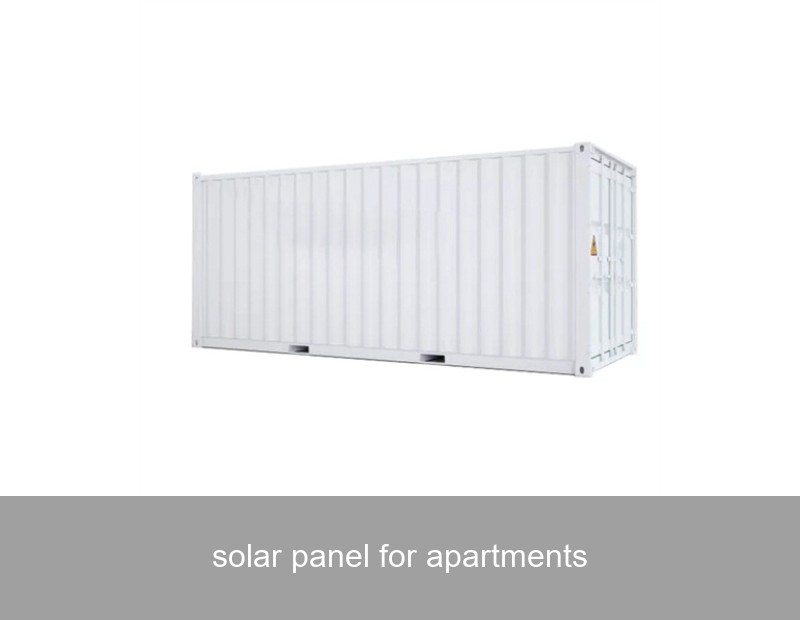
Imagine this: you're passionate about reducing your carbon footprint and your electricity bills, but you live in an apartment. The classic rooftop solar setup seems like a distant dream reserved for homeowners with sprawling roofs. This is a common frustration for millions of urban dwellers across Europe and the United States. But what if we told you that the landscape of renewable energy is changing rapidly? Solar panels for apartments are not only a possibility but are becoming an increasingly popular and viable solution. This guide will demystify how you can harness the sun's power from your flat, the innovative technologies making it possible, and how companies like Highjoule are leading this charge towards accessible, sustainable energy for all.
Table of Contents
- The Apartment Solar Dilemma: Why It's Different
- Breaking Down the Solutions: From Balconies to Basements
- Real Data & Impact: A Case Study from Berlin
- Highjoule's Role: Smart Storage for Community Solar
- Your First Steps Towards Apartment Solar
The Apartment Solar Dilemma: Why It's Different
For single-family homes, the path to solar is relatively straightforward: install panels on your roof, connect to an inverter, and start saving. Apartment residents face a unique set of challenges:
- Shared Roof Space: Who owns it? Who gets to use it? Decisions often require consensus from a homeowners' association (HOA) or building management.
- Individual Metering: How is the solar energy fairly distributed and billed to each resident?
- Structural Limitations: Not all apartment roofs are structurally suited for a large, traditional array.
- Renter Flexibility: Renters need solutions they can potentially take with them.
These hurdles have historically sidelined a massive portion of the population from the solar revolution. However, regulatory shifts and technological innovation are now creating exciting pathways forward.
Breaking Down the Solutions: From Balconies to Basements
The good news? There isn't just one answer. The concept of "solar panels for apartments" encompasses a spectrum of solutions tailored to different building types and regulations.
1. Community or Shared Solar Gardens
This is often the most effective model for multi-unit buildings. A shared solar array is installed on the building's roof or a nearby off-site location. The generated electricity is fed into the building's main supply or the local grid. Residents then subscribe to a portion of the output, receiving credits on their utility bills. It’s like having a slice of a large solar farm dedicated to your building.

Image: Modern building designs are increasingly integrating solar directly into architecture, like these balcony panels. Credit: Unsplash.
2. Balcony Power Plants (Plug-in Solar Modules)
A rapidly growing trend in Europe, particularly in Germany, these are compact, plug-and-play solar systems. You can install one or two panels on your balcony, terrace, or facade, plug them into a special outlet, and directly power your appliances. They are perfect for renters and require minimal bureaucratic hassle. While their output (typically 300-600W) won't power your entire home, they can significantly offset the base load from devices like refrigerators and internet routers.
3. Building-Integrated Photovoltaics (BIPV)
For new constructions or major renovations, BIPV turns the building envelope itself into a power generator. Solar cells can be integrated into windows, facade cladding, or roof tiles. This is a holistic architectural approach that maximizes energy production without compromising aesthetics.
Real Data & Impact: A Case Study from Berlin
Let's move from theory to practice. A compelling example comes from a 12-unit apartment building in the Kreuzberg district of Berlin, Germany. Faced with rising energy costs and a collective desire for sustainability, the residents' association embarked on a community solar project in 2022.
- Project: A 45 kWp rooftop solar array installed on the shared roof.
- Challenge: Fair distribution of solar power and managing surplus energy fed back to the grid during the day.
- Solution: The system was coupled with a centralized Highjoule Hive-Cell 15 battery energy storage system (BESS).
- The Outcome (Data after 1 year):
Metric Result Total Annual Solar Generation 42,300 kWh Building's Self-Consumption Rate Increased from 35% to 78% Average Electricity Cost Savings per Household €340/year CO2 Emissions Avoided Approx. 19 tonnes
The key was the battery storage. Instead of sending excess midday solar power to the grid at low rates, the Highjoule system stored it. This stored energy was then used in the evening peak hours when residents were home, drastically increasing self-consumption and savings. The project's success has been documented in local sustainability reports, highlighting how storage transforms solar from a supplementary to a primary power source for apartments. You can read more about Germany's energy transition policies that enable such projects on the Federal Ministry for Economic Affairs and Climate Action website.
Highjoule's Role: Smart Storage for Community Solar
This is where our expertise at Highjoule becomes crucial. Since 2005, we've understood that the true potential of solar, especially for collective living, is unlocked only with intelligent storage. Our solutions for multi-unit dwellings focus on three pillars:
- Centralized Building Storage: Our Hive-Cell Commercial Series is designed for exactly the scenario described in Berlin. It's a scalable, safe, and smart battery system that allows an entire building to maximize its own solar consumption, reduce demand charges, and provide backup power for common areas.
- Virtual Power Plant (VPP) Readiness: Highjoule systems can connect to VPPs, allowing building managers or energy communities to aggregate their stored energy and provide grid stability services, potentially creating a new revenue stream. Learn how grid operators view this technology from the U.S. Department of Energy.
- Energy Management Software: Our proprietary platform provides transparent insights. Residents can see, via a simple app, how much solar energy their building is producing, storing, and consuming, fostering a community of engaged energy citizens.

Image: A modern battery storage system, similar to Highjoule's Hive-Cell, enables energy independence for buildings. Credit: Unsplash.
For smaller setups or individual renters interested in balcony systems, pairing them with a compact, apartment-safe battery like our Highjoule Home-Cube can take independence to the next level, allowing you to use your solar power even after sunset.
Your First Steps Towards Apartment Solar
Feeling inspired? Here’s a practical action plan:
- Start the Conversation: Talk to your neighbors, building manager, or HOA. Gauge interest and form a "green committee."
- Research Local Policies & Incentives: Many states in the U.S. (like California and New York) and countries in the EU have specific incentives for multi-tenant solar. Check databases like the DSIRE database for the latest programs.
- Get a Professional Assessment: Contact a solar installer experienced in multi-unit buildings. They can assess your roof's potential and explain the financial models (e.g., cost-sharing, third-party ownership).
- Think Storage from the Start: When evaluating quotes, insist on including a battery storage solution like Highjoule's. It's the component that ensures maximum financial return and resilience.
What specific question about your apartment building's solar potential would you like answered first?
Is it the legal framework in your city, the estimated costs for a building of your size, or perhaps how to present the idea to skeptical neighbors? The journey to powering your apartment with the sun begins with a single question.
 Inquiry
 Online Chat