


Solar Panel Installment in Sweden: Your Guide to Powering a Sustainable Future
When you think of solar energy, Sweden might not be the first country that springs to mind. Images of long, dark winters and snowy landscapes seem at odds with the classic picture of sun-drenched solar farms. Yet, here's a surprising fact: solar panel installment in Sweden is not only viable but booming. From the summer cottages of Småland to the commercial rooftops of Stockholm, Swedes are increasingly turning to the sun to gain energy independence, reduce their carbon footprint, and future-proof their electricity costs. This movement goes far beyond just placing panels on a roof; it's about creating a resilient, intelligent energy system for a Nordic climate. Let's explore how the land of the Midnight Sun is becoming a leader in smart solar adoption.
Beyond the Myth: Data Tells the True Story
The most common misconception is that Sweden lacks sufficient sunlight. The reality is more nuanced. While winter yields fewer hours of daylight, Swedish summers are long and bright, with the famous Midnight Sun in the north providing nearly continuous light. Crucially, solar panels operate on light, not just heat. They can be remarkably efficient in cooler temperatures, which actually improves their conductivity and performance. Let's look at the numbers:
- Rapid Growth: Sweden's solar photovoltaic (PV) market has seen exponential growth. According to the Swedish Energy Agency, installed solar PV capacity has increased from around 360 MW in 2018 to over 2.5 GW by the end of 2023, a nearly sevenfold increase in just five years.
- High Summer Production: A well-installed system in southern Sweden can generate between 900 to 1,100 kWh per kWp (kilowatt-peak) installed annually. For a typical 10 kWp residential system, that's enough to cover a significant portion, if not all, of a household's annual electricity consumption, especially when paired with smart energy management.
- Government Incentives: The Swedish state supports this transition through tax deductions for solar energy production (solcellssubvention), allowing homeowners to deduct a portion of the installation cost from their taxes. Additionally, selling surplus energy back to the grid is a common practice, creating a small revenue stream.

Image: Solar panels efficiently operating on a Swedish home in winter. (Source: Unsplash, Photographer: Anders J)
The Solar Installation Journey: A Step-by-Step Guide
So, what does a typical solar panel installment in Sweden entail? It's a structured process designed for efficiency and long-term reliability.
- Initial Assessment & Planning: A certified installer evaluates your property's solar potential. They analyze roof angle, orientation (south-facing is optimal), shading from trees or chimneys, and structural integrity. This stage often involves a digital simulation of annual energy yield.
- System Design & Financing: Based on your historical electricity consumption and goals (self-sufficiency, investment, etc.), a custom system is designed. This includes the number of panels, inverter type, and crucially, whether to include battery storage. You'll receive a detailed quote and explore available subsidies.
- Permits & Grid Connection: Your installer typically handles the necessary permits from the local municipality and the application to connect your system to the public grid (nätanslutning).
- Professional Installation: A team installs the mounting system, panels, inverter(s), and electrical wiring. For a standard residential system, this usually takes 1-3 days.
- Commissioning & Monitoring: Once connected and tested, your system goes live. Modern systems come with monitoring apps, allowing you to track production and consumption in real-time from your phone.
Case Study: The Österlen Farm Transformation
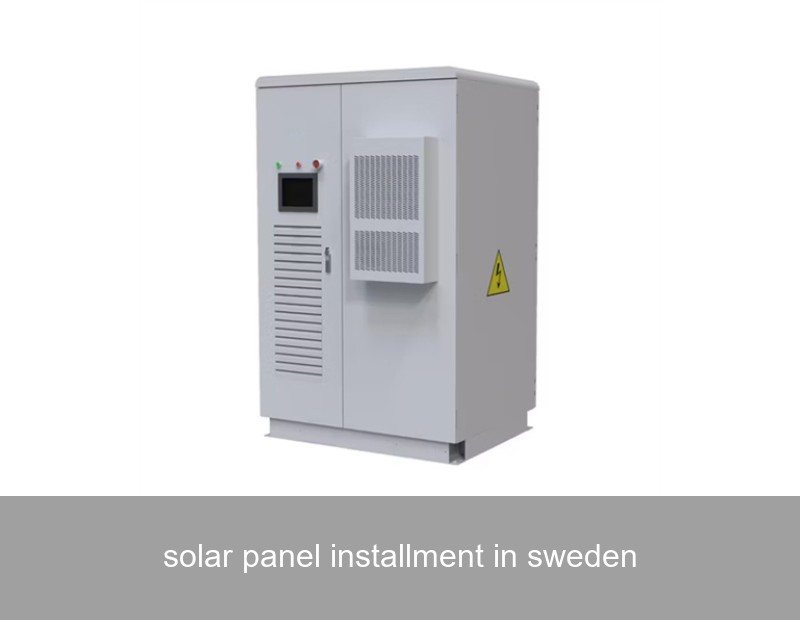
Consider the real-world example of a 150-hectare farm in Skåne. Facing volatile energy prices and a desire for sustainability, the owners invested in a 50 kWp rooftop solar system in early 2022. The system was designed to power the farm's operations, including cooling facilities and machinery workshops. However, the key to their success was integrating a Highjoule HES-30 commercial battery storage system.
| Metric | Before Installation | After Installation (12 Months) |
|---|---|---|
| Grid Electricity Purchases | 100% of needs | Reduced by 78% |
| Self-Consumption of Solar Power | 0% | Increased from 45% to 92% with storage |
| Annual Energy Cost | ~ 285,000 SEK | ~ 62,000 SEK |
| Carbon Footprint (Operations) | ~ 12.5 tons CO2e | ~ 2.8 tons CO2e |
The battery stores excess solar energy produced during the day for use in the evening and on cloudy days, dramatically increasing self-consumption. It also provides backup power during grid outages, ensuring critical farm operations never halt. "The solar panels are our power plant, but the Highjoule battery is the intelligent manager that makes every kilowatt-hour count," the farm manager noted.
The Missing Piece: Why Storage is Non-Negotiable
This case study highlights a critical insight for the Swedish market: solar panels alone are only half the solution. The sun doesn't always shine when you need power most. Without storage, a significant portion of your self-generated energy might be exported to the grid at a lower price, only for you to buy it back at a higher price later. This is where the true intelligence of a modern energy system comes into play.
A battery storage system, like those pioneered by Highjoule, transforms your solar installation from a simple generator into a personal energy hub. It allows you to:
- Maximize Self-Consumption: Store daytime surplus for use at night, increasing your energy independence from 40-50% to over 80-90%.
- Provide Backup Power: Keep essential lights, refrigeration, and communications running during unexpected grid failures—a valuable feature in any climate.
- Optimize Economics: Participate in energy arbitrage (store when prices are low, use when high) if supported by your energy contract.

Image: A modern battery storage system integrated into a home energy setup. (Source: Unsplash, Photographer: Kelly)
Highjoule: Your Intelligent Energy Partner
As a global leader in advanced energy storage since 2005, Highjoule understands that solar panel installment in Sweden requires solutions built for Nordic conditions. Our products are not just batteries; they are integrated energy management systems.
For Swedish homeowners and businesses, we offer the Highjoule Home Energy System (HES) series. These systems feature:
- Nordic-Tested Resilience: Engineered to perform reliably in a wide temperature range, from hot summer days to freezing winter nights.
- Intelligent Software: Our AI-driven platform, JouleMind, learns your consumption patterns and weather forecasts to optimize charging and discharging cycles, maximizing your financial return and system lifespan.
- Scalable Design: Start with a system that fits your current needs and easily expand capacity as your energy demands grow.
- Seamless Integration: Our systems are designed to work harmoniously with all major solar inverter brands, making them the perfect complement to any new or existing solar installation.
For larger commercial, industrial, or microgrid applications, our Highjoule C&I Storage Solutions provide robust, containerized or modular systems that ensure energy security, peak shaving, and significant cost savings on a much larger scale.
Ready to Capture the Midnight Sun?
The data is clear, the technology is proven, and the economic case for solar in Sweden grows stronger every year. But the most successful projects are those viewed holistically: a combination of high-quality solar panels, professional installation, and intelligent storage that works as one cohesive system.
What is the first step you would take to understand your home or business's true potential for energy independence? Could your roof be the foundation of your own sustainable power station, not just for the bright summers, but for the entire year?
 Inquiry
 Online Chat