


Understanding Solar Panel Inverter Battery Price: Your Guide to a Smart Investment
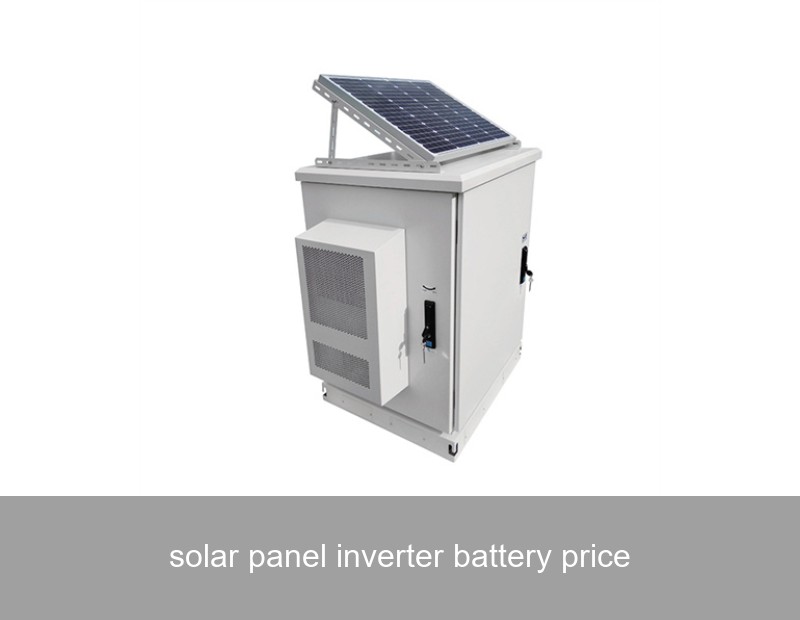
If you're exploring solar power for your home or business, you've likely encountered a crucial question: what determines the overall solar panel inverter battery price? It's more than just adding up component costs. The real value lies in understanding how these pieces—panels, inverters, and batteries—work together as a system to deliver energy independence and long-term savings. As a global leader in advanced energy storage since 2005, Highjoule is here to demystify these costs and highlight what truly matters for a resilient and efficient power solution.
Table of Contents
- The Real Price Breakdown: Beyond the Sticker Shock
- The Inverter: The Brain Behind the Brawn (And a Key Price Factor)
- Battery Storage: The Game-Changer for True Energy Independence
- Case Study: Navigating Price & Performance in a California Home
- Long-Term Value vs. Upfront Price: The Lifetime Cost Equation
- Making the Right Choice for Your Needs
The Real Price Breakdown: Beyond the Sticker Shock
Let's be honest, the initial quote for a solar-plus-storage system can be significant. However, viewing it simply as an expense misses the bigger financial picture. Think of it as an investment in infrastructure, similar to upgrading your roof or installing a high-efficiency HVAC system. The total solar panel inverter battery price encompasses:
- Hardware Costs: The solar panels themselves, the inverter(s), the battery units, mounting hardware, and electrical components.
- Soft Costs: This includes design, engineering, permits, inspection fees, and of course, installation labor. In the U.S. and Europe, these can constitute a substantial portion of the total price.
- Incentives & Rebates: This is where the calculus changes dramatically. Government incentives like the Federal Investment Tax Credit (ITC) in the U.S. or various EU member state subsidies can reduce net cost by 30% or more.
The key is to shift focus from "cheapest per watt" to "best value per dollar over 25 years." A higher-quality, intelligently integrated system will outperform and outlast a cheaper, disjointed one every time.
The Inverter: The Brain Behind the Brawn (And a Key Price Factor)
While solar panels capture the spotlight, the inverter is the unsung hero. Its job is to convert the direct current (DC) electricity from your panels into the alternating current (AC) that powers your home. The choice of inverter technology directly impacts system efficiency, monitoring capabilities, and yes, the overall solar panel inverter battery price.
- String Inverters: A cost-effective option for simple installations with uniform panel placement.
- Microinverters: Installed on each panel, they optimize output per panel (great for shaded roofs) and offer detailed monitoring. They typically add to the upfront cost but can increase overall energy harvest.
- Hybrid Inverters (The Storage-Ready Choice): This is where the future lies. A hybrid inverter is designed from the ground up to seamlessly integrate with battery storage. It manages solar production, battery charging/discharging, and grid interaction through one intelligent unit.
At Highjoule, our H-IQ Series Hybrid Inverters are engineered for this exact purpose. By choosing a system built around a hybrid inverter, you avoid costly add-ons or incompatibilities later, protecting your investment and simplifying expansion.
Battery Storage: The Game-Changer for True Energy Independence
Adding a battery fundamentally transforms your solar system from a money-saver to a resilience powerhouse. It allows you to store excess solar energy for use at night, during peak rate periods, or during grid outages. The battery's price is influenced by:
| Factor | Impact on Price & Value |
|---|---|
| Usable Capacity (kWh) | How much energy you can store. Larger capacity = higher price, but greater self-consumption. |
| Power Rating (kW) | How much power it can deliver at once. Critical for running multiple appliances during an outage. |
| Chemistry & Cycle Life | Lithium Iron Phosphate (LFP), used in Highjoule's H-Cell Matrix batteries, offers superior safety, longevity (10,000+ cycles), and stable performance, justifying a premium over older chemistries. |
| Integration & Intelligence | A battery that communicates flawlessly with your inverter and can be managed via an app provides far more value than a "dumb" unit. |

Image: Modern LFP battery installations, like Highjoule's H-Cell Matrix, prioritize safety, space efficiency, and seamless integration. (Source: Unsplash)
Case Study: Navigating Price & Performance in a California Home
Let's look at real data. A homeowner in Sacramento, California, faced rising electricity rates and frequent public safety power shutoffs. They received three quotes for a 7.6 kW solar system with a 10 kWh battery.
- Quote A (Lowest Upfront Price): Used a basic string inverter with a "bolt-on" battery from a different manufacturer. Limited monitoring and no guaranteed integration during outages.
- Quote B (Mid-Range): Used microinverters with a different brand battery, requiring additional communication hardware.
- Quote C (Featuring Highjoule): Centered on a Highjoule H-IQ8 Hybrid Inverter and a 10 kWh H-Cell Matrix battery, designed as a single, intelligent system.
While Quote C was not the cheapest initially, the homeowner chose it. The result? After the 26% federal ITC, the net price difference was minimal. More importantly, during a two-day outage, the Highjoule system automatically powered critical loads seamlessly, while a neighbor with a cheaper, non-integrated system experienced faults and could not use their battery. The intelligent energy management also optimized time-of-use savings, projecting a payback period under 8 years. This case shows that the holistic system performance, not just the line-item solar panel inverter battery price, dictates true return on investment.
Long-Term Value vs. Upfront Price: The Lifetime Cost Equation
To truly assess cost, consider these long-term value drivers that Highjoule builds into every solution:
- Durability & Warranty: A 25-year panel warranty is standard, but look for a 10+ year warranty on batteries and inverters. Highjoule's warranties reflect our confidence in LFP chemistry and robust engineering.
- Energy Bill Savings: A well-sized system can reduce your bill by 70-100%, and with batteries, you can avoid peak demand charges (critical for businesses).
- Increased Property Value: Studies like this one from the Lawrence Berkeley National Laboratory consistently show solar and storage increase home resale value.
- Grid Services & Incentives: In some markets, you can earn revenue by allowing your battery to support the grid during stress periods. Highjoule's systems are software-upgradable to participate in such future programs.

Image: Real-time monitoring and control turn a complex system into a simple tool for managing energy and costs. (Source: Unsplash)
Making the Right Choice for Your Needs
So, how do you ensure you're getting the best value on your solar panel inverter battery price? Start by asking the right questions:
- Is the system designed as a single, integrated unit, or is it a patchwork of components?
- Does the battery chemistry (we strongly advocate LFP) offer the safety and longevity I need for my family or business?
- Can the system provide backup power automatically, and what loads can it actually support?
- Is the company a long-term partner that will be there for software updates, service, and support over the next two decades?
Highjoule's approach is to provide intelligent, efficient, and sustainable power solutions that are calculated for the long haul. Our H-Energy Hub platform for commercial sites and H-PowerHome solution for residences are designed to deliver a superior lifetime cost of ownership, making the initial investment a wise financial decision.
What energy challenge—be it unpredictable bills, grid unreliability, or a commitment to sustainability—is motivating you to look at solar and storage today, and how can we help you evaluate the true price of solving it?
 Inquiry
 Online Chat