


Solar Panel Mounting Brackets in South Africa: The Unsung Heroes of Your Energy Harvest
When you think of a solar power system in South Africa, the gleaming panels and sleek inverters likely steal the show. But what holds it all together, literally and figuratively, against the fierce Highveld sun, coastal salt spray, and everything in between? The answer lies in the robust, often overlooked solar panel mounting brackets. In a market where energy reliability is paramount, the choice of mounting hardware isn't just an installation detail—it's the foundation of a 25-year investment. Let's explore why the right bracket system is critical for South Africa's unique conditions and how it integrates into a complete, high-performance energy solution.
Table of Contents
Why Mounting Hardware is Non-Negotiable in South Africa
South Africa presents a perfect storm of opportunity and challenge for solar. Abundant sunlight is countered by diverse and often harsh climatic conditions. In Johannesburg, summer hailstorms can unleash golf ball-sized ice. In Durban, the humid, salty air accelerates corrosion. In the Cape, strong southeasterly winds are a constant design consideration. Your solar panel mounting brackets in South Africa must be engineered to withstand these specific stressors for decades. A failure here isn't just a hardware issue; it can lead to panel damage, roof leaks, safety hazards, and a devastating loss of your energy independence—exactly when you need it most during load-shedding.

Image: A secure roof-mounted solar installation. Credit: Wikimedia Commons
The Data: Wind, Weather, and the Cost of Compromise
The numbers speak volumes. According to the South African Weather Service, wind gusts in coastal and highland regions can regularly exceed 90 km/h. Engineering standards for mounting systems must account for these loads, plus the added weight of rain and potential debris. A 2023 industry report highlighted that nearly 30% of solar system performance issues and failures in the region could be traced back to suboptimal mounting or racking, leading to micro-cracks in panels, grounding issues, and premature fatigue. This isn't an area for generic, off-the-shelf solutions. The mounting system must be precisely specified for the roof type (tile, metal, concrete), the ground conditions (soil type, wind exposure), and the specific panel dimensions.
Key Considerations for South African Installations:
- Wind Uplift Resistance: Can the bracket and rail system withstand the suction forces of high winds?
- Corrosion Protection: Is the aluminum or steel protected by superior anodization or hot-dip galvanization to resist rust?
- Thermal Expansion: Does the design allow for metal expansion and contraction in the intense heat without warping or loosening?
- Installation Efficiency: Is the system designed for quick, secure assembly, reducing labor time and potential errors?
Case Study: A Western Cape Winery's Secure Investment
Consider the real-world example of a renowned wine estate in Stellenbosch. Facing erratic grid supply that threatened refrigeration and production processes, they opted for a 250 kW rooftop solar array. The primary concern wasn't just panel efficiency, but survivability through Cape storms. They partnered with installers using a premium, engineered mounting system specified for their large-format panels and corrugated metal roofs.
| Challenge | Solution | Outcome (2 Years Post-Installation) |
|---|---|---|
| Extreme wind loads (≥ 120 km/h gusts) | Wind-tunnel-tested brackets with extra clamp points and torque-controlled installation. | Zero movement or damage recorded through three major storms. |
| Corrosive coastal atmosphere | Aluminum alloy brackets with Class III anodization. | No visible corrosion, maintaining structural integrity and electrical grounding. |
| Minimizing roof penetration | Non-penetrating, ballasted system designed for the roof's weight tolerance. | No leaks, and roof warranty remained intact. |
The result? Uninterrupted operation, projected ROI shortened by 18 months due to zero downtime, and complete peace of mind. This case underscores that the right mounting hardware is an insurance policy, not just a cost.
Choosing the Right System: From Racks to Integrated Solutions
So, what should you look for? The market offers various options, but the smartest choice is to view the mounting system as a core component of your energy ecosystem, not a separate accessory.
- Roof-Mounted Systems: Ensure they are compatible with your roof material. Tile hooks, composite stands, and flat roof solutions each have specific requirements.
- Ground-Mounted Systems: Ideal for larger-scale installations. Look for hot-dip galvanized steel piles driven or concreted into the ground, with adjustable tilt angles for seasonal optimization.
- Carport and Shade Structures: A dual-purpose solution gaining popularity. Strength and design for vehicle or patio cover are key.
This is where a holistic approach from a technology provider makes all the difference. At Highjoule, we don't just see brackets; we see the critical link between energy capture and energy utilization. Our approach to any project, whether in South Africa or globally, starts with a site-specific assessment. We then integrate industry-leading mounting hardware with our core intelligence: the Highjoule Energy Router (HER) and advanced battery storage systems.
Beyond the Brackets: The Highjoule Approach to Resilient Energy
Think of it this way: even the best-mounted solar panels are only productive when the sun shines. To truly conquer load-shedding and achieve 24/7 renewable power, the physical foundation (solar panel mounting brackets) must be connected to an electrical and digital foundation. This is Highjoule's expertise.
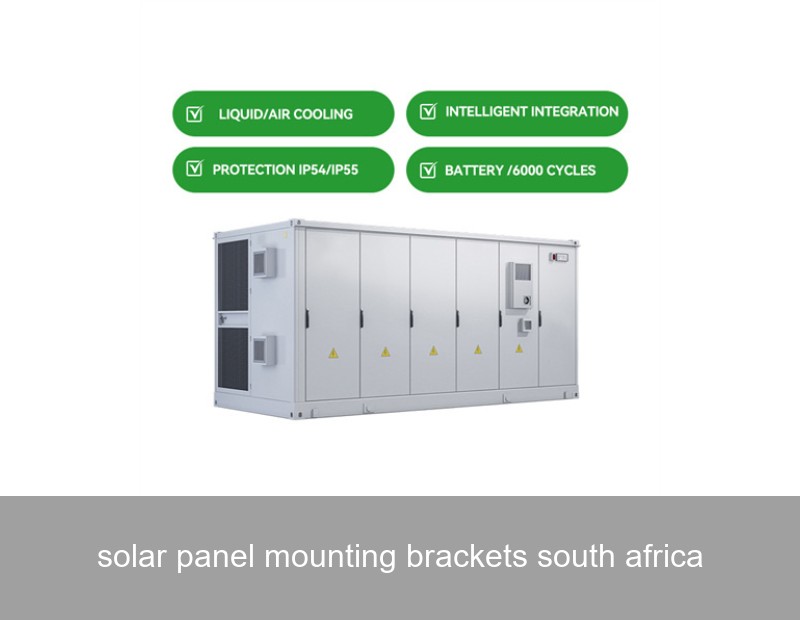
For our commercial and industrial clients in markets like South Africa, we provide complete, smart energy systems. Once those securely mounted panels generate electricity, our Highjoule Energy Router intelligently directs every kilowatt-hour—powering operations directly, charging our high-density lithium-ion battery storage, or selling back to the grid where feasible. Our storage systems, like the Highjoule BESS Cabinet, are built with the same philosophy as the best mounting hardware: resilience, safety, and longevity under demanding conditions.

Image: A containerized battery energy storage system. Credit: Unsplash
By managing this entire loop—secure generation, smart storage, and intelligent dispatch—we ensure that the physical integrity of your mounting system translates directly into financial and operational integrity for your business or home. For microgrid applications, especially in remote areas of South Africa, this integrated design is what turns a solar installation into a truly reliable power station.
The Final Question for Your Solar Project
When planning your solar investment, ask not only "What panels should I use?" but also "How will my entire system, from the brackets to the batteries, perform in 10 years under a punishing South African sun and storm?" The longevity of your energy independence depends on the answer. Are you ready to build your renewable future on the most solid foundation possible?
 Inquiry
 Online Chat