


Solar Panels and Batteries: The Complete Guide to Energy Independence
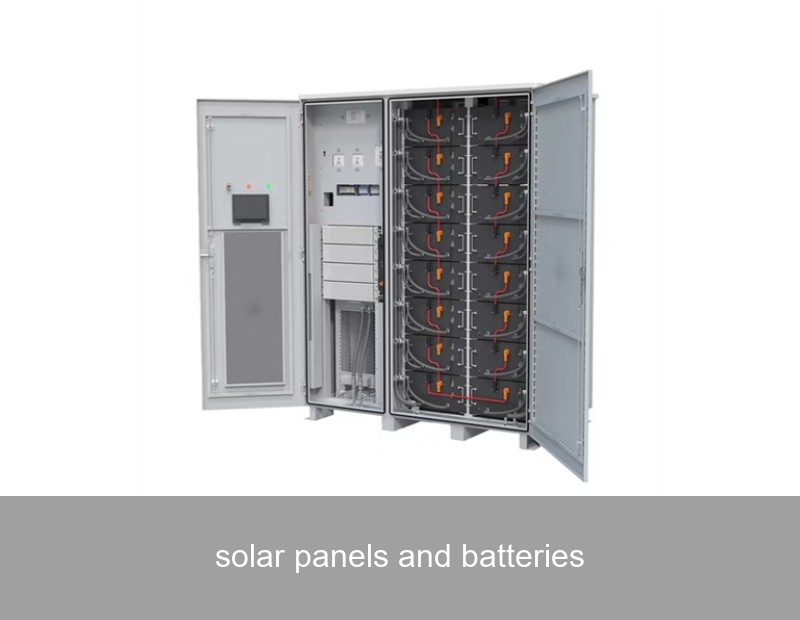
Have you ever looked at your electricity bill on a sunny day and wondered, "Why am I paying so much when the sun is powering the entire planet for free?" You're not alone. Across Europe and the US, homeowners and businesses are experiencing a similar awakening. The combination of solar panels and batteries is transforming from a niche eco-choice into a mainstream powerhouse for financial savings, energy security, and sustainability. But how do these systems truly work together, and what does it take to build a resilient energy ecosystem for your property? Let's demystify the synergy and explore the path to true energy independence.
Table of Contents
- The Phenomenon: Sunlight is Abundant, But the Grid Isn't Always Ready
- The Data: Why Pairing is the New Power Play
- Case Study: A California Community's Resilience Story
- Key Components of a Solar and Battery System
- How Highjoule's Intelligent Systems Elevate the Pairing
The Phenomenon: Sunlight is Abundant, But the Grid Isn't Always Ready
Here's the core issue: solar panels are incredible at generating electricity, but they do so primarily in the middle of the day. For most homes and businesses, energy consumption peaks in the early morning and evening. This creates a timing mismatch. Without a battery, excess solar energy is often sent back to the grid for a small credit (feed-in tariff), while you draw expensive power from the grid at night. Furthermore, increasing grid instability—from extreme weather events in the US to geopolitical pressures in Europe—has made power outages a tangible concern. A standalone solar system goes silent when the grid goes down, for safety reasons. This is where the battery completes the picture, acting as your personal energy reservoir.
The Data: Why Pairing is the New Power Play
The numbers make a compelling case. According to the U.S. Department of Energy, the cost of solar PV has dropped by over 60% in the last decade. Simultaneously, the cost of lithium-ion batteries, the dominant technology for home storage, fell by nearly 90% since 2010. This convergence is driving adoption. A IEA report notes that global solar PV capacity is set to triple by 2027, with a significant portion paired with storage.
Let's break down the benefits with a simple table:
| Metric | Solar Panels Only | Solar Panels + Battery |
|---|---|---|
| Self-Consumption | Typically 30-50% | 70-90%+ |
| Bill Savings | Significant | Maximized (avoids peak tariffs) |
| Backup Power | None during grid outage | Hours to days, depending on system |
| Grid Support | Exports surplus, can strain local grids | Can store surplus, discharge during peak demand |

Image: A modern home equipped with rooftop solar and a wall-mounted battery unit. Source: Unsplash
Case Study: A California Community's Resilience Story
Let's look at a real-world example. In Sonoma County, California, a community of 50 homes faced frequent Public Safety Power Shutoffs (PSPS) due to wildfire risk. In 2021, they embarked on a collective project to install rooftop solar and unified battery storage systems.
- Challenge: Frequent multi-day power outages, lost productivity, and safety concerns.
- Solution: Each home received a 8-10 kW solar array paired with a 13.5 kWh high-capacity battery system. The systems were configured to form a resilient network.
- Result: During a 3-day outage in late 2022, these homes maintained critical loads (refrigeration, lighting, communications, medical devices). Households reported an average of 92% self-sufficiency during the outage. The community's aggregate system reduced their collective grid dependence by over 80% annually, turning a vulnerability into a strength.
This case highlights that solar panels and batteries are not just about savings; they're about community resilience in the face of a changing climate.
Key Components of a Solar and Battery System
Understanding the main parts helps you make an informed decision.
1. The Solar Panels (The Generators)
These photovoltaic (PV) modules convert sunlight into direct current (DC) electricity. Modern panels are highly efficient and durable, with warranties often spanning 25+ years.
2. The Inverter (The Brain)
This is crucial. It converts the DC electricity from your panels into the alternating current (AC) used in your home. In a system with a battery, you often need a hybrid inverter or a dedicated battery inverter that can manage energy flow in multiple directions.
3. The Battery (The Bank)
This stores the excess DC or AC electricity for later use. Key specifications include:
- Capacity (kWh): How much energy it can store.
- Power Rating (kW): How much power it can deliver at once (important for running multiple appliances).
- Depth of Discharge (DoD): The percentage of the battery's capacity that can be safely used.
4. The System Controller (The Conductor)
Advanced software and hardware that intelligently decide when to charge the battery from solar, power the home, or export to the grid, optimizing for cost, consumption, or resilience.
How Highjoule's Intelligent Systems Elevate the Pairing
This is where expertise and technology make all the difference. At Highjoule, with nearly two decades of experience, we've seen that the magic isn't just in the individual components, but in their seamless, intelligent integration. Our EcoSphere energy management platform is the heart of our offering.
For residential and commercial clients, we don't just sell solar panels and batteries; we provide a tailored energy ecosystem. Our Highjoule HomePower Stack integrates high-efficiency PV modules with our proprietary IntelliBatt lithium iron phosphate (LFP) battery systems. LFP chemistry is renowned for its safety, longevity, and performance across a wide temperature range—a critical factor for both European winters and American summers.
What sets our systems apart is the software. EcoSphere learns your energy consumption patterns, weather forecasts, and local utility rate structures (like time-of-use tariffs common in California or dynamic pricing in the EU). It then automatically optimizes energy flow to maximize your savings and preparedness. For instance, it might decide to store extra solar energy rather than export it, anticipating a cloudy tomorrow or a high-price evening period.

Image: A modern energy management dashboard monitoring solar production and home consumption. Source: Unsplash
For larger-scale industrial and microgrid applications, our GridMax series provides utility-grade storage solutions that can integrate massive solar farms, stabilize local grids, and ensure uninterrupted power for critical operations.
Making the Decision: Is It Right for You?
Considering the leap? Ask yourself these key questions:
- Energy Goals: Is your primary driver bill reduction, backup power, environmental impact, or all three?
- Site Suitability: Does your roof have good, unshaded southern exposure (in the Northern Hemisphere)? Is there adequate space for battery installation?
- Financial Landscape: What are your local incentives? In the US, the federal Investment Tax Credit (ITC) now applies to standalone storage when charged by solar. Many European countries offer grants or favorable tariffs.
- Future-Proofing: Are you planning to buy an electric vehicle? A well-sized system can be designed to accommodate future EV charging loads.
The journey to energy independence is a significant step. It requires partnering with a provider who offers not just hardware, but deep expertise in system design, regulatory knowledge, and long-term support. Highjoule's global team provides end-to-end service, from initial consultation and custom design to professional installation and 24/7 system monitoring.
So, as you watch the sun set and the lights in your neighborhood flicker on, powered by the distant grid, what would it feel like to know your home is quietly, efficiently, and independently powered by the day's sunshine, stored and ready for your evening?
 Inquiry
 Online Chat