


Solar Panels for Large Buildings: Unlocking Energy Independence and Financial Resilience
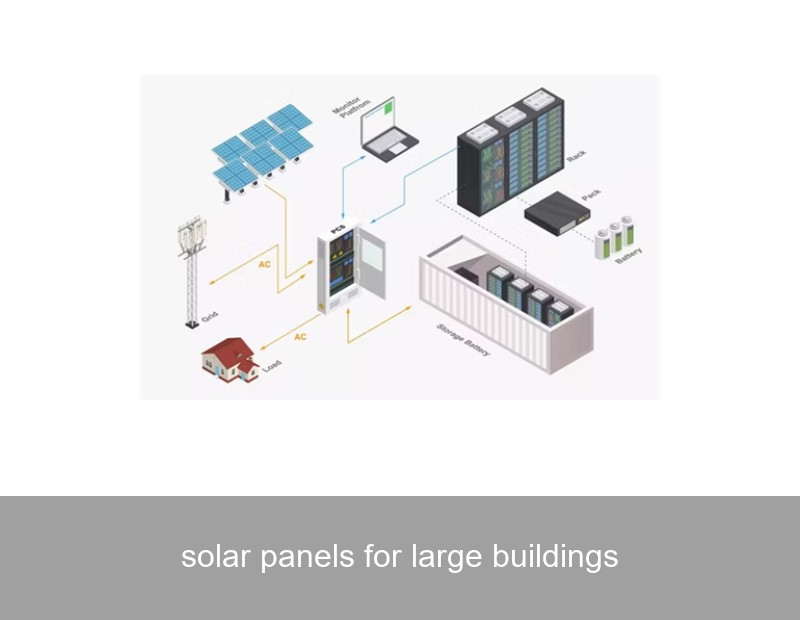
Picture the vast, flat rooftops of a warehouse, a manufacturing plant, or a corporate headquarters. For decades, these spaces were passive, doing little more than providing shelter. Today, a quiet revolution is underway. These expansive surfaces are being transformed into powerful, revenue-generating assets through the strategic installation of solar panels for large buildings. This isn't just about "going green"—it's a sophisticated financial and operational strategy for commercial and industrial entities across Europe and the US, driven by rising energy costs, grid instability, and stringent sustainability targets.
The phenomenon is clear: businesses are moving from energy consumers to "prosumers." But the journey from a standard rooftop to a high-performance, intelligent solar power plant is complex. It involves more than just mounting panels. Success hinges on system design, integration with building loads, and critically, pairing with advanced energy storage to maximize every kilowatt-hour generated. This is where deep expertise in system engineering becomes paramount.
Beyond kW: The Real Metrics for Large-Scale Solar Success
When evaluating solar panels for large buildings, the initial focus is often on the peak kilowatt (kW) capacity. However, the true measure of success lies in three key performance indicators:
- Energy Yield (kWh/kWp): How much actual energy does your system produce per unit of installed capacity? This depends on panel efficiency, local irradiance, and crucially, system design to minimize losses.
- Self-Consumption Rate: What percentage of the solar energy you generate do you use on-site? A high rate directly displaces expensive grid electricity, while a low rate means exporting excess power, often at lower feed-in tariffs.
- Levelized Cost of Energy (LCOE): The total lifetime cost of the system divided by the total energy produced. The goal is to achieve the lowest possible LCOE, ensuring a strong return on investment.
For a large building, a high-capacity solar array with a low self-consumption rate can be financially suboptimal. This is the fundamental challenge: solar generation peaks in the middle of the day, while many commercial operations may have staggered energy demands. The graph below illustrates this common mismatch.

Image: Modern solar arrays turn large rooftops into strategic assets. Source: Unsplash
The Storage Imperative: Making Solar Work 24/7
This is where the game changes. To dramatically increase self-consumption and gain control over energy costs, pairing solar with a Battery Energy Storage System (BESS) is no longer an option—it's a strategic necessity. A BESS acts as an energy buffer:
- Store Excess: Capture surplus solar energy produced at noon instead of exporting it at a low price.
- Discharge on Demand: Use that stored energy during peak evening hours when grid electricity is most expensive, a process known as peak shaving.
- Provide Resilience: Keep critical operations running during grid outages, ensuring business continuity.
This integrated approach transforms a solar installation from a simple generator into a smart, dispatchable energy resource. This is the core of Highjoule's mission. Since 2005, we have specialized in designing and deploying intelligent, integrated solar-plus-storage systems for large buildings. Our solutions, like the Highjoule H-Series Commercial BESS, are engineered specifically for this application. With features like high cycle life, scalable capacity from 100 kWh to multi-MWh, and advanced thermal management, the H-Series ensures that the clean energy you produce is available precisely when you need it most, maximizing your financial return and energy security.
Case Study: A Berlin Logistics Hub's Journey to Energy Independence
Let's look at a real-world application. A major logistics company operating a 40,000 sqm distribution center outside Berlin faced volatile energy prices and pressure from its corporate sustainability framework. Their goal was to reduce grid dependency and stabilize operational costs.
The Highjoule Solution: We deployed a 1.2 MW rooftop solar PV system integrated with a 500 kWh/750 kW Highjoule H-Series BESS. The system was tied together by our proprietary Energy Management System (EMS), which intelligently forecasts generation and load, optimizing every energy flow.
| Metric | Before Installation | After Installation (12-Month Avg.) |
|---|---|---|
| Grid Electricity Consumption | 100% | 42% |
| Self-Consumption of Solar | N/A | 92% |
| Peak Demand Charge | €18,500/month | €6,200/month |
| Estimated CO2e Reduction | Baseline | 720 tonnes/year |
The data speaks for itself. By moving beyond solar-only to an integrated system, the facility now uses over 90% of its self-generated solar power, slashing both energy costs and demand charges. The BESS provides backup power for critical refrigeration units, adding a layer of resilience. You can explore more on the importance of storage for grid stability from the U.S. Department of Energy.
Future-Proofing Your Investment with Smart Energy Management
Installing solar panels for large buildings is a significant capital investment. Protecting and maximizing that investment requires intelligence that goes beyond hardware. Highjoule's cloud-based EMS platform is the brain of the operation. It uses AI-driven algorithms to:
- Perform predictive energy analytics based on weather and usage patterns.
- Automatically choose the most economical operating mode (self-consumption, peak shaving, grid services participation*).
- Provide real-time system health monitoring and proactive maintenance alerts.
This software layer ensures your system adapts to changing energy tariffs, like the dynamic pricing models becoming common in Europe, and evolves with your business needs. It turns a static installation into a dynamic financial asset. For insights into future energy market trends, organizations like the International Energy Agency (IEA) provide valuable analysis.

Image: Intelligent control systems are key to maximizing ROI. Source: Unsplash
Your Next Steps in the Solar Journey
The potential of your building's rooftop is immense. The transition to a smart, resilient, and cost-effective energy model is not a distant future—it's a tangible reality being implemented by forward-thinking businesses today. The first step is moving from a generic concept to a site-specific plan.
What is the single biggest energy challenge your large facility faces today: is it unpredictable operating costs, reliability concerns, or achieving ambitious Scope 2 emission targets? How would transforming your energy profile impact your core business competitiveness?
Highjoule's team of experts works with you from initial feasibility and financial modeling to seamless installation and lifelong performance optimization. We don't just supply equipment; we deliver a guaranteed energy outcome. Ready to calculate the specific potential for your building? The journey to energy independence starts with a conversation about your unique needs.
 Inquiry
 Online Chat