


Understanding Solar Panels for Schools Cost: A Smart Investment in Education and Sustainability
As school administrators and district officials across Europe and the US grapple with tightening budgets and rising energy prices, a powerful solution is gaining traction: solar power. The conversation around solar panels for schools cost is shifting from "Can we afford it?" to "Can we afford *not* to do it?" Beyond the clear environmental benefits, solar installations are proving to be a strategic financial decision, transforming school buildings from energy consumers into efficient, cost-saving assets. Let's demystify the costs, explore the tangible returns, and see how schools are already powering their futures.
Breaking Down the Solar Panels for Schools Cost
The initial price tag for a school solar project can seem daunting. However, it's crucial to view it as a long-term capital investment, much like a new roof or a fleet of buses. Costs are typically calculated per watt of installed capacity ($/W) or as a total system price. For a mid-sized school in the US or Europe, a system might range from 100 kW to 500 kW or more, depending on energy needs and available space (rooftop or ground-mounted).
Key cost components include:
- Equipment (50-60%): Solar panels, inverters, mounting racks, and wiring.
- Labor & Installation (20-30%): Engineering, permitting, and physical installation by certified professionals.
- Soft Costs (15-25%): Permitting fees, interconnection fees, and system design.
According to data from the National Renewable Energy Laboratory (NREL), the average cost of commercial solar (which includes schools) in the US has dropped by over 70% in the last decade. In Europe, prices vary by country but follow a similar downward trend thanks to market maturity and scale.
From Cost to Savings: The Financial Payback
This is where the story gets exciting. The true metric isn't just the upfront cost, but the Levelized Cost of Energy (LCOE)—the average net present cost of electricity generation over the system's lifetime. For solar, this is now often lower than utility rates in most regions.
Consider this financial dynamic: Once installed, sunlight is free. Schools can typically expect to:
- Reduce their electricity bills by 70-100%.
- Lock in predictable energy costs for 25+ years, insulating themselves from volatile utility rates.
- Generate revenue through net metering (selling excess power back to the grid) in many areas.
Furthermore, significant financial mechanisms drastically reduce the net solar panels for schools cost:
| Incentive Type | Impact | Region Examples |
|---|---|---|
| Government Grants & Rebates | Direct cash incentives that lower upfront cost. | EU funding via Recovery and Resilience Facility, state-level rebates in the US. |
| Tax Advantages | For US schools, the Investment Tax Credit (ITC) allows a 30-40% deduction. In Europe, VAT reductions or accelerated depreciation apply. | US Federal ITC, UK's VAT relief for energy-saving materials. |
| Power Purchase Agreements (PPA) | A third party owns/maintains the system; the school simply buys the lower-cost power it produces, often with $0 down. | Widely available in both the US and Europe. |
A Real-World Case Study: Lincoln High School, California
Let's move from theory to practice. Lincoln High School in San Diego installed a 450-kW rooftop solar system in 2021. The total gross cost was approximately $1.1 million. However, after leveraging California's state incentives and the federal ITC, the net cost to the school district was reduced by over 40%.
The results have been transformative:
- Annual Savings: The system generates ~700,000 kWh annually, covering 85% of the school's electricity needs and saving **$95,000 per year** on utility bills.
- Payback Period: The net investment will be paid back in under 7 years through pure energy savings.
- Educational Impact: The system is integrated into science curricula, and savings are redirected to student programs and teacher resources.

Image: Modern school rooftop solar installation. Source: Unsplash
This case highlights that the solar panels for schools cost is not an expense, but an investment with a quantifiable, attractive return that directly benefits the educational mission.
Benefits Beyond the Balance Sheet
While finances are critical, the value proposition extends further:
- Resilience & Energy Security: With a battery energy storage system (BESS), schools can keep critical lights and systems on during grid outages, serving as emergency community shelters.
- Hands-On STEM Learning: A live solar array is a dynamic lab for teaching science, technology, engineering, and math.
- Sustainability Leadership: Schools visibly demonstrate commitment to a healthier planet, aligning with community values and educating the next generation of environmental stewards.
How Highjoule Empowers Schools with Advanced Energy Storage
This is where Highjoule, as a global leader in advanced energy storage since 2005, becomes a crucial partner. While solar panels capture energy, maximizing its value—especially for a school's unique load profile—requires intelligent storage and management.
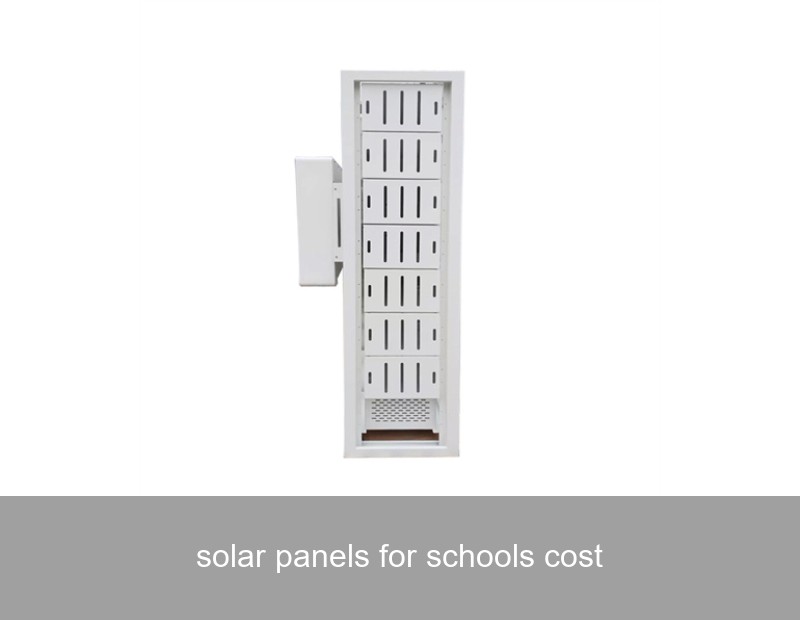
Highjoule's Intelligent Battery Energy Storage Systems (BESS) are designed to integrate seamlessly with school solar installations. Our solutions, like the Highjoule H-Series Commercial Stack, allow schools to:
- Store Excess Solar: Capture surplus energy generated during the day (e.g., on weekends) for use in the evening during events or for night-time security lighting.
- Maximize Self-Consumption: Dramatically increase the percentage of solar power used on-site, enhancing savings and independence from the grid.
- Ensure Uninterrupted Power: Provide backup power for key areas, ensuring safety and continuity.
- Optimize with AI: Our smart energy management software can predict usage patterns and automatically optimize when to store, use, or export energy for the greatest financial benefit.
For a school, adding a Highjoule BESS transforms a solar system from a simple cost-saver into a resilient, intelligent energy asset. We provide end-to-end support from design and financing guidance to installation and long-term monitoring, ensuring the total solar panels for schools cost delivers maximum educational and operational value.

Image: A modern battery energy storage system control room. Source: Unsplash
Making the Transition: Key Steps for Your School
Ready to explore this journey? A structured approach is key:
- Energy Audit & Feasibility Study: Analyze your school's energy consumption and site suitability.
- Financial Modeling: Calculate net costs, projected savings, and explore PPAs, grants, and incentives specific to your region. The DSIRE database is an excellent resource for US incentives.
- Stakeholder Engagement: Involve the school board, faculty, students, and community from the start.
- Select the Right Partners: Choose experienced, certified installers and technology providers like Highjoule who understand the educational environment.
- Integrate into Curriculum: Plan how the system will serve as an educational tool.
So, as you consider the future of your school's energy, infrastructure, and budget, what would your district do with an extra $50,000 to $100,000 in annual savings? And how would you inspire students with a living example of innovation right on their rooftop?
 Inquiry
 Online Chat