


Harnessing the Sun: A Guide to Solar Panels in Portugal for Home and Business
Imagine a country blessed with over 300 days of sunshine a year, where the potential for clean energy literally beams down from the sky. This isn't a futuristic vision; this is Portugal today. The adoption of solar panels in Portugal is accelerating at a remarkable pace, driven by abundant resources, supportive policies, and a growing public commitment to sustainability. But what does this solar revolution look like on the ground? For homeowners and businesses, it's a journey from high electricity bills and grid dependence to energy independence and cost savings. This article will illuminate the current landscape, the tangible benefits, and the smart technology that makes maximizing your solar investment in Portugal not just possible, but exceptionally rewarding.
Table of Contents
- The Portuguese Solar Boom: From Sunlight to Strategy
- Beyond the Panel: The Critical Role of Energy Storage
- Real-World Case Study: A Hotel's Path to Energy Independence
- Choosing the Right System for Your Needs in Portugal
- The Future is Bright and Smart
The Portuguese Solar Boom: From Sunlight to Strategy
Portugal's relationship with solar energy has evolved from early potential to a central pillar of its national energy strategy. The phenomenon is clear: solar capacity is skyrocketing. According to the Portuguese Directorate-General for Energy and Geology (DGEG), the country's installed solar photovoltaic capacity surged past 2.5 gigawatts (GW) in 2023, a figure that has more than doubled in just a few years and continues to climb rapidly. This growth is propelled by a powerful combination of factors. First, the sheer physical resource is undeniable. Southern Portugal, particularly the Algarve and Alentejo regions, boasts some of the highest solar irradiance levels in Europe, rivaling traditional sun-soaked leaders like Spain and Italy.
Second, supportive government frameworks, such as simplified licensing for self-consumption and the elimination of the "sun tax," have removed significant barriers for citizens and businesses. The European Union's ambitious REPowerEU plan further accelerates this shift, aiming to fast-track renewable permitting and installation. The data tells a compelling story: solar is no longer a niche alternative but a mainstream, cost-competitive source of power for the nation.
The Economic and Environmental Imperative
So, why are so many in Portugal making the switch? The answer lies in a dual win: economic resilience and environmental stewardship. Installing solar panels in Portugal directly shields you from volatile electricity market prices. By generating your own power, you fix a significant portion of your energy cost for the system's 25+ year lifespan. Environmentally, each kilowatt-hour generated from the sun displaces fossil fuel-based generation, reducing your carbon footprint. For businesses, this translates into enhanced ESG (Environmental, Social, and Governance) credentials, which are increasingly important to consumers and investors alike.
Beyond the Panel: The Critical Role of Energy Storage
Here's a common misconception: installing solar panels is the complete solution. In reality, the panels are only one part of a sophisticated energy ecosystem. The sun doesn't shine at night, but your energy needs don't pause. This is where the true game-changer comes in: the battery energy storage system (BESS). Think of your solar panels as a superb water collector, and a battery as the reservoir that stores the water for when you're thirsty in the evening.
Without storage, excess solar energy produced at midday is often fed back to the grid at low rates, only for you to buy expensive power from the grid after sunset. A high-quality storage system breaks this cycle, allowing you to store your surplus solar energy and use it on demand. This dramatically increases your self-consumption rate—the percentage of solar energy you use directly—from a typical 30-40% without a battery to 70% or even higher. This is the key to genuine energy independence and maximized savings.

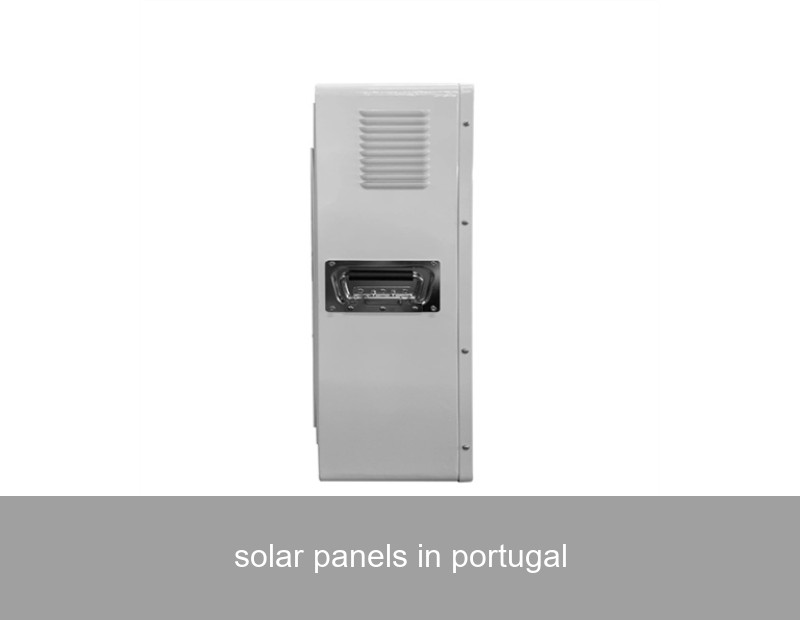
Image Source: Unsplash - A visual representation of a combined solar and storage installation typical in Mediterranean climates.
Highjoule's Intelligent Energy Storage Solutions
This is precisely where Highjoule, with nearly two decades of expertise, transforms the potential of solar panels in Portugal into a reliable, 24/7 power solution. We understand that every home and business has a unique energy profile. Our portfolio, from the compact Highjoule HomePower series for residences to the robust Highjoule Industrial Cube for commercial sites, is designed to integrate seamlessly with new or existing solar arrays. Our systems are built with industry-leading lithium iron phosphate (LFP) battery chemistry, prized for its safety, longevity, and stability. More than just hardware, our intelligent energy management system (EMS) acts as the brain of your installation, constantly learning your consumption patterns, optimizing charge/discharge cycles based on weather forecasts and time-of-use tariffs, and ensuring you get the absolute most from every ray of sunshine.
Real-World Case Study: A Hotel's Path to Energy Independence in the Algarve
Let's move from theory to practice with a concrete example. Consider a 120-room coastal hotel in the Algarve. Like many in the hospitality sector, its energy demands were substantial and costly: air conditioning, pools, laundry, and lighting created a steep and variable load profile, with peaks in the morning and evening.
The Challenge: High, unpredictable energy bills consuming a large portion of operational budget, and a desire to meet guest expectations for sustainable tourism.
The Solution: The hotel partnered with a local installer to deploy a 200 kWp solar carport system, coupled with a 240 kWh Highjoule Commercial Stack battery storage unit.
The Results (Data after 12 months):
| Metric | Result |
|---|---|
| Annual Electricity Cost Reduction | 68% |
| Self-Consumption Rate of Solar Energy | Increased from 35% to 82% |
| Grid Demand During Peak Evening Hours | Reduced by over 90% |
| Estimated CO2 Emissions Avoided | Equivalent to planting 1,200 trees annually |
The battery system strategically discharges during the high-rate evening peak, powering common areas and back-of-house operations. It also provides critical backup power, ensuring essential services remain online during brief grid outages—a valuable reassurance for guests. This case, mirrored by many across Portugal, illustrates that for commercial entities, solar and storage is not just an environmental choice, but a strategic financial investment with a compelling return.
Choosing the Right System for Your Needs in Portugal
Whether you're a homeowner in Lisbon or a factory manager in Porto, the principles of a good solar-plus-storage installation are similar. Here’s a simplified guide to your decision-making process:
- Assess Your Energy Profile: Analyze your last 12 months of electricity bills. Identify your average consumption (kWh) and, crucially, your peak demand patterns. A good installer will do this meticulously.
- Right-Sizing is Key: More panels aren't always better. The goal is to size your solar array to cover a significant portion of your annual consumption, considering your roof space. The battery should be sized to cover your critical evening/night load. An oversized system can lead to poor returns.
- Technology Matters: Insist on high-efficiency, Tier-1 solar panels with strong performance warranties. For the battery, focus on safety (LFP chemistry), cycle life (how many charge/discharge cycles it's guaranteed for), and the intelligence of the accompanying software. Highjoule systems, for instance, offer remote monitoring and control via a user-friendly app, giving you full visibility of your energy flows.
- Understand Incentives: While the major national incentives have evolved, local municipal programs and the significant reduction in VAT (from 23% to 6%) for solar installations in Portugal for self-consumption without storage remain powerful financial drivers. The European Investment Bank also provides funding for renewable projects.
The Future is Bright and Smart
The next frontier for solar panels in Portugal is integration into smart, resilient energy networks. Imagine a neighborhood where homes with Highjoule systems can form a virtual power plant (VPP), collectively stabilizing the local grid or sharing excess power during times of need. Vehicle-to-grid (V2G) technology, where electric car batteries can feed power back into your home or the network, is on the horizon. These advancements promise a future where every building is not just a consumer of energy, but an active, intelligent node in a cleaner and more robust power system. As noted by the International Energy Agency in their Renewables 2023 report, solar PV is set to dominate global capacity additions, and storage is the essential enabler of this transition.
Portugal's sun is a national treasure. The technology to capture, store, and intelligently manage its power is here and proven. The question is no longer "if" but "how optimally" you will participate in this energy transformation. What is the first step you will take to understand your own potential for energy independence under the Portuguese sun?
 Inquiry
 Online Chat