


Finding the Right Solar Panels New for Sale: A 2024 Buyer's Guide for Homeowners
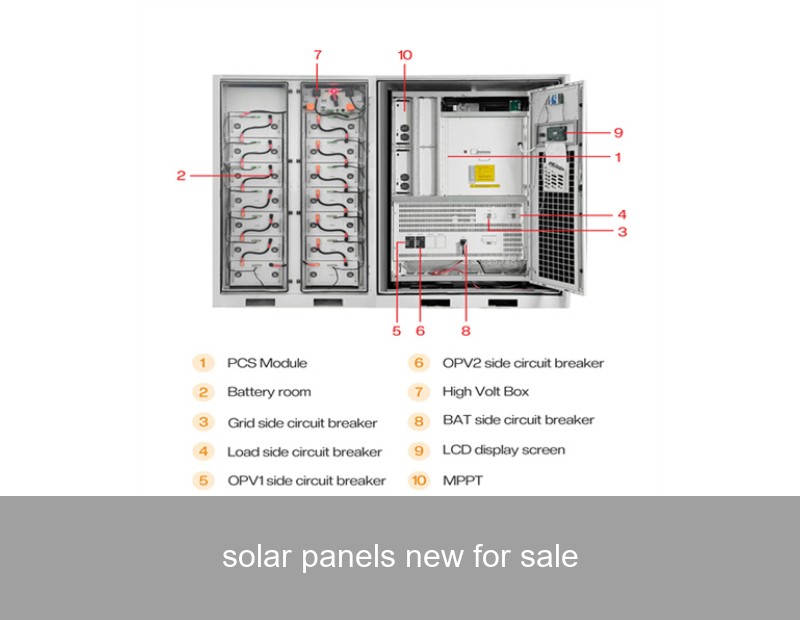
So, you're browsing for solar panels new for sale. It's an exciting step, but the sheer number of options, technical jargon, and bold promises can feel overwhelming. You're not just buying panels; you're investing in your energy independence, your property value, and a sustainable future. But with technology evolving rapidly, how do you ensure your investment remains efficient and valuable for the next 25+ years? This guide cuts through the noise. We'll explore the latest innovations, what "new" truly means in today's market, and how pairing your panels with the right battery system is no longer a luxury—it's the key to maximizing your return.
Table of Contents
- Beyond the Shiny Surface: What "New" Solar Technology Really Means in 2024
- The Data Doesn't Lie: Why Your New Solar Panels Need a Storage Partner
- Case Study: The Oxfordshire Family Who Turned Sunshine into Security
- The Intelligent Heart: Highjoule's Role in Your Modern Solar Ecosystem
- Your Next Step: Questions to Ask Before You Buy
Beyond the Shiny Surface: What "New" Solar Technology Really Means in 2024
When we talk about solar panels new for sale today, we're rarely discussing a simple incremental improvement. The market is shifting from seeking the cheapest price-per-watt to valuing long-term performance, resilience, and smart integration. Here’s what defines the current generation:
- N-Type TOPCon Cells: This is the current frontrunner in high-efficiency technology for residential use. N-type cells significantly reduce performance degradation over time compared to the older P-type PERC cells. This means your panels produce more power, especially in low-light conditions, and maintain their output for decades. When evaluating new panels, look for N-type technology—it's a marker of a manufacturer investing in the future.
- Bifacial Design: Imagine a panel that captures sunlight from both its front and back. Bifacial panels do exactly that, absorbing reflected light from your roof surface. While their full potential is unlocked on flat commercial roofs, they can offer a 5-15% yield boost in residential settings with reflective surfaces, making them a compelling "new" option.
- Built-In Resilience: Newer panels are engineered for harsher realities. This includes better resistance against potential-induced degradation (PID), micro-crack prevention, and higher hail impact ratings. Your investment is better protected against the elements from day one.
However, the most profound shift isn't on the roof—it's in the home. The most advanced panel is only half the equation. Its true potential is unlocked when paired with an intelligent energy management system.
The Critical Companion: Energy Storage
Purchasing solar panels new for sale without considering storage is like buying a high-performance sports car but only driving it in first gear. You're getting a fraction of the benefit. Modern solar isn't just about generation; it's about control.
The Data Doesn't Lie: Why Your New Solar Panels Need a Storage Partner
Let's look at the typical energy flow of a home with solar-only panels versus one with solar + storage. The phenomenon is clear: generation and consumption are out of sync.
| Time of Day | Solar Production | Home Energy Demand | Solar-Only Home Outcome | Home with Solar + Battery Outcome |
|---|---|---|---|---|
| Midday (Sunny) | Peak | Low (Often empty) | Excess power exported to grid at low feed-in tariffs. | Battery charges. Free energy stored for later. |
| Evening (6-10 PM) | None | Peak (Cooking, heating, TV) | Power must be purchased from the grid at peak rates. | Home runs on stored battery power, avoiding costly grid electricity. |
| Power Outage | Varies | Critical | System shuts down for safety. No power. | Battery provides seamless backup power to essential loads. |
According to the U.S. Department of Energy, adding storage can increase a homeowner's consumption of their own solar energy from 20-40% to over 80%. That’s a direct doubling or quadrupling of your self-sufficiency and a massive buffer against volatile utility rates, which have been a significant concern across both Europe and the United States.

Image Source: Unsplash (Representative image of a modern solar-powered home)
Case Study: The Oxfordshire Family Who Turned Sunshine into Security
Let's make this real. Meet the Thompson family in Oxfordshire, UK. In early 2023, they installed a 8.2 kW system using the latest N-type panels. Their goal wasn't just to reduce bills, but to gain energy security amidst rising costs and an older grid infrastructure.
The Challenge: Their solar-only design (pre-battery) showed they would export nearly 65% of their generation back to the grid during the day, only to buy expensive power every evening. Their return on investment timeline was over 12 years.
The Solution: They integrated a Highjoule H2 Series Hybrid Inverter and a 15 kWh Highjoule CubeStack Lithium-Iron-Phosphate (LFP) battery. The system was designed for intelligent self-consumption and backup.
The Data-Driven Result (First 12 Months):
- Self-Consumption Rate: Increased from 35% to 92%.
- Grid Import Reduction: Reduced evening grid purchases by 94%.
- Bill Impact: Achieved an average monthly electricity bill of £18, down from £142—despite a 28% increase in local grid rates that year.
- Unplanned Benefit: A local fault caused a 5-hour neighborhood outage in December. The Thompson's home seamlessly switched to battery power, keeping lights, heating, and internet running without interruption.
"The panels are fantastic, but the battery is what changed everything," said Sarah Thompson. "It turned our solar from a bill-reducer into a true home energy system. We feel in control." This case exemplifies the modern approach: panels + intelligent storage = resilience and maximized ROI.
The Intelligent Heart: Highjoule's Role in Your Modern Solar Ecosystem
At Highjoule, with nearly two decades of experience since 2005, we view the solar panels new for sale as the exceptional source of fuel. Our expertise lies in building the intelligent engine that stores, manages, and deploys that fuel exactly when and where you need it.
When you choose Highjoule as your storage partner, you're not just getting a battery box. You're getting a integrated system designed for compatibility, safety, and longevity:
- Highjoule CubeStack LFP Battery Systems: Our flagship residential storage solution uses ultra-safe Lithium Iron Phosphate chemistry, known for its long cycle life and thermal stability. It's modular, allowing you to start with what you need and expand later—perfectly future-proofing your investment alongside your new panels.
- H-Series Hybrid Inverters: The true brain of the operation. These devices don't just convert DC from your panels to AC for your home. They intelligently route every watt of energy: prioritizing direct home consumption, charging the battery, or exporting excess. Their grid-forming capability is what enables seamless backup power during outages.
- Highjoule Energy Management System (EMS): Our proprietary software platform gives you visibility and control. Through a simple app, you can monitor production, consumption, and storage levels, set preferences for backup or savings, and even receive updates on system health. It turns complex data into simple, actionable insights.
For homeowners investing in premium, new solar panels, pairing them with a Highjoule system ensures you extract their full value, day and night, in sunshine and storms.

Image Source: Unsplash (Representative image of a clean home battery installation)
Your Next Step: Questions to Ask Before You Buy
Armed with this knowledge, your search for solar panels new for sale becomes more strategic. When speaking with installers, move beyond price-per-watt and ask these critical questions:
- "Does your proposal include a detailed analysis of my self-consumption with and without a battery, using my actual usage data?"
- "What battery storage options do you offer, and which inverter technology ensures full compatibility and backup capability?"
- "Can you explain the battery's chemistry, warranty (in cycles and years), and its expected degradation over 10 years?"
- "How does the system's software allow me to monitor and control my energy flow?"
The energy landscape is shifting from centralised grids to empowered, resilient homes. Your decision today sets the course for decades.
Given that your new solar panels are a 25-year investment, what single energy goal—absolute independence, maximum financial return, or unwavering backup security—is most important for you to achieve in the first year?
 Inquiry
 Online Chat