


Powering Progress: How Solar Energy is Transforming Nueva Ecija's Corporations
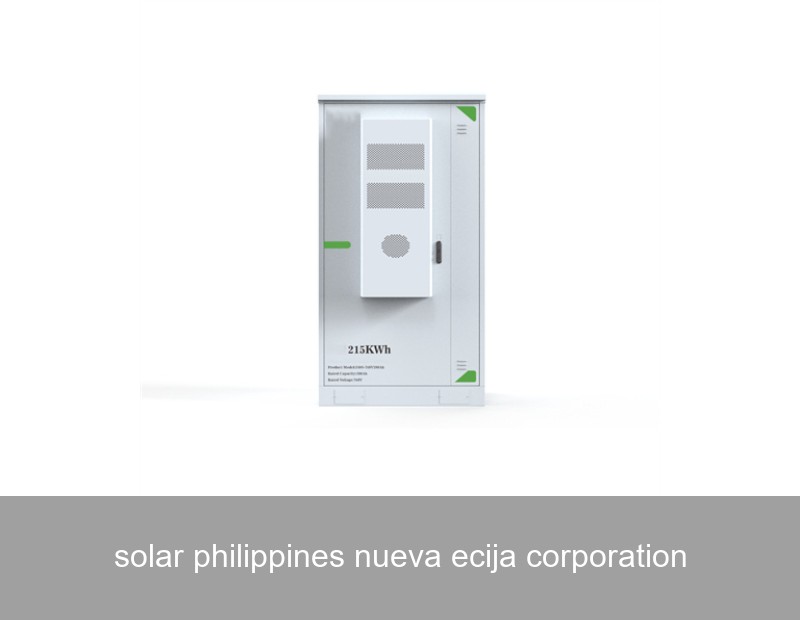
Table of Contents
- The Rice Granary Turns to the Sun
- The Corporate Energy Challenge: Cost, Reliability, and Responsibility
- The Solar + Storage Synergy: Beyond Daylight Savings
- Case Study: A Nueva Ecija Agro-Industrial Corporation's Journey
- Choosing the Right Solar and Storage System
- The Future of Corporate Energy in Nueva Ecija
Nueva Ecija, renowned as the Philippines' "Rice Granary," is witnessing a new kind of harvest. Corporations across the province are increasingly turning their rooftops and open spaces into power generators, leveraging solar energy in Nueva Ecija to fuel sustainable growth. For a corporation operating here, the equation is clear: rising and volatile energy costs directly impact operational margins and competitiveness. This shift isn't just about environmental stewardship; it's a strategic financial decision driven by the compelling economics of modern photovoltaic (PV) technology and advanced energy storage systems.
The Rice Granary Turns to the Sun
The Philippine landscape for business energy is complex. While the nation's energy mix is diversifying, reliance on imported fossil fuels still leads to some of the highest electricity rates in Southeast Asia. For a manufacturing plant, a cold storage facility, or a large-scale agricultural processing corporation in Nueva Ecija, the monthly utility bill represents a significant, and often unpredictable, overhead.

Image source: Unsplash - Representative image of commercial solar installation.
Solar energy presents a powerful antidote. The province's abundant sunlight offers a free and plentiful fuel source. By investing in a solar PV system, a corporation can lock in a significant portion of its energy costs for 25 years or more, shielding itself from market fluctuations. The initial capital expenditure transforms into a long-term asset that generates predictable, low-cost electricity.
The Corporate Energy Challenge: Cost, Reliability, and Responsibility
Let's break down the core challenges driving this shift:
- Financial Pressure: High grid electricity costs erode profit margins. Every peso saved on energy goes straight to the bottom line.
- Operational Reliability: Power interruptions, even brief ones, can halt production lines, spoil perishable goods, and lead to substantial revenue loss.
- Sustainability Goals: Stakeholders, from investors to consumers, now expect corporations to demonstrate tangible climate action. Reducing carbon footprint through renewable energy is a key metric.
- Energy Security: Generating your own power reduces dependency on the grid and provides a layer of security against broader energy supply issues.
The Solar + Storage Synergy: Beyond Daylight Savings
A solar-only system addresses the cost challenge during the day, but what about after sunset or during a grid outage? This is where Battery Energy Storage Systems (BESS) become a game-changer. Think of BESS as a high-tech reservoir for your solar electricity.
By pairing solar panels with a robust storage system, a Nueva Ecija corporation can:
- Maximize Self-Consumption: Store excess solar energy generated at noon and use it during the evening peak when grid rates are highest.
- Ensure Uninterrupted Power: Provide seamless backup power for critical loads, ensuring operations continue even during blackouts.
- Enhance Grid Services (for larger systems): Participate in demand response or grid stabilization programs, creating an additional revenue stream.
The technology behind these systems has advanced dramatically. Modern lithium-ion batteries, like those used by global leaders, are more efficient, compact, and longer-lasting than ever before. For authoritative data on solar and storage cost trends, the International Renewable Energy Agency (IRENA) provides excellent global benchmarks.
Case Study: A Nueva Ecija Agro-Industrial Corporation's Transformation
Consider the real-world example of a major rice milling and packaging corporation in Nueva Ecija. Facing an average monthly demand of 800 kW and crippling downtime from seasonal brownouts, they embarked on a comprehensive energy upgrade in 2023.
The Solution Deployed: A 1.2 MWp rooftop and carport solar PV system was integrated with a 500 kWh / 1000 kW containerized battery storage system. This wasn't just an assortment of parts; it was a unified solar Philippines smart energy solution managed by an intelligent energy management system (EMS).
The Results (12-Month Period):
| Metric | Result | Impact |
|---|---|---|
| Grid Electricity Consumption | Reduced by 78% | Massive direct cost savings |
| Energy Cost per kWh | Lowered by 64% | Predictable, lower operating cost |
| Production Downtime from Outages | Eliminated | Zero spoilage, continuous operation |
| Carbon Footprint | Reduced by ~1,500 tons CO2e annually | Met ESG targets ahead of schedule |
The project's payback period was calculated at under 5 years, turning an energy expense into a high-return investment. The corporation now views its energy infrastructure as a strategic asset, not just a utility.
Choosing the Right Solar and Storage System
Not all energy solutions are created equal. For a corporation, the key is to move beyond commodity equipment to a true system. Key considerations include:
- System Intelligence: Can the solar inverters and BESS communicate seamlessly? Is there an EMS that optimizes for cost, consumption, and resilience automatically?
- Scalability: Can the storage system be easily expanded as your energy needs grow?
- Safety and Standards: Are the batteries and power conversion systems certified to the highest international safety standards (e.g., UL, IEC)?
- Local Support: Who will provide the engineering, installation, and long-term maintenance? This is critical for maximizing system uptime and lifespan.
For insights into safety standards for energy storage, the National Fire Protection Association (NFPA) provides crucial codes like NFPA 855.
The Highjoule Solution: Intelligent Energy for Forward-Thinking Businesses
This is where Highjoule's expertise becomes pivotal. Since 2005, we have been at the forefront of advanced energy storage, designing solutions that make solar power truly reliable and economical for commercial and industrial clients worldwide. We understand that a corporation in Nueva Ecija needs more than just panels and batteries; it needs a guaranteed outcome.
Highjoule's integrated solar Philippines offering for large-scale applications includes:
- Highjoule HPS Series Containerized BESS: Pre-engineered, plug-and-play units that combine our proprietary battery management, power conversion, and climate control in a secure, ISO-standard container. They are scalable from 500 kWh to multiple MWh, perfect for the load requirements of a large agro-industrial facility.
- Intelligent Energy Management Software: The brain of the operation. Our platform uses AI-driven algorithms to forecast energy generation and consumption, deciding in real-time when to charge, discharge, or hold energy to achieve the lowest possible cost while ensuring backup readiness.
- Global Expertise, Local Partnership: We work through certified local engineering and procurement partners in the Philippines, ensuring our world-class technology is supported by on-the-ground expertise for installation, commissioning, and lifecycle maintenance.

Image source: Unsplash - Representative image of a containerized BESS unit.
For a corporation, this translates to a turnkey solution. Highjoule manages the complexity of the storage system, allowing your team to focus on its core business, all while reaping the financial and operational benefits of a fully optimized solar-plus-storage plant.
The Future of Corporate Energy in Nueva Ecija
The transition underway in Nueva Ecija is a microcosm of a global shift. The corporation of the future is not just a consumer of grid power but an active manager of its own intelligent, resilient, and clean energy microgrid. Technologies like vehicle-to-grid (V2G) and advanced grid-forming inverters will further deepen this integration.
The question for business leaders in the region is no longer *if* to adopt solar, but *how to design the most intelligent and resilient system* to maximize return. It's about building energy infrastructure that serves as a competitive moat for decades.
Is your corporation ready to analyze its specific load profile, rooftop space, and operational goals to model the exact financial and operational return a tailored solar-plus-storage system could deliver?
 Inquiry
 Online Chat