


Why Partnering with a Leading Solar Power Company in China is a Strategic Move for Global Energy Independence
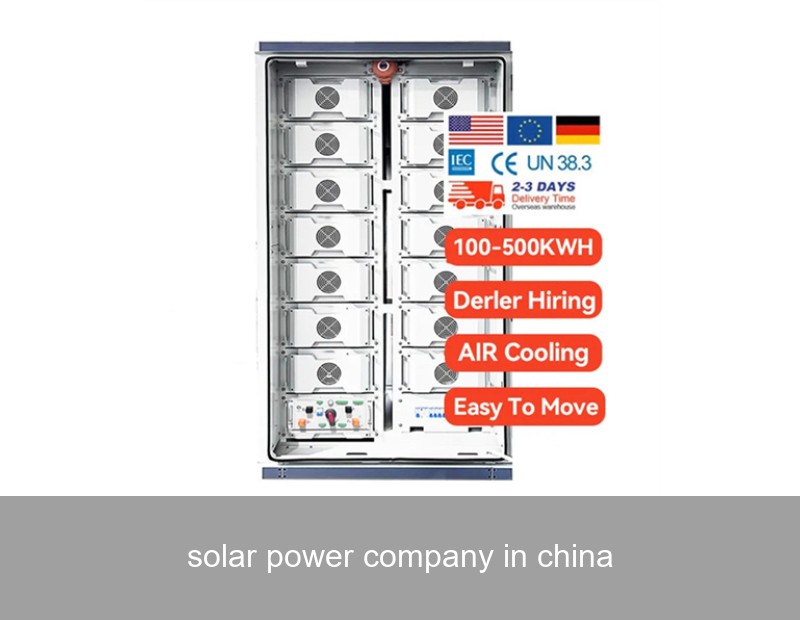
You've likely noticed the headlines: energy prices are volatile, climate goals are pressing, and the demand for reliable, clean power has never been higher. For businesses and communities in Europe and the US, achieving energy independence isn't just an ideal—it's an economic and operational imperative. While local installers are crucial, there's a powerful, often overlooked lever in this equation: strategic technology sourcing from a world-class solar power company in China. This isn't just about panels; it's about accessing integrated, innovative, and cost-competitive ecosystem solutions that can de-risk your entire energy transition.
Table of Contents
The Phenomenon: Beyond the Solar Panel
Think of a solar power company in China a decade ago. The image was singular: photovoltaic (PV) module manufacturing. Today, that picture is dramatically different. Leading Chinese solar companies have vertically evolved into total energy solution providers. They are mastering the entire chain—from high-efficiency cells and bifacial panels to smart inverters and, most critically, advanced battery energy storage systems (BESS). This shift addresses the core weakness of standalone solar: intermittency. The sun doesn't always shine when you need power, so pairing generation with storage is non-negotiable for true resilience.
For a European manufacturer or a US utility, this means you're no longer just buying components. You're potentially accessing a pre-integrated, intelligently managed power system designed to maximize self-consumption, provide backup, and even enable grid services.
The Data: Scale, Innovation, and Global Impact
The numbers are staggering and tell a story of overwhelming market and technological leadership. According to the International Energy Agency (IEA), China's share in all key manufacturing stages of solar panels exceeds 80% (IEA, Solar PV Global Supply Chains Report). But more than scale, it's about relentless R&D driving down costs and pushing efficiency boundaries.
- Technology Leadership: Chinese firms consistently set records for cell efficiency (like perovskite-silicon tandems) and are leading the commercialization of technologies like TOPCon and HJT.
- Cost Competitiveness: This scale and innovation create a levelized cost of electricity (LCOE) for solar that is often unbeatable, a critical factor for any large-scale commercial or industrial project.
- Storage Integration: The natural progression has been into batteries. Leveraging their expertise in power electronics and the domestic scale of lithium-ion production, top solar companies now offer seamless PV-storage hybrids.
However, navigating this landscape requires expertise. Not all storage solutions are created equal, and system integration is where global experience matters immensely.
A Real-World Case Study: The Bavarian Industrial Park
Consider a mid-sized industrial park in Bavaria, Germany. Facing rising grid tariffs and ambitious corporate sustainability targets, they partnered with a major solar power company in China for a 5 MW rooftop PV array. The solar generation was impressive, but without storage, over 40% was being exported to the grid at low feed-in tariffs, missing the opportunity for greater self-use and peak shaving.
| Challenge | Action | Outcome (12 Months Post-Storage) |
|---|---|---|
| High grid consumption during peak hours | Integrated a 2.5 MWh DC-coupled battery storage system | Peak grid load reduced by 68% |
| Low self-consumption of solar power | Added intelligent energy management system (EMS) for forecasting and optimization | Self-consumption rate increased from 58% to 92% |
| Need for backup power for critical processes | Configured storage for islanding capability during grid outages | Achieved >99.9% power reliability for critical lines |
The project's ROI improved by nearly 30% with the added storage. The Chinese partner provided the integrated PV and storage hardware platform, but the park's operator worked with a specialized global system integrator for local grid compliance, safety certification, and long-term performance management. This hybrid approach leveraged the best of both worlds.

Image: Modern industrial solar installations, like this one, achieve maximum value when paired with intelligent storage. (Credit: Unsplash)
The Strategic Insight: The Integrated Solution Advantage
The case study reveals the key insight: the future is not in siloed components, but in optimized, interoperable systems. A leading solar power company in China excels at providing the core generation and storage hardware as a cohesive unit. This "DC-coupled" architecture, often designed together from the ground up, can be more efficient and cost-effective than piecing together separate brands of solar, inverters, and batteries.
But the hardware is just the beginning. The real magic is in the software—the Energy Management System (EMS). A sophisticated EMS, like the ones integrated into these solutions, acts as the brain, making real-time decisions to:
- Store excess solar energy instead of selling it cheaply.
- Discharge batteries during expensive peak tariff periods.
- Provide frequency regulation services to the grid for additional revenue (in markets that allow it).
- Ensure seamless backup power during outages.
Where Highjoule Fits In: Your Bridge to Advanced Storage
This is where a partner like Highjoule becomes invaluable. While you might source advanced PV modules from a solar power company in China, your energy resilience demands storage expertise that meets the highest international standards for safety, longevity, and grid interaction. Highjoule, as a global leader in advanced BESS since 2005, complements this perfectly.
We specialize in high-performance, containerized and modular battery storage systems for C&I and utility applications. Imagine a scenario where you use high-efficiency Chinese PV modules but pair them with a Highjoule BESS. Our systems are built with industry-leading thermal management, safety protocols (like NFPA 855 compliance), and grid-forming inverters that ensure stable microgrid operation. Our AI-driven energy management platform can orchestrate the entire hybrid system, maximizing your financial return and reliability.
For a client in the US or Europe, this means you get a best-in-class, optimized solution: cutting-edge solar generation coupled with battle-tested, locally supported storage intelligence. Highjoule acts as your trusted integrator and storage specialist, ensuring the complete system performs as promised for decades.

Image: A containerized BESS, like those from Highjoule, provides scalable, safe, and grid-ready storage for large-scale solar integration. (Credit: Pexels)
Making the Strategic Move: Key Considerations
So, how do you explore this strategic path? Here’s a quick guide:
- Look for Ecosystem Players: When evaluating a solar power company in China, prioritize those with proven, in-house storage and EMS capabilities, not just panel resellers.
- Demand International Certifications: Ensure all equipment (especially batteries and inverters) carries relevant UL, IEC, or equivalent certifications for your market.
- Plan for Local Integration: Partner with a firm like Highjoule early in the process. We ensure the storage component is perfectly sized, compliant, and integrated with local grid codes and your energy management objectives.
- Focus on Total Lifetime Value: Evaluate the total system LCOE, including maintenance, degradation, and potential revenue streams from grid services, not just the upfront capital cost.
Research from sources like BloombergNEF consistently shows that solar-plus-storage is becoming the default for new projects due to its superior economics and resilience.
Your Next Step
The journey to energy independence is complex, but the tools are more powerful and accessible than ever. By strategically combining the technological prowess of a top-tier solar power company in China with the specialized storage and integration expertise of a global provider like Highjoule, you create a hybrid solution that is greater than the sum of its parts. What specific energy challenge—be it peak demand charges, backup power needs, or a hard-to-meet sustainability target—could this combined approach solve for your operation?
 Inquiry
 Online Chat