


Choosing the Right Solar Power Station Distributor: A Guide for Sustainable Growth
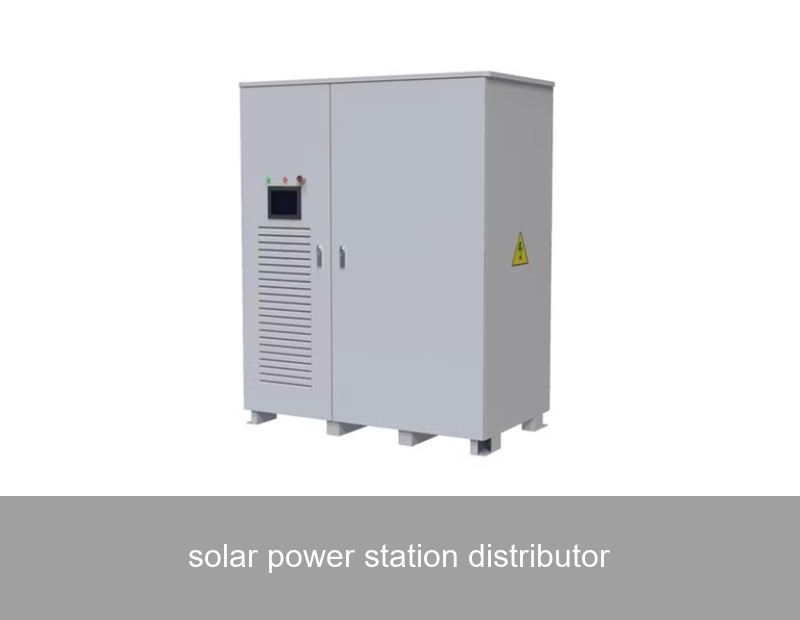
As the global energy landscape pivots decisively towards renewables, the choice of a solar power station distributor has evolved from a simple procurement decision to a critical strategic partnership. For businesses, communities, and energy developers across Europe and the U.S., this partner doesn't just supply hardware; they deliver the reliability, intelligence, and long-term performance that underpins a successful clean energy transition. Let's explore how the right distributor can unlock the full potential of your solar investment.
Table of Contents
- The Phenomenon: More Than Just Panels on a Roof
- The Data: Why System Integration is the Real Game Changer
- The Case Study: A European Logistics Hub's Transformation
- The Solar Power Station Distributor: Your Gateway to Integrated Solutions
- The Highjoule Approach: Intelligence Built-In
- Making the Choice: Key Questions for Your Distributor
The Phenomenon: More Than Just Panels on a Roof
Gone are the days when a solar installation was a standalone array. Today, a modern solar power station is a sophisticated, interconnected energy asset. It's designed not only to generate power but to store it, manage its flow, interact with the grid, and provide resilience. The distributor you choose must understand this holistic system. They are the crucial link between leading-edge technology manufacturers and your specific site requirements, ensuring every component—from PV modules and inverters to the essential battery storage system—works in perfect harmony.
The Data: Why System Integration is the Real Game Changer
Consider this: The U.S. Energy Information Administration (EIA) projects that battery storage capacity will grow significantly alongside solar, a trend mirrored in Europe. Why? Because without storage, a typical commercial solar system might only directly cover 30-40% of a site's energy load. With a seamlessly integrated battery energy storage system (BESS), that figure can soar to 80% or higher. The key metric is no longer just "kW of solar installed," but "percentage of energy independence achieved." This shift demands a distributor with deep expertise in system design and software controls, not just component logistics.

Modern solar farms are increasingly integrated with storage, requiring distributors to provide complex system solutions. (Image: Unsplash)
The Case Study: A European Logistics Hub's Transformation
Let's look at a real-world example from Germany. A major logistics company operating a 50,000 sqm warehouse near Frankfurt had a 1.2 MW rooftop solar array. Despite the large installation, they were still subject to high grid demand charges and had no backup power. Their existing solar power station distributor could only offer more panels, not a solution to these core financial and operational problems.
They partnered with a new, solution-oriented distributor who conducted a detailed energy analysis. The recommendation was a 500 kWh/250 kW battery storage system to be integrated with the existing solar. The results after one year were compelling:
| Metric | Before Integration | After Integration |
|---|---|---|
| Solar Self-Consumption | 35% | 89% |
| Peak Grid Demand | 950 kW | 520 kW |
| Annual Energy Cost Savings | €180,000 | €310,000 |
| Backup Power for Critical Operations | None | Up to 8 hours |
This case underscores that the value of a distributor lies in diagnosing energy pain points and prescribing integrated systems, not just selling discrete components.
The Solar Power Station Distributor: Your Gateway to Integrated Solutions
So, what should you expect from a top-tier distributor in today's market?
- Technical Advisory & System Design: They must provide consultative support, designing systems that optimize for your goals—be it maximizing ROI, achieving net-zero, or ensuring uptime.
- Technology Agnosticism (with Curated Quality): While they may have strong partnerships, their focus should be on matching the best-fit technology from reputable manufacturers to your project, not pushing a single brand.
- Supply Chain & Logistics Mastery: Especially crucial post-pandemic, reliable delivery and inventory management for complex systems are non-negotiable.
- Software & Connectivity Expertise: The "brain" of the system is the energy management software. A good distributor ensures this platform is user-friendly, scalable, and integrates with your existing infrastructure.
The Highjoule Approach: Intelligence Built-In
At Highjoule, we've built our global distribution and partnership network on this very principle of integrated intelligence. Since 2005, we've understood that a solar power station is only as good as its ability to deliver reliable, controllable, and economical power. That's why our product suite, available through certified distributors, is engineered for synergy.
Our H-Series Commercial Battery Storage Systems are designed from the ground up for seamless solar integration. With features like advanced cycle life and built-in safety protocols, they are the perfect complement to any PV array. More importantly, they are governed by our Highjoule Energy Operating System (HEOS). This AI-driven platform doesn't just monitor; it actively learns your energy patterns, forecasts production and consumption, and automatically dispatches storage to maximize self-consumption, shave peak demand, or participate in grid services where available—all without manual intervention.
For a solar power station distributor, offering Highjoule solutions means providing clients with a future-proofed asset. It's a complete package: top-tier hardware, intelligent software, and the expert support to tie it all together, whether for a large industrial facility, a chain of retail stores, or a community microgrid.

Advanced battery storage systems, like Highjoule's H-Series, are the cornerstone of a modern, intelligent solar power station. (Image: Unsplash)
Making the Choice: Key Questions for Your Distributor
Engaging with a potential solar power station distributor? Move beyond price-per-watt discussions. Here are critical questions to ask:
- "Can you provide a detailed energy analysis and financial model for a solar-plus-storage system, not just solar alone?"
- "What is your process for ensuring the battery storage system is safely and optimally integrated with the solar PV and existing electrical infrastructure?"
- "What energy management software do you recommend, and can you demonstrate its reporting and control features?"
- "Do you offer ongoing performance monitoring and support, and what does that partnership look like in 5 or 10 years?"
- "Can you share case studies with verified performance data from installations similar to mine?"
As the National Renewable Energy Laboratory (NREL) has highlighted, the benefits of solar-plus-storage extend beyond economics to include resilience and equity, goals that require thoughtful system design.
The journey to true energy independence is exciting, but its success hinges on the expertise of your partners. The right solar power station distributor acts as your guide, architect, and long-term ally. What energy challenge will you solve first with a truly intelligent solar power station?
 Inquiry
 Online Chat