


Navigating the Solar Surge: How to Choose the Right Solar Surge Supplier for Your Energy Independence
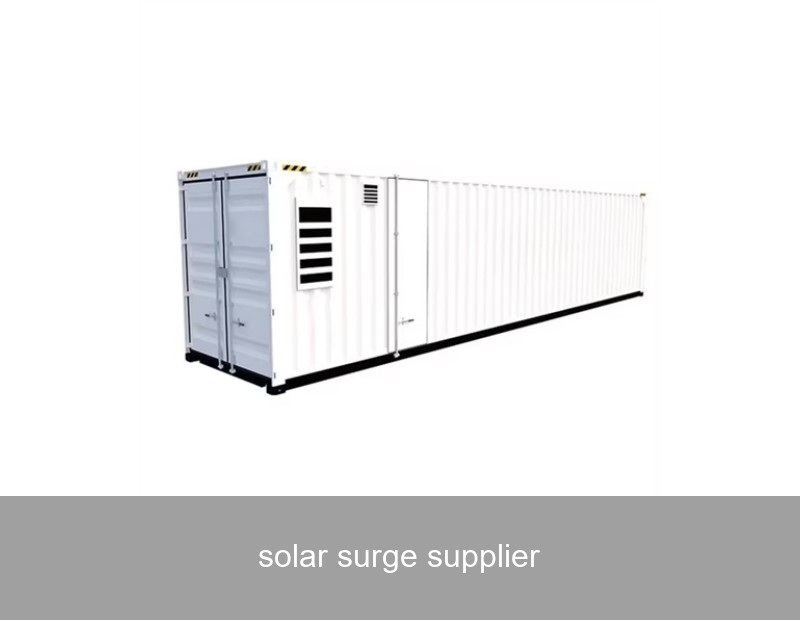
The sun is delivering more power than ever to homes and businesses across Europe and North America. This isn't just a metaphor; global solar photovoltaic (PV) capacity is skyrocketing, driven by energy security concerns, climate goals, and compelling economics. But as this solar surge accelerates, a critical question emerges for project developers and energy managers: Who provides the backbone that makes this renewable energy reliable? The true enabler of this transition isn't just the panels on the roof—it's the sophisticated solar surge supplier that delivers the integrated battery storage and energy management systems. Choosing the right partner is what transforms intermittent sunlight into a dependable, 24/7 power asset.
Table of Contents
The Phenomenon: More Than Just Panels
Walk through any suburban neighborhood in California or scan the rooftops of industrial warehouses in the Rhineland, and you'll witness the solar surge firsthand. The initial driver is clear: capturing free, abundant sunlight. However, the sun's schedule doesn't align with our energy consumption peaks—the famous "duck curve" challenge. This creates a paradox: you can generate excess energy at noon when demand is low, only to face a shortfall in the evening. This fundamental mismatch is where the role of a solar surge supplier evolves from simply providing equipment to delivering a comprehensive capacity solution.

Image Source: Unsplash - Representative image of residential solar adoption.
The Data: Why Storage is Non-Negotiable
The numbers paint a compelling picture. According to the International Energy Agency (IEA), global renewable capacity additions jumped by almost 50% in 2023, with solar PV accounting for three-quarters of this growth. In the U.S., the Solar Energy Industries Association (SEIA) reports that the market is expected to quadruple by 2030. Yet, the value of this energy is increasingly tied to flexibility.
Consider this: A study by the U.S. Department of Energy highlights that achieving high solar penetration (40-50% of annual demand) cost-effectively requires sufficient storage to shift 6-12 hours of energy. This isn't a niche feature; it's the core of a resilient energy strategy. Without it, grid instability risks increase, and the financial returns on solar investments are capped.
| Driver | Impact Without Storage | Benefit With Storage |
|---|---|---|
| Energy Self-Consumption | Excess solar exported at low, variable rates. | Store noon surplus for evening use, increasing self-use to 70%+. |
| Grid Stability & Demand Charges | High import from grid during peaks, incurring massive demand charges for businesses. | Discharge battery during peak periods, slashing demand charges by 30-50%. |
| Backup Power Resilience | Grid outage = complete shutdown, even with solar (safety anti-islanding). | Seamless transition to backup power for critical loads during outages. |
The Case Study: A German Industrial Park's Solution
Let's ground this in reality with a project from Bavaria, Germany. A mid-sized manufacturing park with a 500 kWp rooftop solar system faced a dual challenge: their solar generation often exceeded their midday operational load, and they were subject to steep peak demand charges based on their highest 15-minute grid draw each month.
They partnered with a qualified solar surge supplier to design a turnkey solution. The supplier deployed a 600 kWh battery energy storage system (BESS) alongside an advanced energy management system (EMS). The EMS intelligently decides, in real-time, whether to charge the batteries, power the facility, or sell to the grid based on weather forecasts, tariff structures, and production schedules.
The Results (12-month post-installation):
- Self-Consumption Rate: Increased from 35% to 82%.
- Peak Demand Charges: Reduced by an average of 41%.
- ROI Period: Achieved in under 5 years, factoring in German subsidy programs.
- Carbon Footprint: Additional 120 tonnes of CO2 avoided annually.
This case exemplifies the shift from a solar generator to a smart, grid-interactive energy asset.
The Modern Solar Surge Supplier: Beyond Hardware
Today's leading solar surge supplier is a technology integrator and a long-term partner. They must offer:
- Integrated System Design: Ensuring solar inverters, batteries, and EMS speak the same language for optimal performance.
- Advanced Battery Technology: Offering lithium-ion phosphate (LFP) chemistry for safety, longevity (10,000+ cycles), and wide operating temperatures.
- Intelligent Software: The brain of the operation, enabling energy arbitrage, peak shaving, and grid services participation.
- Comprehensive Services: From feasibility studies and financing support to long-term performance monitoring and maintenance.
Highjoule's Role as Your Strategic Partner
At Highjoule, with nearly two decades of experience since 2005, we embody this evolved definition of a solar surge supplier. We don't just sell components; we deliver Certainty in Every Cycle through our end-to-end solutions.
For commercial and industrial clients, our H-Series C&I Battery Systems are engineered for high-power, high-cycle applications. Their modular design allows for scalable capacity from 100 kWh to multi-MWh, perfect for managing demand charges and providing backup power. Coupled with our Helios Energy Management Platform, the system autonomously optimizes energy flows for maximum financial return.

Image Source: Unsplash - Representative image of a modern industrial battery storage installation.
For residential and microgrid applications, our HomePower+ systems provide seamless integration with existing solar arrays, turning homes into resilient hubs. Our software allows homeowners to set preferences—whether to maximize self-sufficiency, optimize for time-of-use rates, or ensure backup power for essential circuits.
How to Future-Proof Your Solar Investment
As you evaluate your options in this booming market, here are the critical questions to ask any potential solar surge supplier:
- System Intelligence: "Can your EMS integrate weather forecasting and real-time grid pricing, and how is it updated over time?"
- Total Cost of Ownership: "Beyond the upfront price, what is the projected degradation rate of the batteries over 10-15 years, and what are the maintenance costs?"
- Warranty & Support: "Does your warranty cover both performance retention and defects, and what is your local service response time?"
- Interoperability: "Is your system designed to integrate with future technologies, like EV charging stations or additional renewable sources?"
The energy landscape is dynamic. Your partner should help you navigate not just today's needs but tomorrow's opportunities, such as participating in virtual power plants (VPPs) or frequency regulation markets.
Ready to Elevate Your Solar Project?
The solar surge is here. The question is no longer just about installing panels; it's about building a smart, resilient, and profitable energy ecosystem. As you plan your next step, consider this: What specific energy challenge—be it unpredictable demand charges, reliability concerns, or sustainability targets—could a truly intelligent storage solution solve for you today?
 Inquiry
 Online Chat