


"Solarig España How Much?" Decoding the Cost of Solar Power in Spain
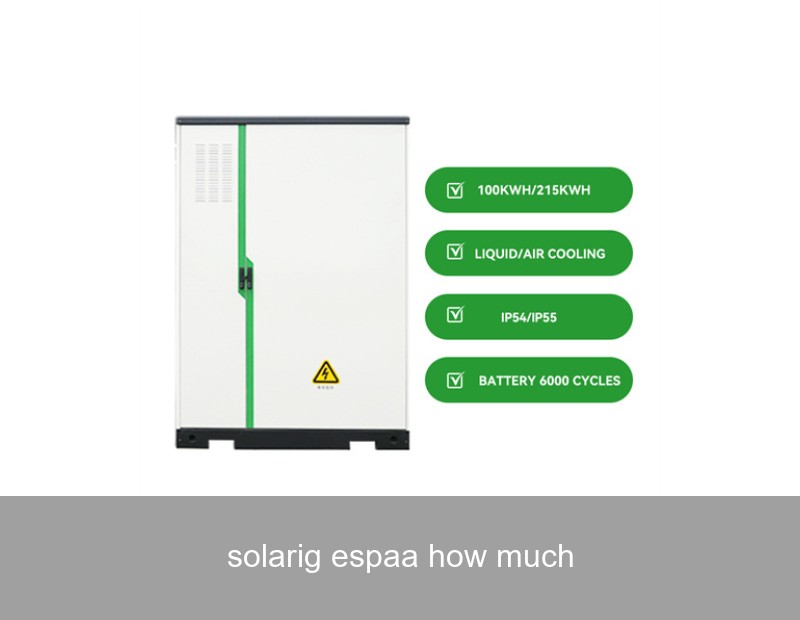
If you're searching for "Solarig España how much?", you're likely a homeowner or business owner in Spain standing at the threshold of an exciting decision: investing in solar energy. It's a smart move, given Spain's abundant sunshine and rising electricity prices. But that initial question, "how much?", is the crucial first step. The answer isn't a single number, but rather a personalized equation based on your energy needs, property, and ambitions for energy independence. In this guide, we'll demystify the costs, explore the components that truly matter, and show how modern technology like intelligent battery storage can maximize your investment.
Key Factors That Determine the Cost of a Solar System in Spain
Think of a solar installation not just as panels on your roof, but as a complete energy ecosystem. The final price tag depends on several interconnected variables:
- System Size (kWp): This is the peak power output. A typical Spanish household might need a 4-6 kWp system, while a larger villa or a small business could require 10 kWp or more. Your historical electricity consumption is the best starting point.
- Component Quality: Not all solar panels and inverters are created equal. Higher-efficiency panels from tier-one manufacturers may cost more upfront but generate more power over a longer, guaranteed lifetime.
- Installation Complexity: Roof type, accessibility, and necessary electrical upgrades can influence labor costs.
- The Storage Factor: This is the game-changer. Adding a battery storage system increases the initial investment but dramatically boosts self-consumption and protection against blackouts. The choice of battery technology and capacity is a major cost driver.
According to data from the International Renewable Energy Agency (IRENA), the cost of solar PV has fallen dramatically globally, making the base technology more accessible than ever. However, the value now lies in optimizing the entire system.
Typical Price Ranges (Before Incentives)
| System Type | Approximate Size | Estimated Price Range (VAT Included) | Primary Use Case |
|---|---|---|---|
| Residential without Battery | 4-6 kWp | €6,000 - €10,000 | Reducing daytime grid consumption |
| Residential with Battery | 5 kWp + 5 kWh storage | €10,000 - €15,000+ | High self-consumption, backup power, night-time use |
| Commercial/Industrial | 20-100 kWp+ | €20,000 - €80,000+ | Substantial bill reduction, operational sustainability |
Breaking Down the Numbers: A Real-World Spanish Case Study
Let's move from theory to practice. Consider the case of the Rodríguez family in Valencia. They live in a detached house with an average monthly consumption of 350 kWh. Their goal was to slash their electricity bill and gain resilience.
- Phenomenon: High evening consumption (when solar production drops) and anxiety during occasional grid outages.
- Solution & Data: They installed a 5.8 kWp solar array paired with a 10 kWh lithium iron phosphate (LiFePO4) battery storage system. The total installed cost was approximately €13,500 (after applying regional deductions available at the time).
- Result: Their self-consumption rate jumped from ~40% (panels alone) to over 85%. They now save an estimated €1,200 annually on their electricity bill, projecting a payback period of around 10-11 years. More importantly, they have secure backup power for essential loads. "The peace of mind during a storm, knowing our lights and fridge stay on, was worth the investment alone," notes Mr. Rodríguez.

Image: A well-integrated solar installation on a Spanish home. Source: Unsplash (Representative image)
Beyond Panels: The Critical Role of the Battery Storage System
As the case study shows, the battery is the brain and bank of your solar system. It's what transforms a simple cost-saving setup into a true energy independence asset. In Spain, with its excellent net metering framework but also time-of-use tariffs, a smart battery allows you to:
- Store Excess Daytime Energy: Use your solar power at night, not just send it all to the grid.
- Avoid Peak Tariffs: Program the system to use stored battery power during expensive evening hours.
- Ensure Backup Power: Keep critical appliances running during grid outages.
The technology inside the battery matters immensely. Cheaper, older battery chemistries may degrade faster and offer less usable capacity. This is where choosing a provider with deep expertise in battery management systems (BMS) is critical for safety, longevity, and performance.
The Highjoule Solution: Intelligent Energy Management for Spain
At Highjoule, we've been pioneering advanced energy storage solutions since 2005. We understand that the question "Solarig España how much?" is really about value, not just price. For the Spanish market, we offer our HES (Highjoule Energy Stack) solutions, which are designed to maximize the return on every euro invested in solar.
Our systems go beyond basic storage. The Highjoule Intelligent Energy Management System (iEMS) acts as the conductor of your personal energy orchestra. It learns your consumption patterns, forecasts solar production, and intelligently decides when to charge the battery, power your home, or export to the grid—always optimizing for your financial benefit and comfort.
- For Homes: Our HES-H Series residential units feature ultra-safe LiFePO4 batteries, scalable capacity, and seamless integration with existing or new solar installations. They are built for the long haul, with a compact design suitable for Spanish homes.
- For Businesses: The HES-C&I Series helps Spanish businesses and industrial facilities manage demand charges, participate in flexibility services, and create a more resilient and sustainable operation.

Image: A modern, wall-mounted battery storage system like Highjoule's HES-H Series. Source: Unsplash (Representative image)
Maximizing Your Return: Incentives and Smart Strategies
To accurately answer "how much," you must subtract available incentives. Spain offers several mechanisms to improve affordability:
- NextGeneration EU Funds & Regional Programs: Various autonomous communities offer direct grants (deductions) for solar and storage installations. These can cover a significant percentage of the cost.
- VAT Reduction: A reduced 10% VAT applies to solar installations for residential properties.
- Net Metering / Net Billing: The compensation for surplus energy fed into the grid improves the economics. A good battery system means you export less valuable excess and use more of your own cheap, clean power.
Our advice? Always get a detailed, site-specific audit. A reputable installer (like Highjoule's certified partner network) will analyze your last 12 months of bills, assess your roof, and model different system configurations—with and without storage—to show you the precise financial and energy outlook.
Your Path to Energy Independence
So, "Solarig España how much?" The journey to your answer starts with understanding your own energy profile and defining your goals. Is it purely about the fastest payback, or is resilience and total energy independence a priority? The market has moved from simply installing panels to designing intelligent, adaptive energy systems.
We invite you to consider this: What would energy security and predictable, low energy costs mean for your home or business over the next 20 years? To move from a generic search to a concrete plan, the next step is to connect with experts who can translate sunshine into your specific savings and security figures.
Are you ready to calculate your personalized "how much" and explore how an intelligent Highjoule storage system can transform your solar investment?
 Inquiry
 Online Chat