


Solar Panels: How Much Do They Really Cost? A Complete Breakdown
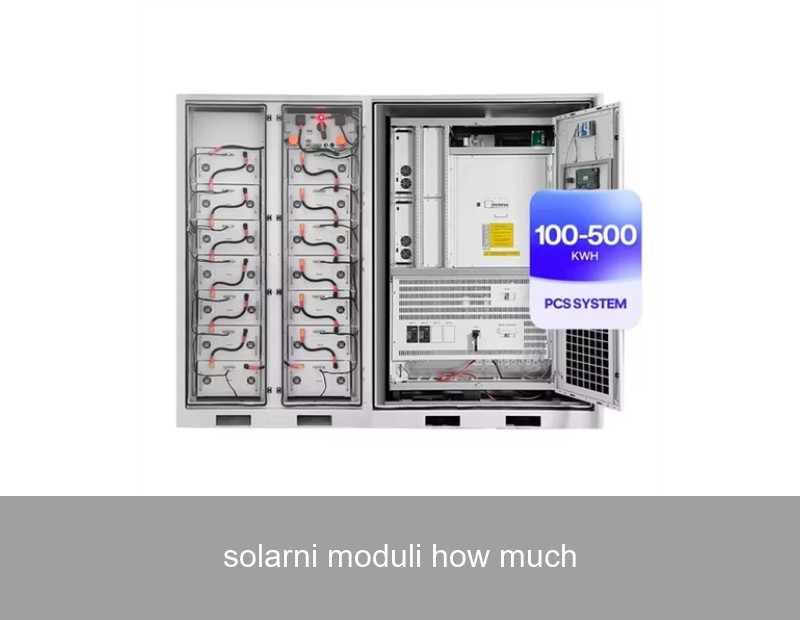
So, you're thinking about going solar. It's a fantastic decision, promising energy independence and lower bills. But the first question that pops into everyone's mind is: "Solarni moduli, how much?" (or "Solar panels, how much?"). The answer, like many good things, isn't a single number. It's a journey from the initial sticker price to the long-term value. Let's demystify the true cost of solar energy, moving beyond the price tag to understand the investment.
Table of Contents
- The Price Puzzle: It's More Than Just Panels
- Key Factors That Determine Your Solar Panel Cost
- The Game Changer: Adding Battery Storage to the Equation
- A Real-World Case: The Munich Bakery's Solar & Storage Success
- Looking Beyond Initial Cost: ROI and Long-Term Value
- Making It Happen: Your Path to a Smart Solar Investment
The Price Puzzle: It's More Than Just Panels
Asking "how much for solar panels?" is like asking "how much for a house?" It depends. A quoted price per watt or per panel is just the beginning. The total system cost encompasses hardware, soft costs, and crucially, your goals. Are you just offsetting daytime use, or aiming for full energy resilience? This is where the conversation shifts from simple solar modules to a complete energy ecosystem.
For a typical residential installation in Europe or the U.S., you might see average prices ranging from €15,000 to €30,000 before incentives. But this figure alone is misleading without context. Let's break down what you're actually paying for.

Credit: Unsplash / Andreas Gücklhorn. Professional installation is a key component of system cost and long-term performance.
Key Factors That Determine Your Solar Panel Cost
Several variables directly impact your final investment. Understanding these empowers you to get accurate quotes and compare offers.
- System Size (kWp): Measured in kilowatt-peak (kWp), this is your system's production capacity. A larger system costs more upfront but generates more electricity. Your energy consumption and roof space are the main determinants.
- Equipment Quality & Type: High-efficiency monocrystalline panels cost more than polycrystalline but produce more power in limited space. Inverter quality is critical for system longevity and efficiency.
- Installation Complexity: A simple, south-facing, composite-shingle roof is less expensive than a tile roof with multiple angles, skylights, or required structural reinforcements.
- Local Labor & Permit Costs: These "soft costs" vary significantly by country and even municipality. In the U.S., for example, they can constitute a large portion of the total price.
- Government Incentives & Tax Credits: This is the big one. Programs like the U.S. federal Investment Tax Credit (ITC) or various European subsidies (like Germany's BEG or Italy's Superbonus) can reduce your net cost by 30% or more. Always calculate your net cost after incentives.
The Game Changer: Adding Battery Storage to the Equation
This is where the modern energy story gets exciting. Solar panels produce during the day, but what about at night or during a grid outage? This is the inherent limitation of a solar-only system. Integrating a battery storage system transforms your setup from a cost-saver to a true energy asset.
Adding storage increases the initial investment but unlocks tremendous value:
- Maximize Self-Consumption: Store excess solar energy for use in the evening, reducing reliance on the grid and skyrocketing your energy independence.
- Backup Power: Keep essential loads running during power outages—a feature whose value is immeasurable during severe weather events.
- Energy Arbitrage: In regions with time-of-use rates, store cheap solar or off-peak grid energy and use it during expensive peak hours.
This is precisely the domain where Highjoule excels. As a global leader in advanced energy storage since 2005, we don't just sell batteries; we provide intelligent, integrated systems. Our H.I.V.E. (Highjoule Intelligent Virtual Energy) platform for commercial & industrial applications and our Residential Energy Hub are designed to seamlessly couple with solar PV. They intelligently manage energy flow, prioritize loads during backup, and can even participate in grid services, turning your storage system into a potential revenue stream. When evaluating "solarni moduli, how much," considering a Highjoule storage solution from the start is key to calculating your system's true long-term economics and capabilities.
A Real-World Case: The Munich Bakery's Solar & Storage Success
Let's move from theory to practice with a concrete example. A family-run bakery in Munich, Germany, was facing high operational costs, particularly energy-intensive refrigeration and oven use. Their solar-only system, installed in 2018, covered only 40% of their consumption because much of the production happened before sunrise and after sunset.
In 2022, they partnered with a Highjoule-certified installer to retrofit a Highjoule C&I battery storage system with a capacity of 50 kWh. The results, after one year of operation, were compelling:
| Metric | Before Storage | After Storage + Highjoule System |
|---|---|---|
| Solar Self-Consumption | ~40% | ~85% |
| Grid Electricity Purchased | 60% of needs | 15% of needs |
| Energy Cost Savings | Moderate | €6,800 annually |
| Backup Capability | None | Critical refrigeration secured for 10+ hours |
The bakery's total investment for the storage system was approximately €35,000. With the increased savings and available German subsidy (BAFA), their calculated payback period dropped to under 7 years. For them, the question "solar panels, how much?" evolved into "how much value can an integrated solar *and storage* system deliver?" The answer was clear: significantly more than panels alone. You can explore more on the importance of storage for renewable integration from the International Renewable Energy Agency (IRENA).
Looking Beyond Initial Cost: ROI and Long-Term Value
Focusing solely on the cheapest per-watt solar panel price can be a costly mistake. The real metric is Levelized Cost of Energy (LCOE)—the average net present cost of electricity generation over the system's lifetime. High-quality components and expert installation yield better long-term performance and durability, lowering your LCOE.
Consider this: A premium system with a Highjoule battery might have a higher initial cost but can deliver 25+ years of solar production and 15+ years of intelligent storage management. It protects you from rising utility rates, increases your property value, and provides peace of mind through backup power. The financial frameworks are also evolving; for instance, the National Renewable Energy Lab (NREL) consistently publishes data showing the falling LCOE of solar-plus-storage.

Credit: Unsplash / Sidekix Media. A modern energy system integrates solar, storage, and electric vehicles for comprehensive energy management.
Making It Happen: Your Path to a Smart Solar Investment
To move from "how much" to "how to," follow this structured approach:
- Audit & Goal-Setting: Analyze your last 12 months of electricity bills. Define your goals: pure savings, energy independence, backup power, or all three?
- Get Holistic Quotes: Request quotes that include both high-quality solar PV *and* integrated storage options. Ask for simulations of self-consumption rates and savings projections with and without storage.
- Evaluate the Ecosystem: Scrutinize the proposed battery's software intelligence, warranty (both capacity and years), and compatibility with future upgrades. This is where Highjoule's decade-plus of grid-focused expertise provides a distinct advantage in system reliability and intelligence.
- Financing & Incentives: Explore loan options, tax credits, and local rebates. Your installer should be an expert on applicable incentives in your region, whether you're in California or Catalonia.
- Choose a Partner, Not Just a Vendor: Installation quality is paramount. Work with certified, experienced partners who understand both solar and storage integration. Highjoule works with a global network of certified installers trained to deliver seamless, optimized systems for homes and businesses.
So, What's Your Energy Future?
The question "solarni moduli, how much?" is the starting line, not the finish. The true inquiry is: What is the value of taking control of your energy, securing predictable costs for decades, and contributing to a resilient grid? With the right combination of solar and intelligent storage, that value extends far beyond monthly savings.
Is your primary goal to achieve the highest possible energy independence for your home or business, and how do you envision your ideal energy day—from sunrise to nighttime and through a potential outage?
 Inquiry
 Online Chat