


Unlocking Energy Independence: A Deep Dive into Solartron Energy Systems
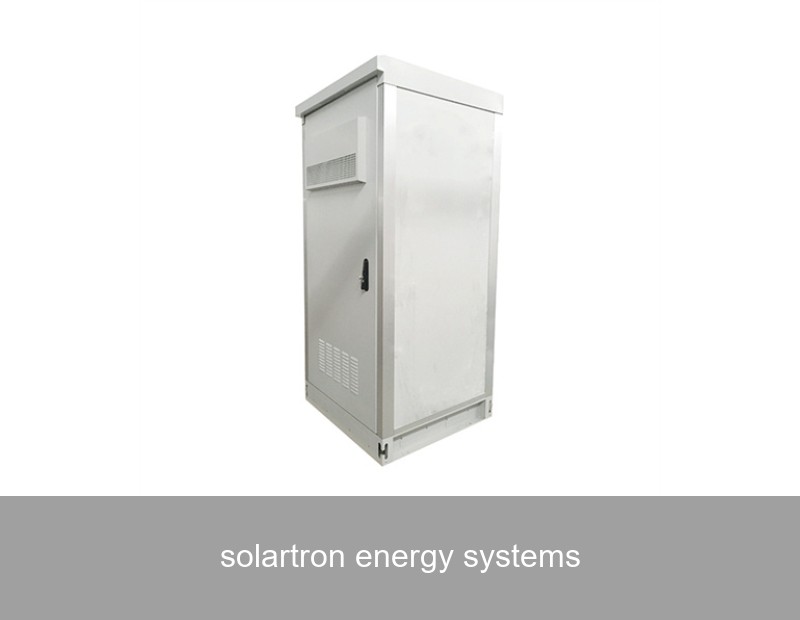
Imagine a world where your home or business isn't just a consumer of electricity but a self-sufficient hub of clean power. This isn't a distant future—it's the reality enabled by modern Solartron Energy Systems. More than just solar panels, these are integrated solutions that capture, store, and intelligently manage renewable energy. For homeowners and businesses across Europe and the U.S., the shift towards these systems is driven by a powerful combination of rising energy costs, grid instability, and a genuine commitment to sustainability. Let's explore how this technology works and why it's becoming the cornerstone of modern energy strategy.
Table of Contents
- The Phenomenon: Beyond Simple Solar
- The Data: Why the Shift is Accelerating
- The Case Study: A German Manufacturing Success
- The Insight: Intelligence is Key
- Highjoule's Role in Advanced Energy Management
- The Future of Your Energy
The Phenomenon: Beyond Simple Solar Panels
Traditionally, solar power had a fundamental limitation: it was only produced when the sun shone. Any excess energy was fed back to the grid, often for minimal compensation, leaving you dependent on the grid at night or on cloudy days. The modern Solartron energy system solves this by integrating three core components: high-efficiency photovoltaic (PV) panels, a sophisticated battery storage unit, and an intelligent energy management system (EMS). This triad works in concert to maximize self-consumption, provide backup power, and optimize energy flows based on usage patterns and real-time electricity prices.
Image Source: Unsplash - A modern integrated solar and storage installation.
The Data: Why the Shift is Accelerating
The adoption of integrated solar-storage systems isn't just an eco-trend; it's a data-driven economic decision. In the U.S., the average electricity price for residents has increased by over 4% annually in the last decade (U.S. Energy Information Administration). In Europe, geopolitical factors have caused wholesale energy prices to experience extreme volatility. Concurrently, the cost of lithium-ion batteries, the heart of storage systems, has plummeted by nearly 90% since 2010 (BloombergNEF). This creates a powerful "value crossover" point where investing in a private Solartron energy system offers a clearer and faster return on investment than ever before, while also insulating owners from market shocks.
Key Financial Drivers
| Factor | Impact on System ROI |
|---|---|
| Rising Grid Electricity Prices | Increases the value of every self-consumed kilowatt-hour (kWh). |
| Falling Battery & Solar Costs | Reduces the upfront capital expenditure for the system. |
| Reduced Feed-in Tariffs | Makes storing excess energy more valuable than selling it cheaply. |
| Grid Service Programs (e.g., VPP) | Creates new revenue streams by allowing the grid to use your stored power. |
The Case Study: Stabilizing a German *Mittelstand* Business
Let's make this concrete. Consider a mid-sized automotive parts manufacturer in Bavaria, Germany. Facing energy costs constituting over 18% of operational expenses and concerns over grid reliability during peak industrial demand, they turned to a comprehensive Solartron energy system.
- Challenge: High peak-demand charges, unpredictable energy costs, and carbon reduction targets.
- Solution: Installation of a 550 kWp rooftop solar array coupled with a 1.2 MWh containerized battery energy storage system (BESS), managed by an advanced EMS.
- Results (12-month period):
- 75% Increase in on-site renewable energy consumption.
- 40% Reduction
- Provision of grid frequency regulation services, generating €28,000 in ancillary revenue.
- An estimated project payback period of under 7 years.
This case highlights how a system transcends simple backup power, becoming an active financial asset that manages cost, generates revenue, and de-risks operations.
The Insight: The Brain Behind the Brawn
If solar panels are the muscles and batteries are the heart, the Energy Management System is the brain. This is the critical differentiator between a basic setup and a true Solartron energy system. A sophisticated EMS uses weather forecasting, load pattern prediction, and real-time electricity price data to make millisecond decisions: Should we store solar energy now or use it directly? Should we charge the battery from the grid during off-peak cheap hours? Should we discharge to avoid a peak tariff or to sell back to the grid at a premium?
Without this intelligence, you're leaving significant economic and operational value on the table. It’s this layer of smart control that transforms a capital expense into a dynamic, responsive, and optimizing energy asset.
Highjoule's Role: Delivering Intelligence for Sustainable Resilience
This is precisely where Highjoule, with nearly two decades of expertise, excels. We don't just provide components; we engineer integrated, intelligent power solutions. For residential, commercial, industrial, and microgrid applications, our systems are designed to meet the specific challenges of markets like Europe and North America.
Our flagship product line, the Highjoule H-Series, exemplifies this approach. These modular battery energy storage systems feature:
- Ultra-Safe LFP Chemistry: Non-toxic, long-lifecycle batteries built for daily cycling.
- Adaptive Power Management: Built-in logic that seamlessly integrates with solar inverters and grid interfaces.
- Scalable Architecture: From a single 5 kWh unit for a home to multi-megawatt containerized solutions for industry.
- Grid Services Ready: Equipped to participate in Virtual Power Plants (VPPs) and frequency response markets where available.

Image Source: Unsplash - Representative image of advanced battery system monitoring.
For a commercial client, our service begins with a detailed energy audit and financial modeling. We then design, install, and commission a turnkey system. But our partnership continues with remote monitoring, performance optimization, and software updates for our EMS—ensuring your Solartron energy system evolves and delivers value for its entire 15+ year lifespan.
The Future of Your Energy: A Question of Control
The energy landscape is fundamentally changing from a centralized, one-way model to a decentralized and interactive one. The question for homeowners and business leaders is no longer just "how much does electricity cost?" but "who controls my power, my costs, and my carbon footprint?"
A well-designed Solartron energy system puts that control firmly back in your hands. It's a tangible step towards energy independence, financial predictability, and operational resilience. As you look at your next energy bill or consider your company's long-term sustainability plan, what would be the impact of turning a variable cost into a managed asset? What could you achieve with a source of power that's not only clean but also smart and steadfastly yours?
 Inquiry
 Online Chat