


Understanding the Solis 10kW Battery Price: A Smart Investment for Energy Independence
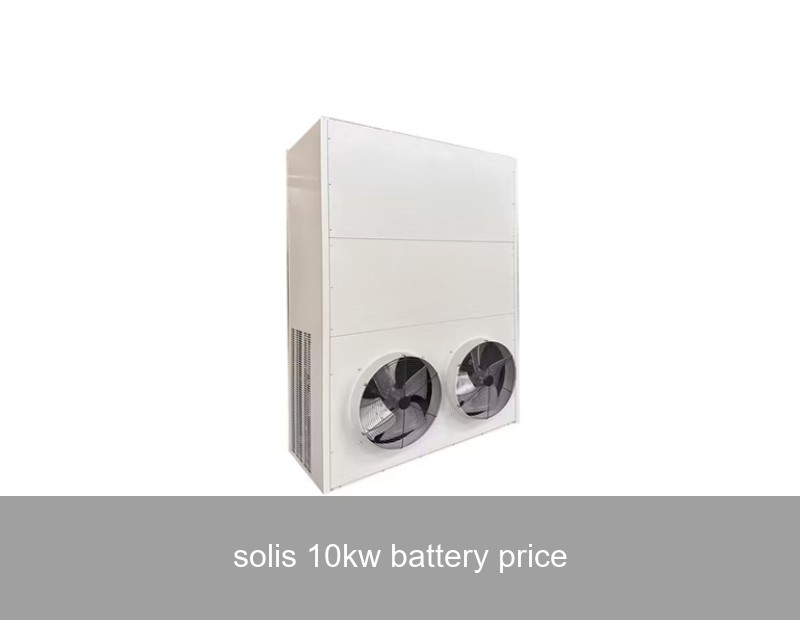
If you're researching a Solis 10kW battery price, you're not just shopping for a product; you're investing in a fundamental shift in how you power your home or business. The initial cost is a common starting point, but the true value lies in understanding what that price delivers in long-term savings, resilience, and control. In an era of volatile energy markets and a growing push for sustainability, pairing a capable inverter like a Solis hybrid model with a robust 10kW battery storage system is a strategic move. As a global leader in smart energy storage, Highjoule has been empowering this transition since 2005, providing intelligent systems that turn price into performance.
Table of Contents
Breaking Down the Cost: More Than Just a Battery
When you see a figure for a "Solis 10kW battery," it's crucial to recognize that this typically refers to the usable energy capacity (e.g., 10.24 kWh) of the battery module itself. However, the total installed price encompasses a complete system. Think of it like buying a car; the sticker price is for the base model, but you need to consider the engine, safety features, and taxes to drive it off the lot.
- The Battery Bank: The core energy storage unit, often comprised of lithium-ion phosphate (LiFePO4) cells for safety and longevity.
- The Hybrid Inverter: A device like a Solis hybrid inverter is the brain. It manages energy flow between solar panels, the battery, your home, and the grid. It converts DC to AC and vice-versa intelligently.
- Balance of System (BOS): This includes cabling, safety disconnects, a dedicated battery management system (BMS), mounting hardware, and monitoring software.
- Installation & Permitting: Professional installation by certified electricians and the cost of local permits and inspections are significant, variable components.
Therefore, the Solis 10kW battery price you should budget for is a system price. A complete, installed residential system with a quality 10kW battery and a compatible hybrid inverter in markets like the US or Europe can range significantly based on complexity and local labor rates.
Key Factors Influencing Your Total System Price
Why does the price vary so much? Several technical and market factors are at play.
| Factor | Impact on Price & Performance |
|---|---|
| Battery Chemistry & Cycle Life | LiFePO4 batteries (common with Solis) may have a higher upfront cost than older NMC types but offer 2-3x more charge cycles (often 6,000+), making them cheaper over decades. |
| Inverter Power Rating | A Solis 10kW battery pairs with inverters like a 5kW, 8kW, or 10kW hybrid model. A higher-power inverter costs more but allows you to run more appliances simultaneously during a blackout. |
| Depth of Discharge (DoD) | A battery with a 90% DoD (like many Highjoule systems) lets you use almost all its capacity without damage, offering better value than one with a 70% DoD for the same nameplate size. |
| Grid Services & Software | Advanced systems with grid-support functions or AI-driven energy management software (like Highjoule's Neuron platform) command a premium but maximize savings. |
| Local Incentives | In the US, the federal Investment Tax Credit (ITC) can reduce system cost by 30%. In Europe, country-specific grants or favorable net-metering laws drastically affect net price. |

Credit: A modern home battery installation, similar to integrated Highjoule systems. Image by Possessed Photography on Unsplash.
The Value Beyond the Price Tag: ROI and Resilience
Evaluating the Solis 10kW battery price purely as an expense misses the point. It's a capital investment with a measurable financial return and invaluable security benefits.
Financial Payback: The primary return comes from bill savings. By storing excess solar energy produced during the day and using it at night (load shifting), you drastically reduce grid purchases. In regions with Time-of-Use (TOU) tariffs—common in California, Italy, or the UK—you can avoid buying expensive peak-hour electricity. For example, if your peak rate is $0.45/kWh and your battery provides 10kW nightly, you could save ~$4.50 per day, or over $1,600 annually, just from peak shaving.
Resilience is Priceless: For homeowners in areas prone to wildfires (California), storms (Florida), or with unstable grids, the value of backup power is immense. A 10kW battery with a capable inverter can keep critical loads—refrigerators, lights, medical equipment, internet—running for hours or even days. This isn't just convenience; it's safety and continuity.
A Real-World Case: The German Household Transformation
Let's look at concrete data from a 2023 installation in Bavaria, Germany—a market with high electricity prices and strong renewable adoption.
The Phenomenon: The Müller family had a 12kW solar array but was still exporting over 60% of their generation to the grid at low feed-in tariffs, while buying expensive power in the evening.
The Data & Solution: Their energy audit showed an average evening load of 8kW. They installed a Solis S6 8kW hybrid inverter paired with a 10.24kWh Highjoule H-Stack LiFePO4 battery. The total installed system price was approximately €13,500. However, after claiming a local KfW efficiency grant, the net investment fell to €10,500.
The Outcome: The system increased their self-consumption of solar power from 40% to over 85%. Their monthly electricity bill dropped from an average of €180 to just €25 (the basic grid standing charge). This creates annual savings of ~€1,860. The simple payback period is roughly 5.6 years (€10,500 / €1,860). Given the battery's 10-year warranty and expected lifespan of 15+ years, the long-term savings and energy independence are substantial.
The Highjoule Approach: Integrated Intelligence
At Highjoule, we believe the right Solis 10kW battery price should reflect not just storage, but seamless integration and future-proof intelligence. Our products, like the Highjoule H-Stack residential battery, are designed to work flawlessly with leading inverters including Solis. What sets our solution apart is the Neuron Energy Operating System, a software layer that learns your consumption patterns, weather forecasts, and utility rate schedules.
This system doesn't just react; it proactively optimizes your energy flow. For instance, on a day with predicted clouds followed by a high-price evening period, it might conserve battery charge early to ensure you have enough reserved for the expensive peak. This level of optimization can squeeze an additional 15-20% in value from your system compared to basic setups, effectively improving your return on investment and making the initial price work harder for you.
For commercial and microgrid applications, Highjoule's scalable Megapack systems offer the same intelligence at utility scale, enabling businesses to manage demand charges and participate in grid stability programs.

Credit: A home energy system with solar, where intelligent storage maximizes value. Image by Andreas Gücklhorn on Unsplash.
Making Your Decision: The Right Questions to Ask
So, how should you proceed when evaluating your options?
- Ask for a detailed quote: Ensure it breaks down hardware, software, installation, and permits.
- Demand a performance simulation: A reputable installer (like Highjoule's certified partners) should model your solar production, consumption, and projected savings based on your specific location and utility rates. You can learn more about the importance of accurate modeling from resources like the National Renewable Energy Laboratory (NREL).
- Clarify the warranty: Look for 10 years on the battery with a guaranteed end-of-warranty capacity (e.g., 70% remaining).
- Consider scalability: Can you easily add more battery modules later if your needs change? Highjoule's modular systems are designed for this.
Ultimately, the journey to energy independence is a personalized one. The Solis 10kW battery price is a key data point, but the conversation should be about crafting a system that fits your home's energy fingerprint, your financial goals, and your vision for a sustainable, resilient future.
 Inquiry
 Online Chat