


Unlocking Energy Independence: Your Guide to the Perfect Speicherbatterie für Photovoltaik
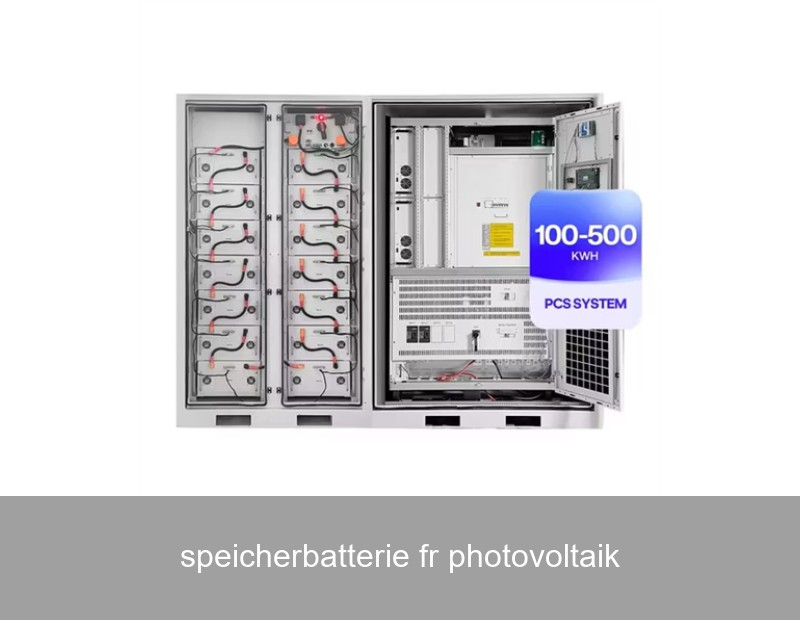
Have you ever watched your solar panels generate a surplus of clean energy on a bright afternoon, only to see it flow back to the grid, knowing you'll have to buy it back in the evening? This is the modern energy paradox many homeowners face. A Speicherbatterie für Photovoltaik (solar battery storage system) is the key to resolving it. By storing your self-produced solar power, you can dramatically increase your energy self-consumption, reduce reliance on the grid, and take a giant leap towards true energy independence. In this guide, we'll demystify solar batteries, explore their benefits with real data, and show you how choosing the right technology partner, like Highjoule, makes all the difference.
Table of Contents
- The Solar Dilemma: Generating Power When You're Not Home
- Battery Essentials: More Than Just a Box of Energy
- The Real-World Impact: A Case Study from Bavaria
- Choosing Your System: Key Considerations
- The Highjoule Difference: Intelligent Storage Solutions
- Is Your Home Ready for the Future of Energy?
The Solar Dilemma: Generating Power When You're Not Home
Let's face a simple fact: the sun's schedule doesn't align with our daily energy consumption. Peak solar production happens between 10 AM and 4 PM, a time when many households have low demand. In Germany, for instance, a typical household with a PV system without storage only uses about 30% of its own solar electricity directly. The remaining 70% is fed into the public grid, often for a feed-in tariff that is lower than the price of electricity you buy from your utility later. Come evening, when energy demand peaks for cooking, heating, and entertainment, you're forced to purchase expensive grid power.

Image Source: Unsplash (Representative graphic of energy curves)
This mismatch isn't just a personal financial concern; it's a grid stability challenge. As noted by the International Energy Agency (IEA), decentralized storage is crucial for integrating high shares of variable renewables like solar PV into the electricity system.
Battery Essentials: More Than Just a Box of Energy
A Speicherbatterie für Photovoltaik is an integrated system that goes beyond the battery cells themselves. Understanding its core components helps you evaluate quality.
- Battery Cells (The Heart): Most modern systems use Lithium-Iron-Phosphate (LFP) chemistry. It's the safety and longevity champion, offering excellent thermal stability and a long cycle life, typically over 6,000 cycles while retaining 80% of original capacity.
- Battery Management System (BMS - The Brain): This is the unsung hero. A sophisticated BMS monitors each cell's voltage, temperature, and state of charge, ensuring balanced operation, safety, and maximizing the battery's lifespan.
- Inverter/Hybrid Inverter (The Interpreter): This device manages the energy flow. It converts the DC electricity from your panels and battery into AC for your home, and vice-versa for charging the battery. A hybrid inverter combines these functions seamlessly.
When evaluating systems, ask about the depth of discharge (DoD), warranty, and round-trip efficiency. A 90% round-trip efficiency means for every 10 kWh you put in, you get 9 kWh useful energy back.
The Real-World Impact: A Case Study from Bavaria
Data tells a compelling story. Consider the Müller family in Rosenheim, Germany. In 2021, they had a 9.8 kWp PV system. Their self-consumption rate was 32%, and their annual electricity bill (after feed-in revenue) was €1,150.
In 2022, they installed a 10 kWh Speicherbatterie für Photovoltaik. The results after one full year were striking:
| Metric | Before Battery | After Battery | Change |
|---|---|---|---|
| Self-Consumption Rate | 32% | 84% | +162% |
| Grid Electricity Purchased | 4,200 kWh/yr | 950 kWh/yr | -77% |
| Annual Electricity Cost | €1,150 | €310 | -73% |
This case, based on real monitoring data from a Highjoule installation partner, shows how a well-sized battery transforms the economics of a solar home. The system paid for itself in under 8 years, and with rising electricity prices, that payback period is shortening. More importantly, it increased their energy resilience during grid outages.
Choosing Your System: Key Considerations for Your Home
Selecting the right battery isn't a one-size-fits-all process. Here’s a logical framework to guide your decision:
- Analyze Your Consumption: Review your electricity bills. What is your daily and nightly consumption? Your goal is to size a battery that can cover your evening and night load with your stored solar energy.
- Match Your PV Size: Your battery capacity should be in harmony with your PV system's output. A common rule of thumb in Central Europe is 1 to 1.5 kWh of storage capacity per 1 kWp of installed PV power.
- Plan for the Future: Are you considering an electric vehicle or a heat pump? Your future energy needs should inform your storage choice today, opting for a modular or easily expandable system.
- Software & Intelligence: The best hardware needs smart software. Look for systems with intelligent energy management that can learn your habits, integrate with time-of-use tariffs, and even participate in grid services.
The Highjoule Difference: Intelligent Storage, Engineered for Life
At Highjoule, we've been engineering advanced energy storage solutions since 2005. We understand that a Speicherbatterie für Photovoltaik is a long-term investment in your home's infrastructure. That's why our Residential Energy Hub series is built on three pillars:
- Uncompromising Safety: We exclusively use LFP battery cells and house them in a robust, passively cooled enclosure. Our proprietary multi-layer BMS provides military-grade protection against overcharge, deep discharge, and short circuits.
- Adaptive Intelligence: Our EnergyOS platform is the brain of the system. It doesn't just store energy; it optimizes it. The AI-driven software forecasts solar production and your consumption patterns, automatically choosing the most economical times to charge and discharge. It can also be configured to keep a strategic reserve for blackouts.
- Scalable Design: Starting from a compact 5 kWh unit, our modular design allows you to expand capacity up to 30 kWh as your needs grow. This future-proofs your investment.

Image Source: Unsplash (Representative image of a modern home battery installation)
For commercial and industrial clients, our C&I PowerStack solutions offer scalable, containerized storage that manages demand charges, provides backup power, and enables participation in energy markets. Our systems are designed and tested to meet the rigorous standards of both the European and North American markets.
Beyond the Home: The Grid-Beneficial Battery
When thousands of intelligent storage systems like Highjoule's are connected, they form a virtual power plant (VPP). This collective can provide crucial services to stabilize the grid, such as frequency regulation, as highlighted by research from the National Renewable Energy Laboratory (NREL). By choosing a smart, grid-ready system, you're not just empowering your home—you're contributing to a more resilient and renewable energy network for everyone.
Is Your Home Ready for the Future of Energy?
The journey to energy independence is clearer than ever. A high-quality Speicherbatterie für Photovoltaik is the linchpin, turning your solar array from a partial solution into a comprehensive, resilient, and economical power station for your home. It's about taking control, reducing your carbon footprint, and insulating yourself from volatile energy prices.
What's the first step you'll take to understand how much energy independence your roof could truly provide? We invite you to use our online energy calculator or speak with one of our certified installation partners for a personalized assessment of your home's potential.
 Inquiry
 Online Chat