


Sunshine Solar Power Inc and the Critical Need for Advanced Energy Storage
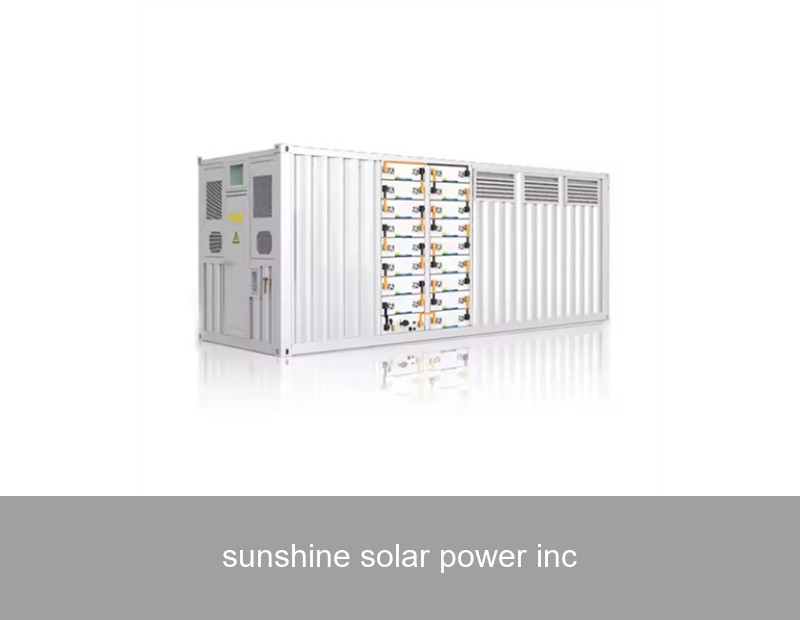
Imagine this: a company like Sunshine Solar Power Inc installs a magnificent solar array on a commercial rooftop. The sun beats down, the panels hum with activity, and for a few peak hours, the meter spins backwards. But what happens when the sun sets, or when a cloud bank rolls in? The power generation plummets, yet the business's demand for electricity remains. This is the fundamental challenge of intermittent renewable energy—a challenge that companies like Sunshine Solar Power Inc grapple with daily. The solution, and the true key to energy independence, lies not just in generation, but in intelligent storage. This is where pairing solar with a sophisticated Battery Energy Storage System (BESS) transforms a simple power source into a resilient, cost-saving energy asset.
Table of Contents
The Solar Dilemma: Generation vs. Consumption
For installers and developers like Sunshine Solar Power Inc, the initial goal is clear: maximize solar kilowatt-hours. However, the modern energy consumer—whether a homeowner, factory manager, or hospital administrator—has a more nuanced need: reliable, affordable, and controllable power, 24/7. Solar production curves famously look like a bell, while energy demand curves are spiky and unpredictable, often peaking in the early evening when solar output is negligible. This mismatch creates a dual problem: wasted solar energy during the day and expensive grid power purchases at night.

Image Source: Unsplash - Illustrating the time-based mismatch between solar generation and energy demand.
The Data: Exposing the Reality Gap
Let's talk numbers. According to the International Renewable Energy Agency (IRENA), solar PV capacity has seen exponential growth globally. Yet, the value of that solar energy is not constant. In markets like California (CAISO) and parts of Europe, "duck curves" have emerged, where net demand plunges during sunny afternoons and then ramps up steeply at dusk. This can lead to:
- Grid Instability: Rapid ramping of fossil-fuel plants to meet the evening surge.
- Price Volatility: Wholesale electricity prices can spike by 300-500% during peak hours compared to midday solar surplus periods.
- Curtailment: Grid operators sometimes have to pay solar plants to stop generating to avoid overloading the grid, a direct financial loss for asset owners.
This data paints a clear picture: without storage, a significant portion of solar's potential value is left untapped, and grid integration becomes more challenging.
Case Study: Empowering a European Manufacturing Plant
Consider a real-world scenario. A mid-sized automotive parts manufacturer in Germany, a client partnered with a developer similar to Sunshine Solar Power Inc, had a 1 MW rooftop solar system. They were exporting excess power at low feed-in tariffs at noon but buying expensive grid power during morning and evening operational peaks. Their goal was to increase self-consumption and achieve backup power for critical processes.
The solution was integrating a 500 kW / 1 MWh battery storage system. Here’s the impact over the first year:
| Metric | Before BESS | After BESS | Change |
|---|---|---|---|
| Solar Self-Consumption | 35% | 85% | +50% |
| Peak Grid Demand | 950 kW | 450 kW | -53% |
| Annual Energy Cost | €280,000 | €185,000 | €95,000 saved (34%) |
| CO2 Footprint | ~480 tonnes | ~310 tonnes | ~170 tonnes reduced |
The BESS was programmed to charge from the solar excess and discharge during high-price periods (energy arbitrage) and peak demand windows (peak shaving). Furthermore, it provided seamless transition to backup power during two grid outages, preventing an estimated €50,000 in production line stoppages. This case, documented in part by the Fraunhofer Institute for Solar Energy Systems, exemplifies the multi-faceted ROI of storage.
Beyond the Battery Box: The Intelligence of a Modern BESS
A common misconception is that a BESS is just a battery. In reality, it's an integrated energy management platform. The hardware—battery cells, inverters, thermal management—is crucial. But the true magic is in the software: the Energy Management System (EMS). A sophisticated EMS like the one in Highjoule's H-Series commercial systems does the heavy thinking:
- Predictive Analytics: Uses weather forecasts and historical load data to optimize charge/discharge cycles.
- Market-Aware Operation: In deregulated markets, it can participate in grid services like frequency response, creating an additional revenue stream.
- Seamless Mode Switching: Automatically transitions between grid-tied, backup, and time-of-use optimization modes without human intervention.

Image Source: Unsplash - Representative image of a modern, containerized commercial BESS unit.
Highjoule's Role: Delivering Stability and Savings
This is precisely where Highjoule partners with solar integrators and developers. Since 2005, we've moved beyond simply supplying hardware. We provide turnkey, intelligent storage solutions that solve the core problems identified by companies like Sunshine Solar Power Inc.
For the residential market, our EchoHome system is designed for simplicity and resilience, allowing homeowners to maximize their rooftop solar investment and keep the lights on during outages. For commercial & industrial (C&I) clients, our modular H-Series offers scalable power and capacity, with an EMS that actively manages energy costs and can generate revenue. And for complex microgrid applications, our integrated control systems seamlessly orchestrate solar, storage, and often other distributed generation sources to create self-sustaining energy islands.
Our systems are built with a core philosophy: safety, longevity, and intelligence. Using top-tier LiFePO4 battery chemistry, robust thermal management, and cybersecurity-hardened software, we ensure the storage asset is a reliable partner for decades, not just a short-term add-on.
The Future Energy Landscape
The journey for a solar company no longer ends at the inverter. The future belongs to integrated energy providers who can deliver a complete, controllable, and optimized power solution. As grid dynamics evolve and electricity markets become more complex, the ability to store and intelligently dispatch energy will be the defining feature of a successful solar project.
For a forward-thinking company like Sunshine Solar Power Inc, embracing advanced storage isn't just an option; it's a strategic evolution. It allows them to offer clients unparalleled value: lower bills, guaranteed uptime, and a direct contribution to grid decarbonization. The question is no longer "if" storage is needed, but "how sophisticated" the storage solution must be to meet the specific financial and operational goals of each client.
Is your current solar offering fully addressing the 24/7 energy needs of your clients, or is there a hidden opportunity for value creation waiting in the form of intelligent storage?
 Inquiry
 Online Chat