


Navigating the Global Energy Shift: Your Guide to a Reliable Supplier of China Battery Technology
If you're exploring energy storage solutions in Europe or the US, you've undoubtedly encountered the term "China battery." The global dominance of Chinese battery manufacturing is a defining phenomenon of our energy transition. But what does it truly mean to partner with a supplier of China battery cells or systems? Beyond the commodity, it's about accessing cutting-edge technology, ensuring supply chain resilience, and integrating these cells into safe, high-performance, and intelligent storage systems tailored for your specific market needs. This is where the distinction between a simple component vendor and a full-solution technology partner becomes critical.
The Phenomenon: China's Battery Dominance
Let's address the elephant in the room. Over the past decade, China has established an unparalleled ecosystem for lithium-ion battery production. This isn't just about lower labor costs. It's a result of strategic national investment in raw material processing, massive gigafactory construction, and a fiercely competitive domestic market that drives rapid iteration and cost reduction. For project developers, EPCs, and businesses worldwide, this has made advanced battery technology more accessible and affordable, accelerating the adoption of solar-plus-storage and grid stability projects. However, sourcing directly can be a complex maze of technical specifications, quality variance, and long-term support challenges.

Modern lithium-ion battery production requires precision and scale. (Image source: Unsplash)
The Data: Scale, Innovation, and Market Realities
The numbers are staggering. As of 2023, Chinese companies account for over 60% of global lithium-ion battery manufacturing capacity. According to BloombergNEF, the average price of a lithium-ion battery pack has fallen by nearly 90% in the last decade, a decline heavily influenced by Chinese manufacturing scale. But here's a crucial data point often overlooked: not all cells are created equal. Energy density, cycle life, degradation rates, and safety protocols vary significantly between manufacturers.
For instance, leading Chinese suppliers like CATL and BYD are now producing Lithium Iron Phosphate (LFP) cells that surpass 5000 cycles at 80% depth of discharge, making them ideal for daily-cycling applications like commercial storage. Choosing the right cell chemistry and supplier for your application—be it frequency regulation for the grid or peak shaving for a factory—requires deep technical expertise. This is the first value a expert system integrator like Highjoule provides: we navigate this complex landscape for you, selecting and qualifying top-tier supplier of China battery cells that meet rigorous performance and safety standards for European and American markets.
Case Study: A German Industrial Park's Resilience Challenge
Consider a real-world scenario. A mid-sized industrial park in Bavaria, Germany, faced rising grid instability and soaring peak-time energy costs (over €0.32/kWh). Their goal was to increase on-site consumption of solar power and provide backup during grid outages. They initially sourced battery racks directly from a supplier of China battery modules but encountered integration issues with their existing German inverters and a complex regulatory environment for grid interconnection.
This is where they partnered with Highjoule. We didn't just provide batteries; we delivered a turnkey solution:
- System Design: A 500 kWh / 750 kWh (2-hour) system using Highjoule's GridMax Commercial series, integrating high-quality LFP cells.
- Intelligence Layer: Our proprietary EnergyOS platform dynamically managed charge/discharge schedules based on real-time electricity prices, weather forecasts, and production schedules.
- Grid Compliance: Full certification and seamless interconnection with the local DSO (Distribution System Operator).
The Result? In the first year of operation, the park achieved a 40% reduction in peak demand charges and increased its solar self-consumption by 65%. The system also provided two seamless backup events during grid fluctuations, preventing an estimated €120,000 in production downtime. The project paid for itself in under 5 years.
| Model | Usable Capacity | Chemistry | Cycle Life (to 80% DoD) | Warranty |
|---|---|---|---|---|
| GridMax 100 | 102.4 kWh | LFP (Prismatic) | >6000 cycles | 10 years / 10,000 cycles |
| GridMax 250 | 256 kWh | LFP (Prismatic) | >6000 cycles | 10 years / 10,000 cycles |
The Highjoule Insight: Beyond the Cell to Intelligent Integration
Our nearly two decades of experience have taught us that the battery cell is just the beginning. The real magic—and the real challenge—lies in the integration. Think of it like building a high-performance car. You can source an excellent engine from a specialist, but without the right transmission, chassis, and software, you won't win the race. Similarly, a battery system requires:
- Advanced Battery Management System (BMS): This is the brain, ensuring each cell operates within its safe and optimal window, balancing performance with longevity.
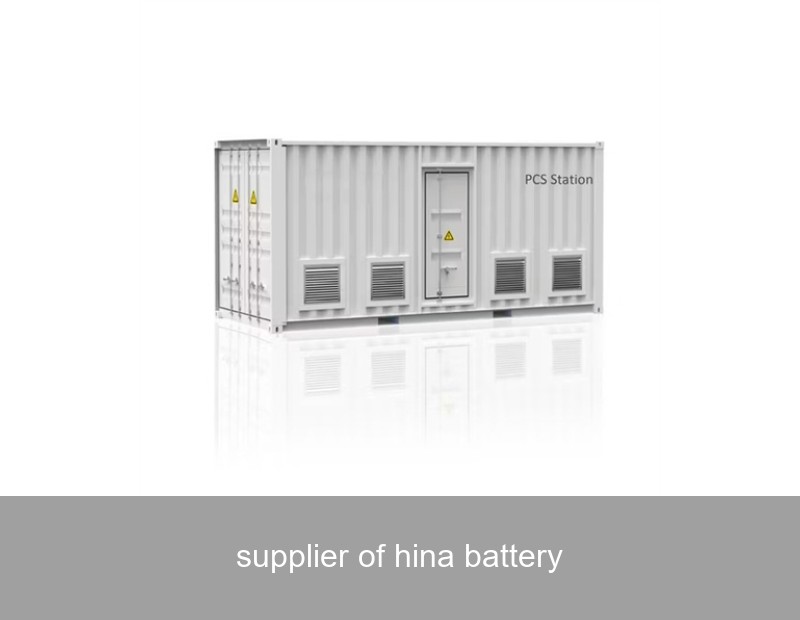
- Power Conversion System (PCS): The muscle, efficiently converting DC battery power to AC for your facility or the grid.
- Energy Management Software (EMS): The strategy, making intelligent, revenue- or savings-maximizing decisions every second of the day.
Highjoule's role as your technology partner is to master this entire stack. We leverage our global supply chain to incorporate the best cells from leading supplier of China battery innovators, then engineer, test, and certify the complete system in-house. This vertical integration is what delivers the reliability, safety, and return on investment that our customers across Europe and North America depend on.

Intelligent control systems are key to unlocking the full value of an energy storage installation. (Image source: Unsplash)
Highjoule's Integrated Solutions: Powering Your Transition
Founded in 2005, Highjoule has evolved from a component specialist to a global leader in complete, smart storage solutions. Our product lines are designed to meet diverse needs:
For Commercial & Industrial (C&I) Clients
Our GridMax series, as seen in the German case study, is the workhorse for reducing demand charges, providing backup power, and participating in grid services. It's UL and CE certified, ensuring compliance for your peace of mind.
For Residential and Small Business
The HomePower+ series offers sleek, quiet, and safe storage for maximizing solar self-consumption and achieving energy independence. Its simple app interface puts control in the homeowner's hands.
For Utilities and Large-Scale Developers
Our MicroGrid Core platform is a containerized, utility-scale solution for frequency regulation, renewable firming, and creating resilient community microgrids. It's where our expertise in managing massive flows of energy from a supplier of China battery cells truly scales.
We encourage you to look beyond the component. The future of energy is not just stored; it's intelligently managed. For a deeper dive into battery technologies, you can explore resources from the U.S. Department of Energy or the latest market reports from BloombergNEF.
What's the Next Step for Your Energy Independence?
The journey from considering a supplier of China battery components to deploying a fully operational, revenue-generating asset on your property is filled with critical decisions. Which application holds the most value for your operation? How do you navigate local incentives and interconnection rules? We invite you to start a conversation with our technical team. What specific energy challenge are you looking to solve in the next 18 months?
 Inquiry
 Online Chat