


Finding the Right Supplier of Solar Energy for Your Sustainable Future
You've decided to harness the sun's power. Whether it's for a remote industrial facility, a community microgrid, or a large-scale commercial development, the vision is clear: clean, independent, and cost-effective energy. But here's where many projects hit an unexpected snag. The success of your solar dream doesn't just hinge on the panels you see; it critically depends on a less visible but far more pivotal partner: your supplier of solar energy. This isn't merely a vendor selling components; it's your strategic partner for the entire energy lifecycle.
Beyond Panels: The Critical Role of a Modern Solar Supplier
Gone are the days when a solar supplier simply delivered photovoltaic (PV) modules. Today, a true supplier of solar energy provides an integrated ecosystem. Think of them as the architect and engineer of your power independence. Their role encompasses:
- System Design & Engineering: Crafting a solution that balances energy yield, physical space, grid interaction, and financial return.
- Technology Curation: Selecting not just panels, but inverters, monitoring systems, and the most crucial component for modern projects: advanced energy storage.
- Grid Integration & Software: Providing the brain that manages when to store, when to consume, and when to sell back to the grid, maximizing every kilowatt-hour.
- Long-term Performance & Service: Ensuring the system delivers its promised output for 20+ years through proactive monitoring and support.
This evolution is driven by a simple, powerful trend: solar alone is powerful, but solar paired with storage is transformative. According to the International Energy Agency (IEA), global renewable capacity is set to grow by 2.5 times by 2030, with solar PV accounting for three-quarters of this increase. However, the real value is unlocked when this generation can be time-shifted. This is where the expertise of a supplier becomes non-negotiable.
The Storage Imperative
Why is storage the game-changer? Without it, excess solar energy produced at midday is often sold to the grid at low rates, only for you to buy back expensive power in the evening. A battery energy storage system (BESS) breaks this cycle. It captures that midday surplus, turning your solar array into a 24/7 power plant. For commercial and industrial (C&I) entities, this isn't just about sustainability; it's a direct shield against volatile energy prices and a tool for demand charge reduction—a significant portion of electricity bills for businesses.

Image: Large-scale solar farms require integrated suppliers for optimal performance. (Source: Unsplash)
The Istmo Challenge: A Real-World Case Study in Resilience
Let's ground this in reality. Consider the Istmo region of a country like Mexico or a similar area with high solar potential but an unreliable grid. A food processing plant here faces a constant threat: grid outages that halt production, spoiling inventory and costing thousands per hour. Their goal was clear: achieve energy resilience and cut costs.
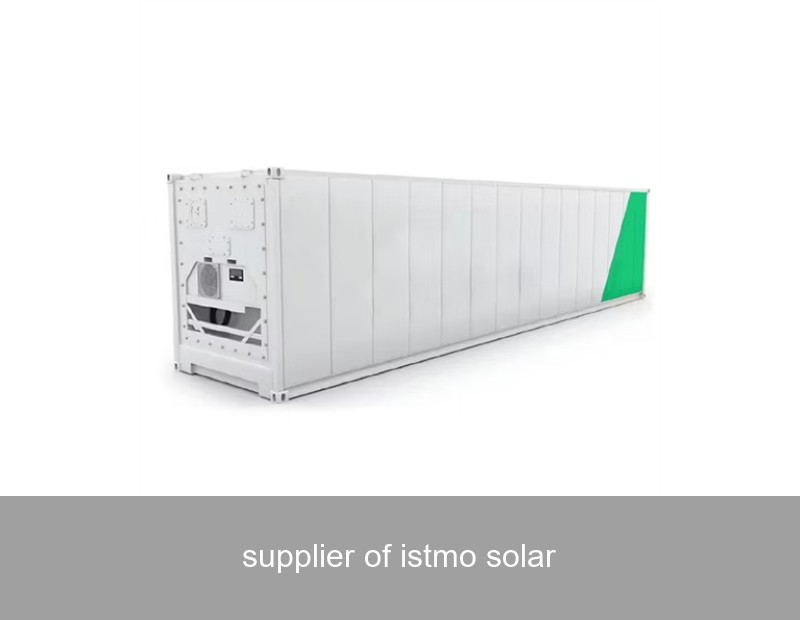
They partnered with a forward-thinking supplier of solar energy who proposed a holistic solution: a 1.2 MW rooftop solar PV system coupled with a 2.4 MWh containerized battery storage system. The supplier's role was to integrate these components seamlessly with the plant's existing electrical infrastructure and sophisticated energy management software.
| Metric | Before System | After System | Change |
|---|---|---|---|
| Grid Energy Consumption | 100% | 35% | -65% |
| Demand Charges | ~$15,000/month | ~$4,500/month | -70% |
| Production Halts from Outages | 8 incidents/year | 0 incidents/year | 100% reduction |
| Carbon Footprint | Baseline | Reduced by 580 tons CO2e | Significant |
The data speaks volumes. The supplier didn't just sell hardware; they delivered operational continuity and financial predictability. The BESS acts as a "buffer," ensuring smooth operations during the 2-3 hour daily grid instability periods common in the region. This case exemplifies the modern supplier's mandate: to solve energy problems, not just install equipment.
How to Choose the Right Supplier for Your Solar Project
Selecting your supplier of solar energy is a strategic decision. Here are key questions to ask:
- Do you offer integrated storage solutions? Avoid suppliers who treat storage as an afterthought.
- What is your software and monitoring capability? The intelligence layer is what maximizes ROI.
- Can you provide examples of C&I or microgrid projects of similar complexity? Demand relevant case studies.
- What is your long-term service and performance guarantee model? Look for partners invested in the system's lifelong output.
Highjoule: Engineering Your Intelligent Solar + Storage Ecosystem
This is where Highjoule's expertise becomes your asset. Since 2005, we have evolved from a component provider to a global supplier of intelligent, storage-centric solar energy solutions. We understand that every project, from a sprawling European industrial park to a remote US microgrid, has unique challenges. Our approach is to engineer the complete system with storage at its core.
For instance, our HES (Highjoule Energy Stack) platform is the operating system for your sustainable energy assets. It doesn't just monitor; it autonomously optimizes energy flow between solar generation, battery storage, on-site loads, and the grid. For a business, this means our algorithms are constantly working to minimize your energy costs based on real-time tariffs and consumption patterns. We provide the full suite: from initial consultancy and system design using our high-efficiency battery systems, to AI-driven software and lifelong performance management.

Image: Intelligent energy management software is crucial for modern solar-storage systems. (Source: Unsplash)
Consider a project like the one in the Istmo. With Highjoule, the food plant wouldn't just get a battery; it would get a guaranteed performance outcome. Our systems are designed to handle the toughest grid conditions, ensuring that critical operations never miss a beat. We bridge the gap between abundant solar generation and reliable, 24/7 clean power, making us a true partner for entities that cannot afford downtime.
The Future is Integrated
The landscape of energy is shifting from centralised generation to decentralised, intelligent nodes. As noted by research from The National Renewable Energy Laboratory (NREL), the value of solar increases dramatically when paired with storage and smart controls, especially in markets with time-varying rates or capacity constraints. Your choice of supplier dictates whether you simply participate in this shift or lead it within your sector.
So, as you plan your journey to energy independence, we leave you with this question: Is your current vision for solar power limited to daytime generation, or are you ready to explore how an intelligent, storage-integrated system can provide total energy control and resilience for your operations?
 Inquiry
 Online Chat