


Why the Modern Supplier of Prefab Homes Must Prioritize Integrated Energy Solutions
Imagine this: a beautiful, sustainably-built prefabricated home is installed in record time, only for the new owners to face unexpectedly high energy bills and grid dependency. This scenario is becoming a critical concern for homeowners and a pivotal challenge for the modern supplier of prefab homes. Today, the definition of a quality prefab home extends beyond sleek design and efficient construction. It encompasses the home's entire lifecycle, with energy independence and sustainability at its core. This is where the synergy between advanced prefabrication and intelligent energy storage becomes non-negotiable.
Table of Contents
The New Standard: Energy Independence as a Home Feature
Gone are the days when energy systems were an afterthought. For a forward-thinking supplier of prefab homes, the electrical backbone must be designed in parallel with the floor plans. Homebuyers, especially in markets like Europe and the United States, are increasingly aware of climate issues and energy security. They aren't just buying a house; they are investing in a lifestyle that is resilient, cost-effective, and environmentally responsible. An integrated solar-plus-storage system transforms a prefab home from a passive structure into an active, intelligent power hub.

This shift represents a massive opportunity. By embedding smart energy storage from the outset, suppliers can offer a truly turnkey solution that commands a premium and builds unparalleled customer loyalty.
The Data Reality: Grid Volatility and Rising Costs
Let's look at the numbers. According to the U.S. Energy Information Administration (EIA), the average U.S. homeowner experienced a 3.9% increase in electricity prices in 2023, a trend expected to continue. In Europe, the aftermath of the energy crisis has left prices structurally higher, with households remaining vulnerable to geopolitical shocks. Furthermore, aging grid infrastructure in many regions leads to more frequent and longer outages. A study by Lawrence Berkeley National Laboratory found that power outages cost the U.S. economy billions annually.
For a supplier of prefab homes, this data isn't just background noise—it's a direct specification for your product. Homes built today will experience these challenges for decades. Can you afford to deliver a home that's immediately susceptible to these pressures?
Case Study: A Net-Zero Community in Bavaria
A compelling example comes from a recent development in Bavaria, Germany. A local supplier of prefab homes partnered with Highjoule to create a 20-unit community designed for net-zero living. Each home featured a standard rooftop solar array, but the key differentiator was the integrated battery storage system in every unit.
- Project Goal: Achieve 95% energy self-sufficiency for each household, year-round.
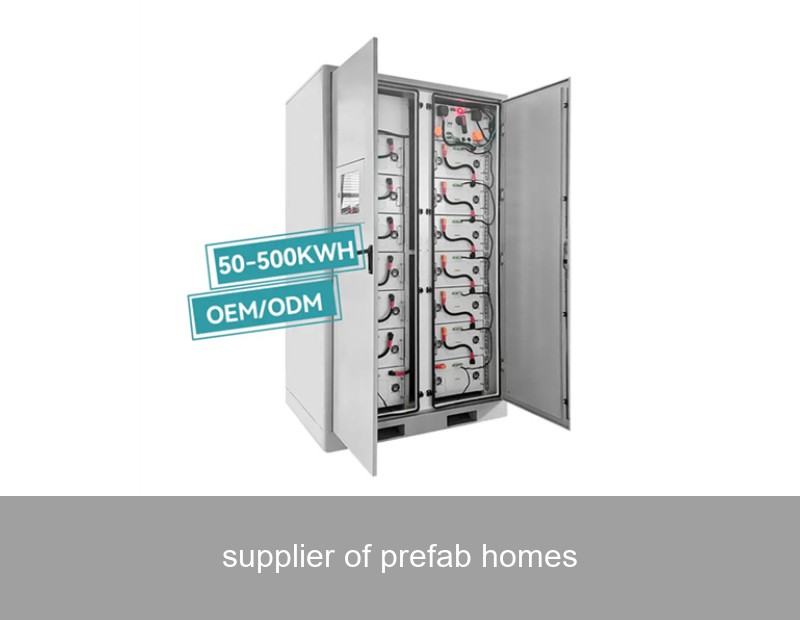
- Solution: Highjoule's Residential Energy Hub (REH) series was pre-wired into each home's design during factory construction. The system includes a hybrid inverter, a scalable lithium-iron-phosphate (LFP) battery (from 10 kWh to 30 kWh), and intelligent energy management software.
- Results (12-month data):
Metric Result Average Household Self-Sufficiency 96.7% Grid Energy Import Reduction 94% Peak Demand from Grid Reduced by 88% Homeowner Reported Bill Savings €1,200-€1,800 annually
The success of this project wasn't just in the numbers. The developer reported that homes with the integrated Highjoule system sold 40% faster and at a 7% higher price point than comparable homes without storage. This is a clear market signal.
The Integrated Approach: Beyond Just Solar Panels
Simply slapping solar panels on a roof is no longer sufficient. True energy resilience requires a system that generates, stores, and manages power intelligently. This is the triad that every modern supplier of prefab homes should engineer into their designs.
- Generation: High-efficiency photovoltaic (PV) panels.
- Storage: A safe, long-lasting, and scalable battery system that stores excess solar energy for use at night or during outages.
- Management: The "brain" of the system. This software optimizes energy flow, prioritizes critical loads during a blackout, and can even participate in grid services (where available) to generate revenue.
Missing any one component leaves the homeowner—and your value proposition—exposed. For instance, without storage, solar energy produced in the afternoon is exported to the grid at low rates, and the home remains powerless during a blackout, as most grid-tied solar systems shut down for safety. This is a major disappointment for homeowners expecting resilience.
How Highjoule Empowers Prefab Home Suppliers
At Highjoule, we understand the unique needs of industrial-scale home manufacturing. Since 2005, we've been at the forefront of advanced energy storage, and we've tailored our offerings to seamlessly integrate with the workflow of a leading supplier of prefab homes.

Our solutions for the prefab sector include:
- Pre-Configured Energy Systems: Our Residential Energy Hub (REH) is a modular, all-in-one unit that combines inverter, battery, and controls. It's designed for easy, fast installation on the factory floor or the job site, keeping your build timeline on track.
- Design & Engineering Partnership: Our technical team works directly with your engineers to integrate our systems into your architectural and electrical plans from day one, ensuring a perfect fit and optimal performance.
- Scalability & Safety: We use non-toxic, stable LFP battery chemistry that is inherently safer than other alternatives. Systems are easily scalable to match different home sizes and energy profiles, from a compact cottage to a large family home.
- Smart Energy Management: The Highjoule system comes with our proprietary energy OS, which gives homeowners intuitive control via an app and allows you, the builder, to offer premium monitoring and maintenance services.
By partnering with Highjoule, you move from being a supplier of prefab homes to a provider of future-ready living ecosystems.
Future-Proofing Your Offerings
The regulatory landscape is also shifting. In California, the 2023 Building Energy Code pushes towards mandatory solar and storage readiness. The EU's Energy Performance of Buildings Directive (EPBD) is driving member states toward zero-emission buildings. Proactively integrating storage positions your company as a leader, not a follower struggling to comply.
Furthermore, the rise of electric vehicles (EVs) adds another layer. An intelligent storage system can manage EV charging, preventing a huge spike in grid demand and allowing homeowners to fuel their cars with cheap, stored solar power. This is a feature you can market today.
The Essential Question for Every Prefab Home Supplier
As you plan your next catalog of home designs, ask yourself this: When a potential client asks, "How will this home protect me from blackouts and rising energy costs?" is your answer a confident explanation of an integrated, intelligent energy system, or an awkward suggestion to "talk to a solar installer later"?
The market has spoken. Homebuyers are seeking resilience. Are your homes equipped to provide it? We invite you to explore what a partnership with Highjoule could look like for your next development. What would it mean for your brand to be synonymous not just with beautiful, efficient construction, but with guaranteed energy independence?
 Inquiry
 Online Chat