


Choosing the Right Supplier of RTE in BESS: A Guide to Maximizing Your Energy Investment
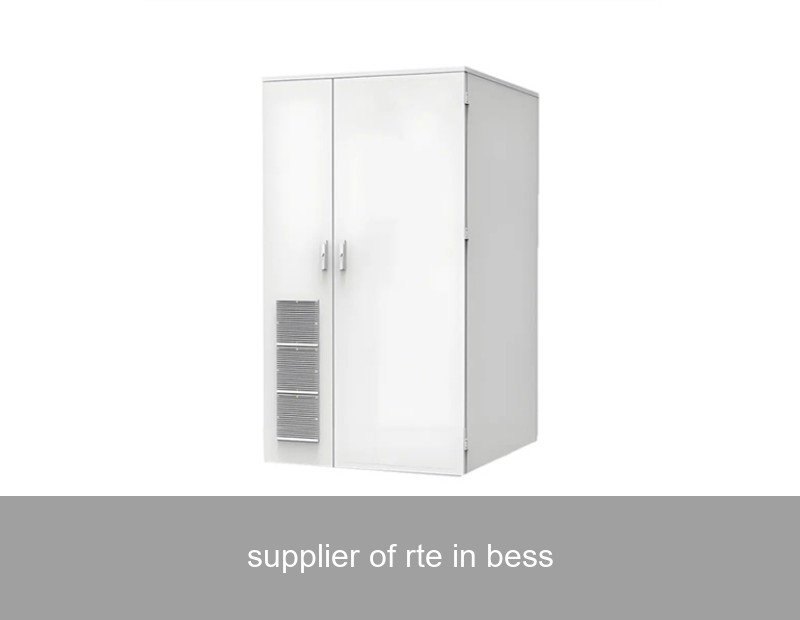
As the global push for renewable energy intensifies, Battery Energy Storage Systems (BESS) have become the linchpin of a sustainable grid. But here’s a crucial insight many overlook: not all batteries are created equal. The true measure of a system’s economic and operational value often boils down to one key metric: Round-Trip Efficiency (RTE). This is where your choice of a supplier of RTE in BESS becomes paramount. A supplier focused on maximizing RTE isn't just selling hardware; they are delivering a fundamental driver of your project's lifetime return on investment. Let's explore why RTE is the silent hero of storage performance and how partnering with a technology-focused provider like Highjoule can make all the difference.
Table of Contents
- RTE Defined: More Than Just a Percentage
- The Direct Financial Impact of High RTE
- Beyond the Battery Cell: The System-Level Approach
- Case Study: High RTE in Action for a European Industrial Plant
- Choosing Your Supplier of RTE in BESS: Key Evaluation Criteria
- The Highjoule Approach: Engineering Efficiency at Every Level
RTE Defined: More Than Just a Percentage
Round-Trip Efficiency (RTE) is the ratio of energy you can *discharge* from a battery to the energy you originally *put in* to charge it, expressed as a percentage. Think of it as the "fuel efficiency" for your storage system. A 90% RTE means for every 100 kWh of solar or grid electricity you store, you get 90 kWh of usable power back. The remaining 10 kWh is lost, primarily as heat, during the conversion and storage processes.
While leading lithium-ion battery cells themselves boast high efficiencies, the system-level RTE—what you actually experience—is determined by the entire ecosystem: power conversion systems (PCS), battery management systems (BMS), thermal management, and system software. This is the first critical filter in selecting a supplier of RTE in BESS. Do they simply integrate commodity components, or do they engineer the entire system to minimize losses at every junction?

Image Source: Unsplash - Representative image of BESS monitoring
The Direct Financial Impact of High RTE
The financial implications of RTE are staggering when projected over a system's 15-20 year lifespan. Let's model a straightforward commercial scenario:
| System Parameter | System A (85% RTE) | System B (92% RTE) |
|---|---|---|
| Daily Cycling Energy | 1,000 kWh | 1,000 kWh |
| Usable Energy per Day | 850 kWh | 920 kWh |
| Annual "Lost" Revenue* | ~$3,700 | ~$1,200 |
| Cumulative Loss (15 yrs) | > $55,000 | > $18,000 |
*Assuming a conservative value of $0.12/kWh for energy arbitrage or demand charge savings.
As you can see, a 7-point RTE difference leads to System A forfeiting over $37,000 more in potential value than System B over 15 years. That’s revenue literally turning into waste heat. A premium supplier of RTE in BESS like Highjoule focuses on maximizing this metric to ensure your asset delivers its full financial potential.
Beyond the Battery Cell: The System-Level Approach
To achieve industry-leading RTE, a supplier must optimize the complete energy chain. This involves:
- High-Efficiency, Bi-Directional Inverters: The PCS is often the largest source of loss. Selecting and tuning inverters for peak efficiency across a wide load range is essential.
- Advanced Thermal Management: Batteries operate best within a narrow temperature band. An intelligent, low-power cooling/heating system prevents efficiency degradation without consuming excessive parasitic load.
- Sophisticated Battery Management (BMS): A precision BMS ensures optimal cell balancing and charging protocols, minimizing internal resistance and energy dissipation.
- Intelligent System Software: Software that optimizes charging/discharging cycles to reduce unnecessary conversions and keep components in their "sweet spot" for efficiency.
This holistic engineering mindset is what distinguishes a true technology partner from a simple equipment vendor.
Case Study: High RTE in Action for a European Industrial Plant
Let’s examine a real-world application in Germany. A manufacturing plant with a large rooftop solar array faced two issues: midday solar curtailment and high evening energy costs. Their goal was to increase solar self-consumption and reduce grid dependency.
The Challenge: A standard BESS proposal promised 86% RTE. While good on paper, plant engineers calculated that lower efficiency would erode the project's payback period, as significant solar energy would be lost in the storage process.
The Highjoule Solution: As a dedicated supplier of RTE in BESS, we deployed our HPS-Industrial series. The system featured our proprietary Efficiency Optimization Core, which integrates a low-loss PCS, a predictive thermal management system, and adaptive charging algorithms.
- Measured System RTE: 93.2% under real operating conditions.
- Annual Increased Energy Yield: The high RTE, combined with smart forecasting, captured an additional 42 MWh of usable solar energy annually compared to the baseline proposal.
- Financial Impact: This translated to an extra €6,500+ in annual energy savings, improving the project's IRR by 1.8 percentage points and shortening the payback period by nearly two years.
This case underscores that the choice of supplier directly impacts measurable, bottom-line results. You can read more about the importance of performance metrics in real-world storage projects from the National Renewable Energy Laboratory (NREL).

Image Source: Unsplash - Representative image of industrial solar and storage
Choosing Your Supplier of RTE in BESS: Key Evaluation Criteria
When vetting potential partners, move beyond datasheet promises. Ask these pointed questions:
- Is the quoted RTE for the cell or the total system? Demand a guaranteed minimum system RTE in the performance warranty.
- How is thermal management optimized for efficiency? Look for solutions that minimize parasitic load (the energy the system uses to run itself).
- Can you provide third-party performance validation? Reputable suppliers will have test reports from independent labs.
- What is the efficiency curve at partial load? Systems rarely operate at full power. High efficiency at 30-50% load is crucial for real-world performance. The U.S. Department of Energy provides a useful primer on these factors.
The Highjoule Approach: Engineering Efficiency at Every Level
At Highjoule, our philosophy is that every percentage point of RTE matters. Founded in 2005, we’ve built our reputation as a global leader by focusing on intelligent, system-level design. Our products, from the HPS-Commercial line to the HPS-Microgrid solutions, are engineered around the core principle of loss minimization.
For instance, our integrated Adaptive Conversion Technology (ACT) reduces DC-AC-DC conversion steps in certain applications, directly boosting RTE. Furthermore, our Helios Energy Management Platform uses AI to predict energy flows and schedule storage operations at peak system efficiency. We don't just supply a BESS; we deliver a high-efficiency energy asset guaranteed to perform. Explore the latest trends in grid storage from a trusted source like the International Energy Agency (IEA).
Ready to See the Difference a High-Efficiency BESS Can Make?
The journey to a resilient and profitable energy storage project begins with a critical decision: selecting a partner who views efficiency not as a checkbox, but as the cornerstone of value. As you evaluate your options, consider what the true cost of lost energy could be for your operation over the next decade. What would a 5-8% increase in your system's usable energy output do for your project's financial model and sustainability goals?
 Inquiry
 Online Chat