


Finding the Right Supplier of Solar Voltaic Systems for Your Energy Independence
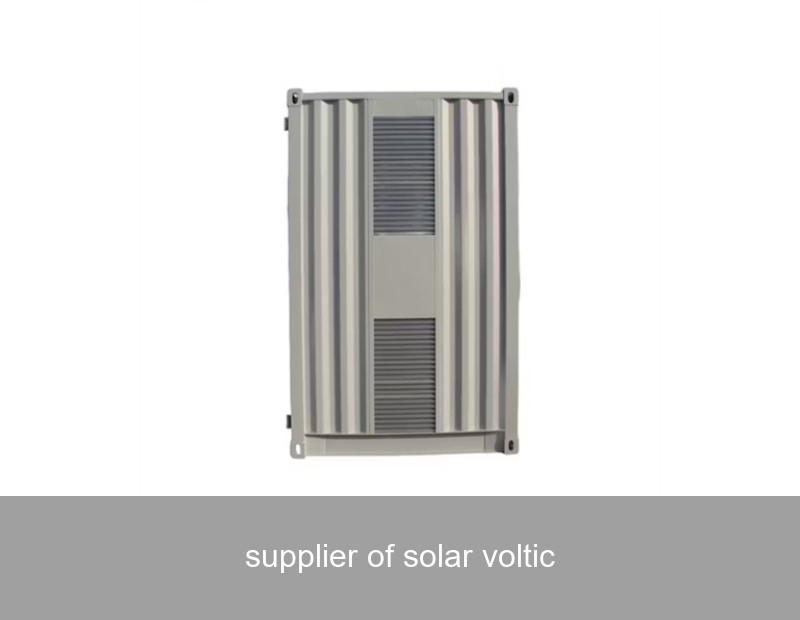
You've made the decision. The rising energy costs, the desire for sustainability, and the need for reliable power have all pointed you toward solar energy. But now comes the crucial step: choosing a supplier of solar voltaic (PV) systems. This isn't just about buying panels; it's about investing in a complete energy ecosystem that will power your home or business for decades. The right partner doesn't just sell hardware; they provide intelligent design, seamless integration, and long-term performance assurance. In today's market, where technology evolves rapidly, your supplier must be a guide, ensuring your system delivers maximum return on investment and true energy resilience.
Table of Contents
- The Phenomenon: Beyond the Panel on the Roof
- The Data: Why System Intelligence is the New Currency
- The Case Study: A European Industrial Park's Transformation
- The Insight: The Hallmarks of a Leading Supplier
- The Highjoule Approach: Engineering Your Energy Ecosystem
The Phenomenon: Beyond the Panel on the Roof
For many, the journey starts with the iconic solar panel. However, the modern solar solution is a sophisticated symphony of components. A true supplier of solar voltaic systems understands that the panel is just the beginning. The real value lies in the inverter that converts the power, the battery that stores it, and the energy management system that orchestrates it all. Think of it this way: you wouldn't buy a car engine without the transmission, wheels, and computer. Similarly, a fragmented approach to solar—buying components from different vendors—often leads to compatibility issues, suboptimal performance, and finger-pointing when service is needed.
The challenge for consumers and businesses is navigating this complexity. How do you ensure all components communicate flawlessly? How is your system protected from grid fluctuations? This is where the expertise of a holistic system provider becomes indispensable.
The Data: Why System Intelligence is the New Currency
Let's talk numbers. According to the National Renewable Energy Laboratory (NREL), the levelized cost of solar has dropped by over 80% in the last decade. But the next frontier of savings isn't in cheaper panels; it's in smarter systems. Data from the SolarPower Europe Market Outlook 2023 indicates that over 50% of new residential solar installations in key European markets now include battery storage. This shift underscores a critical point: energy independence is measured not just by what you generate, but by what you can control and use on your terms.
An intelligent system can:
- Increase self-consumption of solar energy from ~30% to over 70%.
- Provide automatic backup power during grid outages in milliseconds.
- Enable participation in grid services or virtual power plants, creating revenue streams.
The data is clear. The value of your solar investment is increasingly defined by the intelligence of the storage and management system paired with it.
A Visual Breakdown of a Modern Solar Voltaic System
| Component | Traditional Role | Modern, Intelligent Role |
|---|---|---|
| Solar Panels | Generate DC electricity during sunlight. | High-efficiency, durable modules that are the foundation of generation. Their performance data feeds the overall system brain. |
| Inverter(s) | Convert DC to usable AC power. | Advanced hybrid inverters manage multiple energy flows (solar, battery, grid) simultaneously and form the grid-forming "heart" of the system. |
| Battery Storage | Optional backup power. | The essential "energy bank." It stores excess solar, provides seamless backup, and allows for intelligent energy arbitrage (buying low, using high). |
| Energy Management System (EMS) | Basic monitoring. | The "brain." It uses AI and weather forecasts to optimize energy flow, predict usage, and maximize financial returns automatically. |
The Case Study: A European Industrial Park's Transformation
Consider the real-world challenge faced by a mid-sized industrial park in Northern Germany. The park housed several small manufacturing units with high, fluctuating daytime energy demands. Their goals were to reduce peak demand charges, ensure production continuity, and meet corporate sustainability targets.
The Problem: High grid dependency led to crippling peak tariffs and vulnerability to outages. A standard solar-only system would have left them exporting most of their midday surplus and still drawing expensive power in the morning and evening.
The Solution: They partnered with a supplier of solar voltaic systems that provided an integrated solar-plus-storage microgrid solution. The system included a 750 kWp solar carport array, a centralized 1.2 MWh containerized battery energy storage system (BESS), and a sophisticated microgrid controller.
The Data-Driven Outcome (12 months post-installation):
- Grid Independence: Achieved 92% energy self-sufficiency during daylight hours.
- Cost Savings: Reduced peak demand charges by 40% and overall energy costs by 68%.
- Reliability: The system provided uninterrupted power during two planned grid maintenance outages, saving an estimated €120,000 in potential production losses.
- Sustainability: Carbon footprint reduced by over 580 tonnes annually.

Image Source: Unsplash - Representative image of a commercial-scale solar installation.
This case illustrates the paradigm shift: the solution wasn't just solar panels; it was a custom-engineered, intelligent energy system designed for a specific commercial need.
The Insight: The Hallmarks of a Leading Supplier
So, what separates a component vendor from a true energy partner? Based on industry expertise and cases like the one above, here are the key differentiators:
- Holistic Design Capability: They design from the outcome backwards (e.g., "90% self-sufficiency") rather than just selling a pre-packaged kit.
- Technology Agnosticism (within reason): They recommend the best-in-class components (panels, batteries, inverters) that fit your specific use case, not just what they have in inventory.
- Deep Storage Integration Expertise: They treat storage not as an add-on, but as the core enabling technology for modern energy independence.
- Long-Term Performance Guarantees: They offer comprehensive warranties and performance guarantees on the entire system's output, not just individual parts.
- Software & Monitoring: They provide user-friendly, granular monitoring and control software that gives you insight and command over your energy.
The Highjoule Approach: Engineering Your Energy Ecosystem
At Highjoule, with nearly two decades of experience since 2005, we embody this partner-led philosophy. We don't just see ourselves as a supplier of solar voltaic equipment; we are engineers of resilient energy ecosystems. For our residential, commercial, and microgrid clients across Europe and North America, we provide a seamless, single-point-of-responsibility solution.
Our IntelliHub energy storage system is the cornerstone. It's a modular, high-voltage battery system built with automotive-grade lithium-ion cells for safety and longevity. Paired with our AI-driven Orchestrator EMS platform, the IntelliHub doesn't just store energy—it manages it with foresight. The platform can integrate with any major solar inverter brand, allowing us to design the optimal solar array for your site while ensuring flawless communication with the storage core.

Image Source: Unsplash - Example of a modern home with integrated solar and storage.
For our commercial and industrial clients, like the German industrial park, we deploy our Microgrid Controller. This technology allows multiple buildings or generators to operate in concert, island from the grid during outages, and even participate in grid-balancing programs. Our service includes full lifecycle support—from feasibility studies and financial modeling to installation, commissioning, and 24/7 performance monitoring.
Your Next Step: Questions to Ask Your Potential Partner
The journey to energy independence is a significant one. As you evaluate potential partners, move beyond price-per-watt comparisons. Instead, engage them in a conversation about your goals. Here are a few questions to start with:
- "Can you model my specific load profile and show me how the system you propose will perform across different seasons?"
- "How does your energy management software actively optimize my savings, not just monitor production?"
- "What is your protocol for system expansion if my needs grow, and how do you ensure new components integrate seamlessly?"
- "Can you provide a detailed case study or reference from a project with objectives similar to mine?"
What is the one energy goal—be it total outage protection, eliminating your electricity bill, or meeting a strict carbon target—that would make your investment in solar an unequivocal success?
 Inquiry
 Online Chat