


Finding the Right Supplier of TRES Solar: Your Guide to a Resilient Energy Future
Have you noticed your business's electricity bills becoming increasingly unpredictable? Or perhaps you're an energy manager grappling with the challenge of integrating a growing solar array while maintaining grid stability. You're not alone. This common experience is the first step toward a crucial conversation about modern energy independence. The solution lies in a sophisticated, integrated system: a T-Res, or Transformer-Ready Energy Storage system. But the key to unlocking its potential isn't just in the hardware; it's in choosing the right supplier of TRES solar solutions—a partner who can deliver not just a product, but a comprehensive, intelligent energy ecosystem.
Table of Contents
- What Exactly is a TRES (Transformer-Ready Energy Storage) System?
- Why Your Choice of Supplier of TRES Solar is More Critical Than Ever
- Key Criteria for Selecting Your TRES Supplier
- Case Study: A European Manufacturing Plant's Journey to Resilience
- The Highjoule Approach: Intelligent Storage as a Service
- Future Trends: Where is TRES Technology Headed?
What Exactly is a TRES (Transformer-Ready Energy Storage) System?
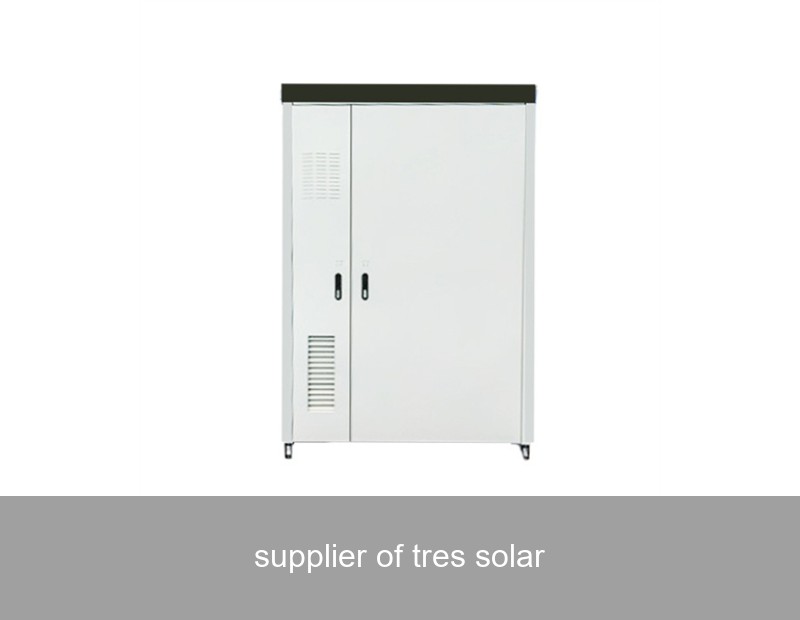
Let's demystify the term. A Transformer-Ready Energy Storage (TRES) system is an advanced, pre-integrated battery energy storage system (BESS) designed to connect directly to a distribution transformer. Think of it as a "plug-and-play" power hub for commercial and industrial sites. Unlike piecemeal components, a true TRES solution comes factory-assembled, tested, and contains all critical components—battery racks, thermal management, power conversion systems (PCS), and control software—within a single, often containerized, enclosure. This integration is what makes it "transformer-ready," significantly reducing on-site installation complexity, time, and cost.
The primary function of a TRES system is to store energy, typically from on-site solar photovoltaic (PV) arrays, for use at a later time. This capability unlocks several powerful applications:
- Peak Shaving: Reducing demand charges by discharging stored energy during periods of high, expensive grid usage.
- Solar Self-Consumption Optimization: Storing excess solar energy generated midday for use in the evening, maximizing your renewable investment.
- Backup Power: Providing critical load support during grid outages, ensuring business continuity.
- Grid Services: In some markets, providing frequency regulation or voltage support to the local utility grid.

Image: A modern containerized TRES solution, like those offered by leading suppliers, enables seamless integration at commercial sites. (Photo credit: Unsplash)
Why Your Choice of Supplier of TRES Solar is More Critical Than Ever
The global shift towards renewable energy is not just an environmental choice; it's an economic imperative. According to the International Energy Agency (IEA), global renewable capacity is set to expand by 2,400 gigawatts (GW) between 2023-2028, with solar PV accounting for over half. This explosive growth creates a dual challenge: grid intermittency and the need for localized energy management. A high-quality TRES system is the linchpin that addresses both.
The data is compelling. For commercial entities, demand charges can constitute 30-70% of an electricity bill. A strategically sized and managed TRES system can reduce these charges by 20-40%, delivering a rapid return on investment. Furthermore, with extreme weather events causing more frequent and prolonged power outages—the U.S. experienced an average of 5.8 hours of interruption per customer in 2021—on-site storage transitions from a luxury to a critical component of operational resilience.
This context elevates the role of your supplier of TRES solar from a simple vendor to a strategic energy partner. The system's hardware is important, but its intelligence, long-term performance, and integration capabilities are what truly determine its value over a 15-20 year lifespan.
Key Criteria for Selecting Your TRES Supplier
Not all suppliers are created equal. When evaluating a potential partner, consider this multi-tiered framework:
| Criterion | What to Look For | Why It Matters |
|---|---|---|
| System Intelligence & Software | Advanced Energy Management System (EMS) with AI-driven forecasting, real-time optimization, and user-friendly monitoring. | The software is the "brain." It maximizes financial returns, ensures battery health, and adapts to changing energy tariffs and usage patterns. |
| Technology Agnosticism & Integration | Ability to seamlessly integrate with various inverter brands, existing solar arrays, and future technologies. | Protects your existing investments and ensures future-proof flexibility, avoiding costly "rip-and-replace" scenarios. |
| Safety & Certification | UL 9540 (ESS Standard) and UL 9540A (Fire Test) certification, robust cell-level monitoring, and passive safety designs. | Non-negotiable for risk mitigation. Ensures the system meets the highest industry safety standards for installation and long-term operation. |
| Service & Warranty Model | Comprehensive, performance-based warranty (e.g., 10+ years) coupled with remote monitoring and proactive maintenance services. | Guarantees system performance and longevity. A supplier who offers operational services is invested in your system's success for decades. |
Case Study: A European Manufacturing Plant's Journey to Resilience
Let's examine a real-world application. A mid-sized automotive parts manufacturer in Bavaria, Germany, faced a classic problem: high grid dependency, volatile energy prices, and ambitious corporate sustainability targets. Their existing 500 kW rooftop solar array was covering only ~25% of their daytime load, with much excess energy being fed back to the grid at low feed-in tariffs.
Their chosen supplier of TRES solar conducted a detailed site analysis and recommended a 750 kWh / 375 kW Highjoule H-Cube TRES system. The pre-integrated, containerized solution was installed and grid-connected in under 8 weeks with minimal disruption to plant operations.
The Results (12 Months Post-Installation):
- Solar Self-Consumption Rate: Increased from 35% to over 85%.
- Demand Charge Reduction: Achieved a consistent 28% reduction, translating to €42,000 in annual savings.
- Backup Power: The system now provides 4 hours of full backup for critical manufacturing lines, a vital feature in a region experiencing more grid congestion.
- ROI: Projected payback period of 6.2 years, factoring in German energy price forecasts.
The plant manager noted, "The decision wasn't just about the battery box. It was about choosing a partner whose software could continuously optimize our energy flows against real-time prices and whose service team provides proactive insights. It's become a dynamic asset, not a static piece of equipment."
The Highjoule Approach: Intelligent Storage as a Service
At Highjoule, with nearly two decades of experience since our founding in 2005, we have redefined what it means to be a supplier of TRES solar solutions. We view our role not as equipment sellers, but as providers of guaranteed energy outcomes. Our flagship product for commercial and industrial applications, the H-Cube TRES, embodies this philosophy.
The H-Cube is more than a containerized battery. It's a pre-engineered ecosystem featuring:
- JouleMind AI Platform: Our proprietary EMS uses machine learning to predict energy generation and consumption, automatically selecting the most profitable operating mode every 5 minutes.
- Modular, Future-Proof Design: Based on standard 20-foot container footprints, the H-Cube's power and energy ratings can be scaled independently. This means you can easily increase storage capacity (kWh) as your solar array grows or your needs change, without replacing the entire PCS.
- Unmatched Safety: Every H-Cube system is built with LFP (Lithium Iron Phosphate) chemistry as standard, undergoes full UL 9540/9540A testing, and features a multi-layered safety architecture from cell to container.
Our service model, Highjoule Assure, extends this partnership. It combines our extended performance warranty with 24/7 remote monitoring, predictive maintenance alerts, and regular performance reports. We ensure your system delivers its promised financial and operational benefits year after year.

Image: Intelligent software dashboards, like Highjoule's JouleMind, are critical for visualizing and optimizing TRES performance. (Photo credit: Unsplash)
Future Trends: Where is TRES Technology Headed?
The evolution of TRES is being shaped by software and market structures. We are moving towards virtual power plants (VPPs), where thousands of distributed TRES systems are aggregated to act as a single, dispatchable power resource for the grid. This creates a new revenue stream for system owners. Furthermore, the integration of second-life EV batteries into stationary storage is gaining traction, promising a more circular economy, though it demands sophisticated battery management from the supplier.
The most significant trend, however, is the shift from capital expenditure (CapEx) to operational expenditure (OpEx) models. Forward-thinking suppliers are offering Storage-as-a-Service (SaaS) arrangements, where the customer pays a monthly fee for the energy services (peak shaving, backup) without the upfront capital outlay. This dramatically lowers the barrier to entry for businesses seeking energy resilience.
Is Your Current Energy Strategy Prepared for the Next Decade of Volatility?
The question isn't whether you need to manage your energy costs and ensure resilience—it's how. As you evaluate your path forward, consider this: does your prospective supplier of TRES solar offer a holistic partnership built on intelligent technology and long-term performance guarantees, or are they simply offering a commodity battery in a box? The distinction will define your energy independence for the next 20 years.
What specific energy challenge—be it demand charge spikes, renewable curtailment, or backup power needs—is currently the biggest obstacle to your operational and financial goals?
 Inquiry
 Online Chat