


Why Telecom Battery Suppliers Are the Unsung Heroes of Our Connected World
Think about the last time you made a phone call, streamed a video, or checked a map on your phone. It felt seamless, right? That seamless experience relies on a vast, invisible network of cell towers and data centers, all demanding one critical thing: absolute, unwavering power reliability. This is where telecom battery suppliers step into the spotlight. They don't just provide batteries; they supply the very lifeline of modern communication. In an era of increasing grid instability and a global push for sustainability, the role of these suppliers is evolving from providing simple backup to delivering intelligent, resilient, and green energy solutions.
Table of Contents
- The Power Paradox: More Connectivity, More Vulnerability
- Beyond Backup: The New Demands on Telecom Battery Suppliers
- Case Study: A European Telco's Green Transition
- Choosing the Right Telecom Battery Supplier: A Strategic Decision
- Highjoule's Role: Powering the Future of Telecom
- The Future Horizon: What's Next for Network Power?
The Power Paradox: More Connectivity, More Vulnerability
The phenomenon is clear: our world is hungrier for data than ever. The rollout of 5G, the expansion of fiber networks, and the growth of IoT devices are dramatically increasing the density and energy consumption of telecom infrastructure. Each macro-cell site can now consume over 10-15 kW, compared to 1-2 kW for older 3G/4G sites. However, this growth creates a paradox. These advanced networks are more sensitive to power interruptions. A mere seconds-long outage can cause dropped calls, network congestion, and significant data loss, impacting everything from individual users to critical emergency services.
Let's look at the data. According to a U.S. Department of Energy report, telecommunication is listed among the top critical infrastructure sectors, with power reliability being its Achilles' heel. The financial impact is staggering. For a major telecom operator, network downtime can cost over $15,000 per minute in lost revenue and remediation efforts. This isn't just about inconvenience; it's about economic and societal resilience. Traditional backup systems, often relying on decades-old lead-acid battery technology or diesel generators, are increasingly seen as inadequate. They are bulky, require frequent maintenance, have a shorter lifespan, and conflict with corporate sustainability goals.

Image Source: Unsplash - A modern cell site highlighting the need for integrated power solutions.
Beyond Backup: The New Demands on Telecom Battery Suppliers
Today, a leading telecom battery supplier must be a strategic energy partner. The checklist has expanded far beyond just providing a box that holds energy.
- Lithium-ion Dominance: The shift to Lithium-ion (Li-ion) is undeniable. With 2-3 times the lifespan of lead-acid, faster charging, higher depth of discharge, and a smaller footprint, Li-ion is the core technology for modern telecom backup.
- Intelligence and Connectivity: Batteries are now smart. Remote monitoring capabilities allow network operators to check state-of-charge, health, and performance of every battery unit across thousands of sites from a central dashboard, predicting failures before they occur.
- Grid Services and Sustainability: Forward-thinking operators are looking at their distributed battery assets as a virtual power plant. During periods of high grid demand or high energy prices, batteries can provide power back to the grid or be used for peak shaving, creating a new revenue stream.
- Resilience to Extreme Conditions: From scorching deserts to freezing tundras, telecom batteries must perform reliably. Suppliers need to provide robust thermal management systems within their battery cabinets.
Case Study: A European Telco's Green Transition
Let's examine a real-world application. A major telecommunications provider in Scandinavia, committed to achieving net-zero operations by 2030, faced a dual challenge: replacing aging lead-acid batteries at hundreds of remote sites and reducing reliance on diesel generators for backup, which were both carbon-intensive and costly to refuel.
They partnered with a next-generation telecom battery supplier to deploy a standardized Li-ion battery storage system integrated with existing site controllers. The results over a 24-month pilot across 50 sites were compelling:
| Metric | Before (Lead-Acid/Diesel) | After (Li-ion System) |
|---|---|---|
| Estimated Backup Runtime | 4-6 hours | 12+ hours |
| Site Visits for Maintenance | 4 per year | Remote monitoring; 1 physical visit every 2-3 years |
| CO2 Emissions from Backup | ~12 tonnes/site/year | 0 tonnes (when coupled with on-site solar) |
| Total Cost of Ownership (10y) | High (fuel, replacements, labor) | Reduced by an estimated 40% |
This case, documented in part by the GSMA's Future Networks initiative, illustrates the transformative impact of modern energy storage. It's not just a battery swap; it's an operational and environmental upgrade.
Choosing the Right Telecom Battery Supplier: A Strategic Decision
Selecting a supplier is no longer a simple procurement task. Network operators should look for partners who demonstrate:
- Proven Global Expertise: Experience deploying solutions in your specific geographic and climatic region.
- Full-System Integration: Ability to provide not just battery racks, but the complete power conversion, control, and monitoring system for seamless integration.
- Cybersecurity & Safety: Adherence to the highest international safety standards (e.g., UL, IEC) and robust cybersecurity protocols for connected devices.
- Lifecycle Support: A clear plan for installation, long-term service, warranty, and end-of-life battery recycling.
Highjoule's Role: Powering the Future of Telecom
At Highjoule, with nearly two decades of experience since 2005, we understand these complex challenges intimately. We position ourselves not just as telecom battery suppliers, but as architects of network resilience. Our H-Power Telecom Series is engineered specifically for the rigors of the telecom industry.
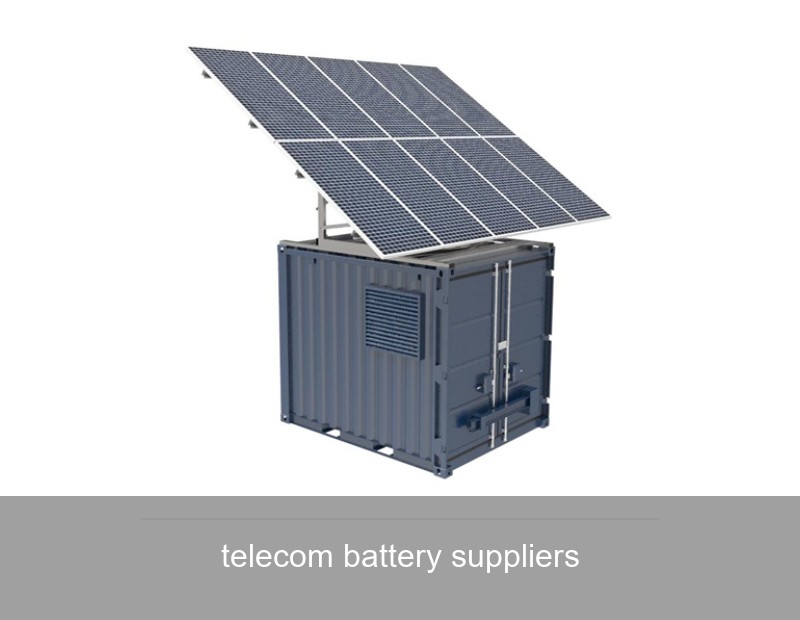
Our solutions feature industry-leading Li-ion cells in a modular, scalable design, allowing operators to easily expand capacity as network demands grow. The integrated Highjoule Energy Management System (HEMS) is the brain of the operation, offering granular, real-time monitoring and control. It enables features like intelligent cycling to extend battery life and can be configured to participate in grid service programs where available. For off-grid or unreliable grid sites, we design hybrid systems that seamlessly integrate solar PV with our battery storage, creating truly sustainable and self-sufficient telecom hubs. Our global service network ensures that whether a site is in Texas or Bavaria, support is always within reach.

Image Source: Unsplash - Representative image of a high-density, modern battery installation.
The Future Horizon: What's Next for Network Power?
The journey doesn't stop here. As we look ahead, the convergence of telecom and energy will deepen. We're moving towards networks that are not only consumers of power but active, intelligent participants in the local energy ecosystem. Imagine a cell tower that stores excess solar energy during the day, powers its transmitters at night, sells surplus power to the grid during a demand peak, and provides critical backup during a blackout—all autonomously managed. This is the vision of the truly resilient, sustainable, and efficient network.
The question for every telecom operator now is: Is your power strategy still living in the backup era, or is it ready to become a source of competitive advantage and sustainability leadership? What would it mean for your network if every site could contribute to your bottom line and your green goals, rather than just being a cost center?
 Inquiry
 Online Chat