


Finding the Best Solar Company in Kenya: Your Guide to Sustainable Power
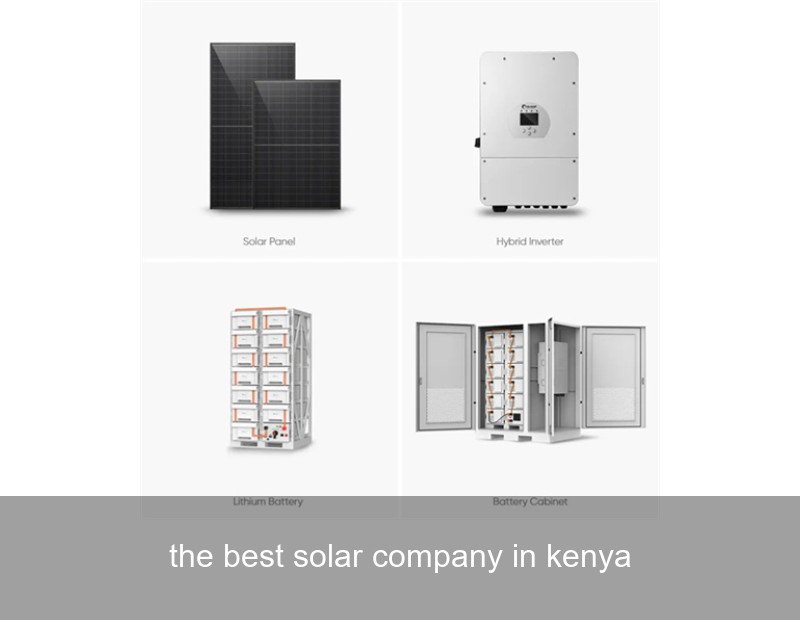
Kenya stands at a remarkable energy crossroads. Blessed with some of the highest solar irradiance levels on the planet—averaging 4-6 kWh/m²/day—the potential for solar power is immense. Yet, for businesses, farms, and households, the journey from abundant sunshine to reliable, 24/7 power is fraught with complexity. It’s not just about mounting panels on a roof; it’s about building a resilient energy system. This is where the search for the best solar company in Kenya becomes critical. The right partner doesn't just sell hardware; they deliver energy independence through intelligent design, robust technology, and deep understanding of local challenges.
The Challenge: More Sun, More Power Problems?
You might think, "With so much sun, solar should be simple." The reality for many Kenyan enterprises is different. Intermittent grid power, commonly known as "blackouts" or "load-shedding," forces reliance on expensive, polluting diesel generators. A solar panel system alone can't solve this—it generates power only when the sun shines, leaving operations vulnerable at night and during cloudy periods. The true need is for consistent power. According to a World Bank report, unreliable electricity supply remains a significant constraint for businesses in Sub-Saharan Africa, impacting productivity and growth. The initial excitement of installing solar panels can quickly fade if the system lacks the intelligence to store and manage energy effectively.

Image Source: Unsplash - Representative image of commercial solar installation.
The Solution: Beyond Panels - The Intelligent Energy Ecosystem
The benchmark for the best solar company in Kenya has shifted. Today, it's about providing a complete, intelligent energy ecosystem. This system integrates three core components seamlessly:
- High-Efficiency Solar Panels: To capture maximum sunlight.
- Advanced Battery Energy Storage Systems (BESS): The heart of 24/7 power, storing excess solar energy for use anytime.
- Smart Energy Management Software: The brain that optimizes energy flow, prioritizes loads, and ensures system health.
This trifecta transforms a simple solar installation into a sophisticated on-site microgrid. It allows you to maximize self-consumption of solar energy, provide backup during grid outages, and even manage energy costs by avoiding peak tariff periods. The technology behind the storage system is paramount. Lithium-ion phosphate (LFP) batteries, for instance, are now the industry standard for commercial and industrial use due to their long lifespan, safety, and stability in varied climates.
Case Study: A Kenyan Flower Farm's Transformation
Let's look at a real-world example from Naivasha, a hub for Kenya's famed horticulture industry. A large flower farm exporting to Europe faced two major issues: unpredictable grid outages threatening refrigeration units, and crippling diesel generator costs exceeding KES 800,000 monthly.
They partnered with a leading Kenyan solar integrator who utilized Highjoule's HPS Series Commercial & Industrial Battery Storage solution. The project included:
| Component | Specification | Purpose |
|---|---|---|
| Solar PV Array | 850 kWp | Primary daytime power generation |
| Highjoule HPS Battery System | 500 kWh / 250 kW | Energy storage for night & backup |
| Energy Management System | Highjoule Neuron Platform | Intelligent control & monitoring |
- Diesel Usage Reduction: 95% (from 40,000 liters/month to ~2,000 liters for extreme backup only).
- Energy Cost Savings: ~70% overall, paying back the system investment in under 4 years.
- Reliability: Zero product spoilage due to power loss, securing vital export contracts.
- Carbon Footprint: Reduced by over 1,200 tons of CO₂ annually.
This case underscores that the value is delivered not by a single component, but by a perfectly harmonized system designed for the client's specific load profile and business goals.

Image Source: Unsplash - Representative image of a clean, modern battery storage system interior.
What Makes the Best Solar Company in Kenya?
Based on this evolving landscape, here are the key attributes to look for:
1. Holistic System Design Capability
The company should ask detailed questions about your energy consumption patterns, not just your roof size. They must design for your needs, not just sell a predefined package.
2. Technology Partnerships & Quality
Top firms partner with globally proven technology providers for critical components like batteries and inverters. This ensures performance, warranty support, and access to ongoing innovation. For instance, Highjoule's storage systems are engineered for global markets but are deployed in diverse climates from Texas to Tanzania, proving their resilience.
3. Long-Term Performance Guarantees
Look for strong warranties on performance (e.g., battery capacity retained after 10 years) and professional O&M (Operations & Maintenance) offerings. Your system is a long-term asset.
4. Deep Local & Sector Expertise
Understanding Kenya's regulatory environment, grid codes (for interconnection), and sector-specific challenges (e.g., for agriculture, manufacturing, hospitality) is non-negotiable.
Highjoule's Role in Empowering Kenyan Solar
As a global leader in advanced energy storage since 2005, Highjoule does not install systems directly for end-users in Kenya. Instead, we empower the best solar companies in Kenya by being their technology partner of choice. We provide the core intelligence and storage hardware that allows these integrators to deliver exceptional results for their clients.
For Kenyan partners, Highjoule offers:
- The HPS Series: Containerized and rack-mounted BESS solutions scalable from 100 kWh to multi-MWh, perfect for C&I and microgrid applications.
- The Neuron Digital Platform: Cloud-based AI for real-time monitoring, predictive analytics, and remote management, ensuring systems perform optimally for decades.
- Global Engineering Support: Our technical teams collaborate with local engineers on system design and commissioning, transferring knowledge and ensuring best practices.
- Proven Track Record: With thousands of systems deployed worldwide, Highjoule brings a level of reliability and data-driven insight that de-risks large-scale solar+storage projects.
By choosing a solar integrator that utilizes Highjoule technology, you're indirectly tapping into nearly two decades of global energy storage expertise, tailored for the Kenyan context.
Looking Ahead: Your Energy Independence
The conversation around solar in Kenya is moving from cost to value—value in uninterrupted production, in predictable operational expenses, and in sustainability credentials that open international market opportunities. The International Energy Agency (IEA) highlights Kenya's leadership in renewable energy in Africa, with solar playing an increasingly central role.
So, when you evaluate potential partners for your solar journey, ask them not just about the price per watt of a panel, but: "How will you guarantee my power supply after sunset?" and "What is your strategy for ensuring my battery system still performs at its peak a decade from now?"
What is the first operational cost you would eliminate if you had a perfectly reliable, solar-powered microgrid at your facility?
 Inquiry
 Online Chat