


Three Phase String Energy Storage Cabinet: The Powerhouse for Modern Commercial & Industrial Energy Management
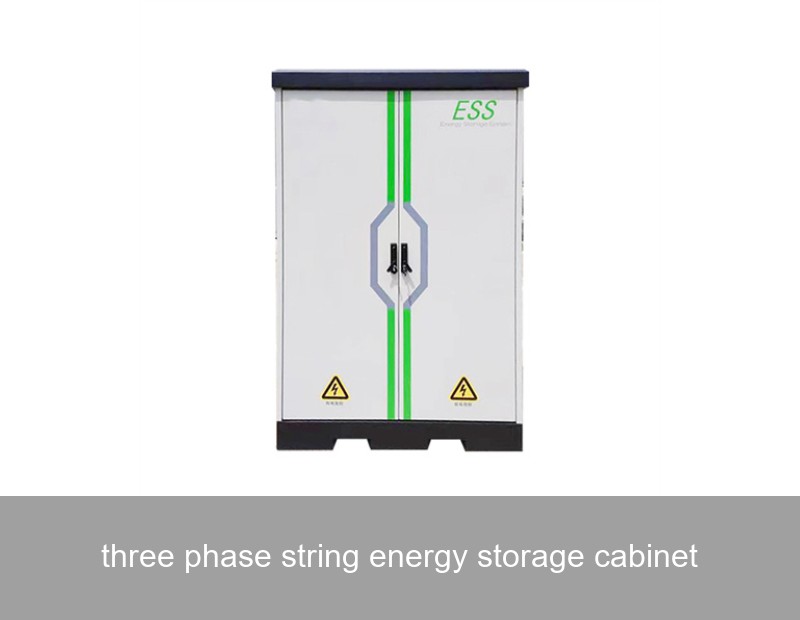
Have you ever watched your facility's electricity meter spin wildly during peak hours, translating directly into soaring energy bills? Or felt the frustration of a manufacturing process interrupted by a grid hiccup? You're not alone. Across Europe and the U.S., businesses are grappling with volatile energy prices and an increasingly unreliable grid. The solution? Intelligent, industrial-grade energy storage. And at the heart of this revolution is a key piece of technology: the three phase string energy storage cabinet. This isn't just a big battery; it's a sophisticated power management system designed to bring stability, savings, and sustainability to demanding commercial and industrial (C&I) applications. Let's explore how this technology works and why it's becoming a non-negotiable asset for forward-thinking businesses.
What is a Three Phase String Energy Storage Cabinet?
In simple terms, a three phase string energy storage cabinet is a modular, containerized system that stores electrical energy for three-phase power systems—the standard for almost all industrial and large commercial buildings. Think of it as a highly organized, industrial-strength power bank. The "three phase" part means it seamlessly integrates with your building's heavy-duty electrical infrastructure. The "string" architecture is where the magic happens: instead of one massive battery block, multiple smaller battery modules are connected in series (a "string") to build up the required voltage. Several of these strings are then connected in parallel within the cabinet to increase capacity. This design, championed by leading providers like Highjoule, offers unparalleled flexibility, safety, and uptime.

Highjoule's H-Ionic C&I Series cabinets exemplify this. They combine high-density lithium iron phosphate (LFP) battery strings with integrated power conversion systems (PCS) and a sophisticated energy management system (EMS) in one robust, self-contained unit. This allows businesses to easily scale their storage capacity by adding cabinets and manage complex energy flows with precision.
The Phenomenon: Energy Volatility is a Direct Business Risk
The old model of simply drawing power from the grid 24/7 is breaking down. Two major forces are at play:
- Cost Spikes: Time-of-Use (TOU) rates and demand charges can make peak-hour electricity 2-3 times more expensive. For a factory running heavy machinery, this is a massive, recurring operational cost.
- Grid Instability: From extreme weather events straining infrastructure to the intermittent nature of renewable energy feeding into the grid, power quality and reliability are concerns. A momentary voltage dip can ruin a batch of product or halt automated assembly lines.
The phenomenon is clear: passive energy consumption is a financial and operational liability.
The Data-Driven Solution: How String Architecture Delivers Superior Performance
Why choose a string-based cabinet over other designs? The data and engineering principles speak for themselves. Let's break down the advantages:
| Feature | String Architecture (e.g., Highjoule H-Ionic) | Traditional Centralized Battery |
|---|---|---|
| Modularity & Scalability | Capacity can be increased by adding battery strings or cabinets incrementally. | Often requires a complete, costly system overhaul to scale. |
| Safety & Reliability | Fault in one module/string can be isolated. The rest of the system operates normally. | A single cell fault can compromise the entire battery bank, leading to full shutdown. |
| Efficiency & Uptime | Individual Maximum Power Point Tracking (MPPT) per string optimizes charging from uneven solar arrays. | One inverter for the whole system; shading on part of solar panels drags down overall performance. |
| Maintenance & TCO | Hot-swappable modules allow for maintenance without system shutdown, reducing downtime cost. | Maintenance often requires taking the entire storage system offline. |
According to a 2023 NREL report on C&I storage, modular, string-based systems can achieve up to 25% higher lifecycle energy throughput due to improved individual string management and reduced system downtime. This directly translates to a faster return on investment (ROI).
Real-World Impact: A Manufacturing Plant in Bavaria, Germany
Let's move from theory to practice. A mid-sized automotive parts manufacturer near Munich faced crippling demand charges and sought to leverage its large rooftop solar PV system more effectively. Their goal was to maximize self-consumption of solar energy and eliminate grid power during the expensive 4 PM to 9 PM window.
The Solution: Highjoule deployed a turnkey system featuring two of its H-Ionic 200 kW / 430 kWh three phase string energy storage cabinets, integrated with the existing solar inverters.
The Data-Driven Outcome (First 12 Months):
- Demand Charge Reduction: Peak grid draw was slashed by 78%, saving over €48,000 annually on this charge alone.
- Solar Self-Consumption: Increased from 35% to over 80%, diverting excess daytime solar into the cabinets for evening use.
- ROI: Projected payback period of 4.2 years, factoring in German energy price trends and EU clean energy incentives.
- Resilience: The system provided seamless backup power for critical QA labs during two brief grid outages, preventing production line contamination.

Highjoule's Advanced Approach to Three-Phase Storage
With nearly two decades of experience since 2005, Highjoule doesn't just supply cabinets; it delivers intelligent energy ecosystems. Our three phase string systems are built on three core pillars:
- Proactive Safety: Our proprietary Battery Management System (BMS) performs cell-level monitoring within each string. It uses AI-driven algorithms to predict thermal behavior and prevent issues before they occur, a critical feature for industrial settings.
- Grid-Interactive Intelligence: The integrated EMS can be configured for multiple revenue streams. Beyond peak shaving, it can participate in grid services like frequency response (a growing market in both the U.S. FERC markets and Europe), turning your storage system from a cost-saver into a potential revenue generator.
- Seamless Integration: We understand that every facility is unique. Our cabinets are designed for easy integration with existing solar PV, wind, generator sets, and building management systems, providing a unified view and control of your energy assets.
Key Insights for Your Business Energy Strategy
The transition to active energy management is inevitable. Implementing a three phase string energy storage cabinet is not merely an equipment purchase; it's a strategic upgrade to your facility's infrastructure. Here are the critical takeaways:
- Start with an Audit: The first step is understanding your precise load profile, solar generation, and tariff structure. What are your true peak demand windows?
- Prioritize Flexibility: Choose a modular, string-based system. Your energy needs will evolve; your storage system should be able to evolve with them without becoming obsolete.
- Think Beyond Backup: The primary value is often in daily financial arbitrage and demand charge management. Resilience is a powerful secondary benefit.
- Partner with Experts: The design, permitting, and grid interconnection process requires deep expertise. Partnering with a provider like Highjoule, which offers end-to-end services from consultancy to long-term performance monitoring, de-risks the entire project.

Is your business ready to transform its energy profile from a volatile cost center into a predictable, efficient, and resilient asset? What would a 40-80% reduction in your peak demand charges do for your operational budget this coming year?
 Inquiry
 Online Chat