


5kW Solar Panels: Is This the Perfect Size for Your Home Energy Independence?
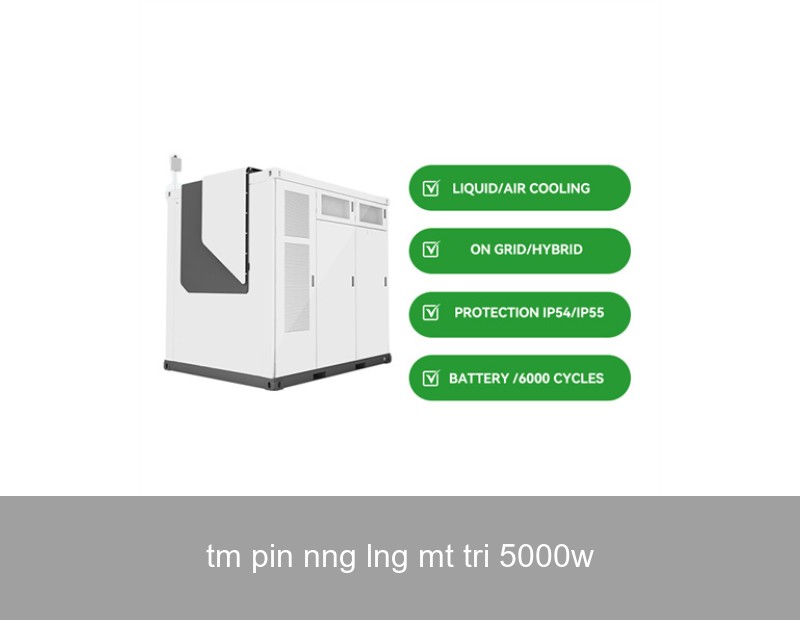
You're considering solar power, and you keep hearing about "5kW systems." It sounds substantial, and it is. A 5000-watt (5kW) solar panel array represents a powerful step toward energy self-sufficiency for countless homeowners across Europe and the U.S. But is it the right fit for your roof, your lifestyle, and your energy goals? Let's demystify the 5kW solar solution, moving beyond the specs to understand its real-world impact, and explore how pairing it with the right technology unlocks its full potential.
What is a 5kW Solar Panel System?
A 5kW solar power system refers to an array of photovoltaic (PV) panels with a combined peak power output of 5,000 watts (5 kilowatts) under ideal laboratory conditions. In practice, it typically consists of 12 to 15 high-efficiency solar panels, depending on the wattage of each individual module. This system size is designed to significantly offset, and sometimes completely cover, the annual electricity consumption of an average family home.
The Phenomenon: Why 5kW is a Residential Sweet Spot
So why has this particular size become so popular? It's a convergence of economics, physics, and practicality. For many detached homes, a 5kW system fits neatly on available roof space—often south-facing in the Northern Hemisphere—without appearing oversized or requiring complex structural adjustments. It strikes a balance between a meaningful upfront investment and a compelling return, both financially and environmentally. However, the initial excitement of generating your own power often meets a hard reality: you produce the most energy when you might be at work, and you need it most in the evening when the sun is low. This mismatch is the central challenge modern solar adopters face.
By the Numbers: Output, Savings, and Payback
Let's ground this in data. A 5kW system's actual energy yield isn't 5kW every hour; it's about daily energy production in kilowatt-hours (kWh). This varies dramatically by location.
| Location (City) | Estimated Annual Production* | Potential Annual Offset for an Average Home** |
|---|---|---|
| Munich, Germany | ~5,100 kWh | 85-100% |
| Madrid, Spain | ~7,300 kWh | 120%+ (often covers heating/cooling) |
| Los Angeles, USA | ~8,200 kWh | 110%+ |
| New York, USA | ~6,000 kWh | 90-100% |
*Source: PVWatts Calculator from the National Renewable Energy Laboratory (NREL). **Based on average EU household consumption of ~3,500 kWh and US of ~10,600 kWh (EIA).

Image: A typical residential solar installation. Credit: Unsplash (Representative image).
The financial math is compelling. With rising electricity prices across Europe and North America, locking in a low, predictable cost of solar energy for 25+ years provides a powerful hedge. The payback period can range from 6-12 years, after which the electricity your system produces is essentially free. But this calculation assumes you can use the power you generate. Without a way to store surplus midday production, a significant portion is often exported to the grid at a lower price, diminishing your returns and failing to secure your power during outages.
The Critical Missing Piece: Storage and Smart Management
This is where the solar story evolves. A standalone 5kW PV system is a generator. An integrated 5kW PV + storage system is a personal power plant. Adding a battery energy storage system (BESS) transforms your relationship with energy. Suddenly, that surplus noon energy charges your battery, ready to power your home from dusk until dawn. Your self-consumption rate—the percentage of your solar energy you use directly—can jump from 30-40% to 70% or more. This isn't just about savings; it's about resilience. When the grid goes down, a properly configured system with storage keeps your lights on, your fridge running, and your family safe.
Enter Highjoule: The Intelligence Behind the Power
At Highjoule, we've seen this evolution firsthand since 2005. We understand that the true value of a 5kW solar array is unlocked not just by adding a battery, but by integrating it with sophisticated energy management. Our HPS (Highjoule Power System) series for residential and commercial applications is designed for this exact purpose. It's more than a battery; it's an AC-coupled system with a smart hybrid inverter at its core that seamlessly orchestrates solar panels, battery storage, grid power, and home loads.
Think of it as the conductor of your home's energy orchestra. Our system's AI-driven software learns your consumption patterns, weather forecasts, and electricity tariff schedules. It automatically decides the most economical and efficient moment to store solar energy, draw from the grid, or discharge the battery—maximizing your independence and minimizing your bill.
Case Study: A German Household's Journey to 80% Self-Consumption
Let's look at real data from a family home near Frankfurt, Germany. The homeowners installed a 5.2kW solar array in 2020. Initially, their self-consumption was just 35%. In 2022, they integrated a Highjoule HPS-10 battery system (10.2 kWh usable capacity). The results after one year were transformative:
- Annual Self-Consumption Rate: Increased from 35% to 82%.
- Grid Electricity Purchases: Reduced by 68%.
- Bill Savings: Increased by an additional €580 per year, accelerating the system's payback.
- Backup Power: The system provided seamless backup during two grid outages, totaling 8 hours.
"The panels were a great first step, but the Highjoule battery and its smart controls made us truly energy-aware," the homeowner reported. "We're not just generating power; we're intelligently managing our own energy ecosystem." This case underscores a key insight: the system's intelligence is as valuable as its hardware.

Image: A modern home battery storage unit. Credit: Unsplash (Representative image).
Beyond the Panels: Highjoule's Integrated Energy Solution
For homeowners investing in a robust 5kW solar setup, choosing the right partner for storage and management is critical. Highjoule's solutions are engineered for longevity, safety, and seamless integration. Our batteries use premium LiFePO4 (LFP) chemistry, renowned for its long cycle life and thermal stability. The modular design allows for capacity expansion as your needs grow. Furthermore, our systems are designed for both new installations and retrofits to existing solar arrays, making the upgrade to a smart, resilient power system straightforward.
Our services extend beyond the sale. We provide comprehensive energy assessments, professional installation support through our certified partner network, and remote system monitoring via the Highjoule Energy App. This allows you to track your production, consumption, and savings in real-time from your smartphone, giving you complete transparency and control over your energy future.
Making the Decision: Is a 5kW System Right for You?
As you contemplate a 5kW solar panel system, ask yourself these broader questions:
- Is my primary goal to reduce bills, achieve energy independence, or ensure backup power?
- Do I have a suitable, unshaded roof area (approx. 25-35 m²)?
- Am I planning for future energy needs, like an electric vehicle or heat pump?
- Is my local grid stable, or are outages a growing concern?
The answers will guide you. For many, a 5kW system paired with intelligent storage from a provider like Highjoule represents the optimal point where ambition meets practicality, and investment meets transformative return.
So, as you envision those sleek panels on your roof, we leave you with this: What would you power first, knowing you have a clean, reliable energy source that works for you day and night?
 Inquiry
 Online Chat