


Top 10 Solar Panel Company in Bangladesh: Powering a Nation's Sustainable Future
Imagine a country where millions have gained access to electricity in less than a generation, not solely through sprawling traditional grids, but through the power of the sun. This is Bangladesh's reality. The nation's remarkable journey towards energy security is increasingly painted in photovoltaic blue, with rooftop installations and solar home systems becoming ubiquitous. For businesses, industries, and communities looking to join this transformation, the search often begins with finding a reliable top 10 solar panel company in Bangladesh. But in a bustling and competitive market, what truly sets the leaders apart? It goes beyond just selling panels; it's about providing comprehensive, intelligent energy solutions that last.
Navigating the Market: What Defines a Top Solar Panel Company?
While numerous firms operate in the sector, the elite top 10 solar panel company in Bangladesh group distinguishes itself through a combination of product quality, technical expertise, financial stability, and after-sales service. These companies are typically authorized distributors or partners for internationally recognized tier-1 panel manufacturers (like Jinko Solar, Longi, Canadian Solar, or REC). They offer more than hardware; they provide system design, engineering, installation, and long-term maintenance.
A key phenomenon in Bangladesh is the shift from small-scale residential systems to larger commercial and industrial (C&I) and utility-scale projects. This shift demands higher technical competency. According to the Sustainable and Renewable Energy Development Authority (SREDA), Bangladesh aims to generate 4,114 MW from solar PV by 2030, with a significant portion coming from grid-connected large-scale plants. This ambitious target creates both opportunity and a need for quality.
Hallmarks of a Leading Solar Provider
- Technology Partnerships: Association with globally reputed panel and component manufacturers.
- In-House Engineering: Capability to design systems optimized for Bangladesh's specific climate and grid conditions.
- Financial Health: Ability to offer bankable solutions and support financing for clients.
- Project Portfolio: A proven track record with case studies, especially in the C&I segment.
- Grid Compliance: Expertise in ensuring systems meet the Bangladesh Grid Code requirements for interconnection.
Key Criteria for Choosing Your Solar Partner in Bangladesh
Selecting from a potential top 10 solar panel company in Bangladesh requires due diligence. Your choice will impact your system's performance for 25+ years.
| Criteria | What to Look For | Why It Matters for Bangladesh |
|---|---|---|
| Panel Performance & Warranty | High efficiency (>20%), robust temperature coefficient, 25+ year linear power output warranty. | Maximizes energy yield in limited rooftop space and performs reliably in high heat and humidity. |
| Inverter Quality & Compatibility | Inverters from top brands (e.g., SMA, Fronius, Sungrow) with smart monitoring capabilities. | Ensures stable conversion of DC to AC and handles frequent grid voltage fluctuations common in the region. |
| System Design & Simulation | Detailed shading analysis, accurate production forecasts using tools like PVsyst. | Bangladesh's dense urban landscape requires precise design to avoid shading losses from nearby structures. |
| O&M and Monitoring Support | Remote monitoring platforms and clear operations & maintenance (O&M) contracts. | Proactive maintenance prevents soiling and technical issues, safeguarding your investment's ROI. |
The Critical Piece Often Overlooked: It's Not Just About the Panels
Here's an insight many discover too late: the solar panels, while crucial, are only one part of the equation. The true intelligence and resilience of a modern solar power system lie in the balance of system (BOS)—particularly in the inverter and the energy storage system. This is where the narrative expands beyond a local top 10 solar panel company in Bangladesh to include global technology specialists.
Consider this: Bangladesh experiences seasonal variations in solar irradiance and, more critically, an electricity grid that can be unstable in certain areas. A solar system without storage simply turns off during a grid outage, a phenomenon known as "anti-islanding." For a factory, hospital, or shopping mall, this means productivity halts precisely when needed most.

Image: A well-designed commercial rooftop solar installation requires robust components and expert engineering. (Photo by American Public Power Association on Unsplash)
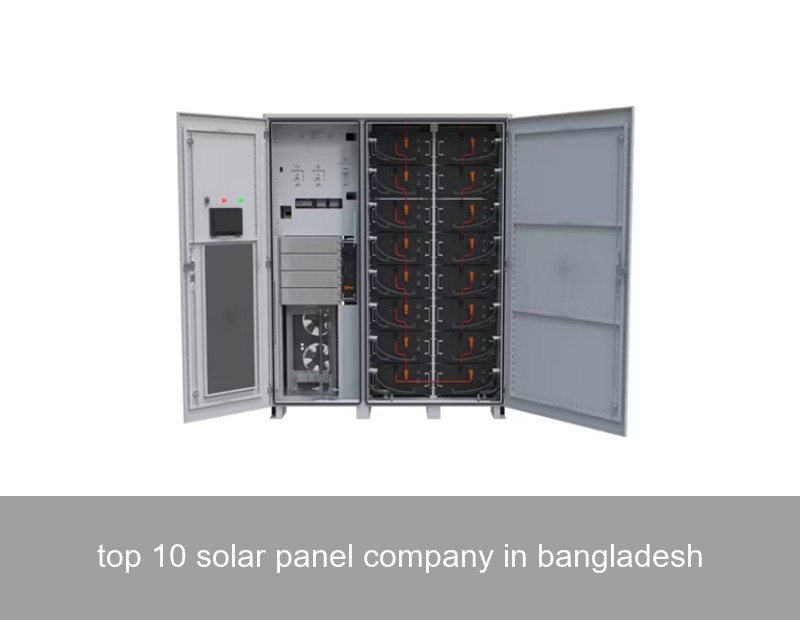
Integrating a battery energy storage system (BESS) transforms a solar installation from a cost-saver into a true energy asset. It provides:
- Backup Power: Seamless continuity during grid failures.
- Load Shifting: Storing excess solar energy generated during the day for use in the expensive evening peak hours.
- Grid Support: Helping stabilize local voltage and frequency, which is increasingly valuable as grid penetration of solar rises.
How Global Innovators Like Highjoule Elevate Solar Projects
This is where a company like Highjoule becomes a pivotal partner for both end-users and forward-thinking top 10 solar panel company in Bangladesh. Since 2005, Highjoule has been at the forefront of advanced energy storage solutions globally. For the Bangladeshi market, Highjoule doesn't supply panels but provides the intelligent backbone that makes solar power reliable and economically optimal.
Highjoule's containerized and modular battery storage systems are designed for commercial, industrial, and microgrid applications. When a leading Bangladeshi solar EPC (Engineering, Procurement, and Construction) company partners with Highjoule, they can offer clients a far superior solution:
- Highjoule's AI-powered energy management system (EMS) intelligently decides when to charge from solar, when to discharge to the facility, and when to interact with the grid, maximizing self-consumption and savings.
- Their systems use lithium iron phosphate (LFP) battery chemistry, known for its exceptional safety, long cycle life (10,000+ cycles), and stability in high temperatures—a perfect match for Bangladesh's climate.
- Scalable design allows a business to start with a modest storage capacity and expand as their needs grow.
A Concrete Case Study: Garment Factory in Dhaka
Let's look at real data. A large garment manufacturing facility in Dhaka, working with a local top 10 solar panel company and Highjoule, implemented a 1.2 MW rooftop solar PV system coupled with a 500 kWh / 1000kWh Highjoule BESS.
- Challenge: High grid electricity costs, frequent short-duration outages disrupting production lines, and demand charges based on peak power draw.
- Solution: The solar panels cover daytime base load. The Highjoule BESS was programmed for peak shaving—discharging during the factory's highest consumption periods to reduce grid draw and slash demand charges. It also provides instantaneous backup during outages.
- Result (Annual):
- Solar Generation: ~1,650 MWh
- Grid Energy Cost Reduction: 35%
- Demand Charge Reduction: 28%
- Eliminated productivity losses from ~80% of short grid outages.
- Project payback period: Under 5 years.
This case, documented in a IEA report on renewables integration in emerging economies, illustrates the compound value of pairing quality solar with intelligent storage.
The Future of Solar in Bangladesh: Integration and Intelligence
The next phase for Bangladesh's solar sector is moving from "solar installed" to "smart energy managed." As the share of variable renewable energy grows, the grid will require more flexibility. Companies that can offer not just panels, but integrated solar-plus-storage solutions with smart controls, will lead the market.
Image: A containerized Battery Energy Storage System (BESS), like those from Highjoule, provides scalable and safe storage for commercial solar projects. (Photo by Michael Fousert on Unsplash)
For a European or US investor or developer looking at the Bangladeshi market, the opportunity is clear. The key is to seek out local partners—those truly deserving of the top 10 solar panel company in Bangladesh designation—who understand this integrated future and collaborate with global technology providers like Highjoule. This partnership model ensures access to cutting-edge storage technology backed by deep, localized installation and service expertise.
An Open Question to Consider
As you evaluate your solar project in Bangladesh, are you planning for a system that merely generates energy when the sun shines, or are you building a resilient, intelligent energy asset that can power your operations 24/7, maximize financial returns, and contribute to grid stability for decades to come?
 Inquiry
 Online Chat