


What Makes a "Top Solar Company" in Today's Market?
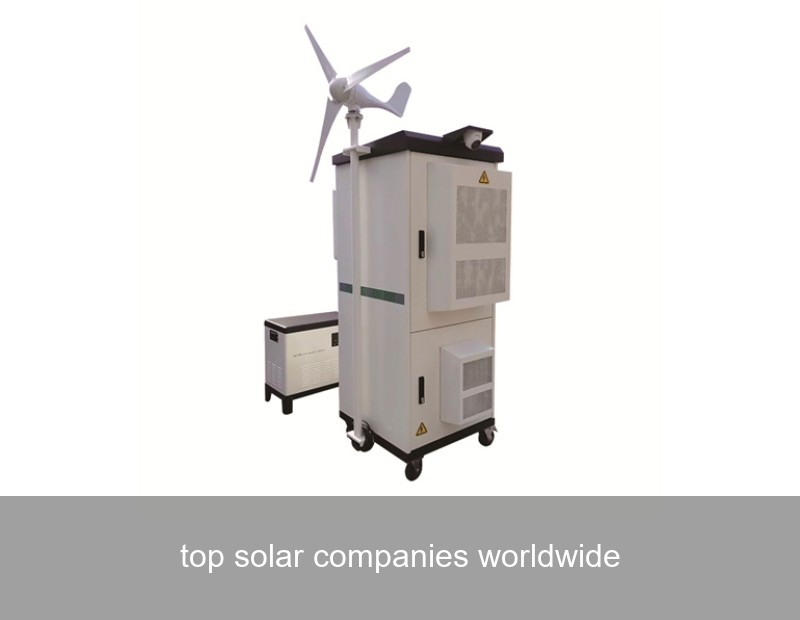
When you think of top solar companies worldwide, what comes to mind? For many, it's the household names manufacturing photovoltaic (PV) panels. But here's a reality check: the landscape of solar excellence has dramatically expanded. True leadership in the global solar industry is no longer just about who produces the most panels. It's about who delivers the most intelligent, reliable, and holistic energy solutions. As energy costs remain volatile and climate goals become urgent, businesses and communities aren't just buying solar panels; they're investing in energy independence, resilience, and a sustainable operational model. This evolution is why the list of top contenders now includes advanced system integrators and smart storage specialists who ensure every kilowatt-hour generated is used optimally.
The Global Solar Landscape: More Than Just Panels
The International Energy Agency (IEA) notes that solar PV is on track to become the largest source of installed power capacity globally, with growth outpacing all other fuels. However, this rapid expansion presents a new challenge: intermittency. The sun doesn't shine on demand, creating a mismatch between generation and consumption. This is where the definition of a top-tier solar company is being rewritten. The leaders are those who seamlessly integrate generation with smart management and, crucially, advanced energy storage.
Think of it this way: a solar array without storage is like a high-performance sports car with a one-gallon fuel tank—powerful but limited in its practical use. The real value is unlocked when you can store excess solar energy for use at night, during peak pricing hours, or when the grid is unstable. This integrated approach transforms a capital expense into a strategic asset that manages energy costs 24/7.
Key Criteria for Evaluating the World's Leading Solar Providers
So, beyond manufacturing scale, what should you look for when identifying a true leader in the solar space?
Innovation and Technology
Top companies invest heavily in R&D, not just for panel efficiency, but for system intelligence. This includes AI-driven energy management platforms, high-density battery chemistry, and power conversion systems that maximize round-trip efficiency. For instance, at Highjoule, our research focuses on making storage systems smarter and more adaptive. Our EnerSync AI Platform doesn't just store energy; it learns a facility's consumption patterns, weather forecasts, and utility rate structures to autonomously decide when to charge, discharge, or hold, ensuring maximum financial return and grid support.
Reliability and Performance
Long-term performance guarantees and robust engineering are non-negotiable. This extends to the entire system lifecycle. Highjoule's IntelliBESS (Battery Energy Storage System) product line, for example, is designed with a multi-layered safety architecture and is backed by industry-leading performance warranties. We understand that for commercial and industrial clients, system uptime is directly tied to operational continuity and cost predictability.

Image Source: Unsplash - A modern solar farm. The true value of such installations is fully realized when paired with intelligent storage solutions.
Sustainability and Circularity
A leading company's responsibility extends to the end of a product's life. True sustainability encompasses the entire supply chain and product lifecycle. Highjoule is committed to circular economy principles, with active battery recycling partnerships and designs that facilitate future refurbishment and material recovery. Choosing a partner with this holistic view ensures your solar-plus-storage project delivers on its full environmental promise.
Global Reach and Local Expertise
The best solar solutions are not one-size-fits-all. Grid regulations, incentive structures, and climate patterns vary drastically from Germany to Texas. A top company has the global footprint to ensure product compliance and supply chain resilience, coupled with local engineering and service teams who understand regional nuances. Founded in 2005, Highjoule has cultivated this exact blend, delivering tailored solutions for commercial, industrial, residential, and microgrid applications across Europe and North America.
Case Study: A European Industrial Giant's Shift to 24/7 Renewable Power
Let's ground this discussion with a real-world example. A major automotive parts manufacturer in Bavaria, Germany, faced a dual challenge: ambitious corporate carbon reduction targets and soaring regional electricity costs. They had a sizable rooftop PV installation, but a significant portion of its midday output was being exported to the grid at low feed-in tariffs, while they purchased expensive power in the early morning and evening.
The Solution: The company partnered with Highjoule to design and deploy a containerized IntelliBESS 500 system (500 kWh / 250 kW). This wasn't a simple battery add-on. The system was integrated with their existing PV inverters and connected to the Highjoule EnerSync platform.
The Data-Driven Results (12-month period):
| Metric | Before Highjoule BESS | After Highjoule BESS | Change |
|---|---|---|---|
| On-Site Solar Consumption | 68% | 94% | +26% |
| Peak Grid Demand | 850 kW | 650 kW | -23.5% |
| Annual Energy Cost Savings | Baseline | €142,000 | -- |
| CO2e Reduction (Scope 2) | Baseline | 185 tonnes | -- |
The system automatically shifts solar energy to cover night shifts and participates in a local grid flexibility program, generating additional revenue. This case exemplifies how modern top solar companies worldwide act as total energy solution partners, moving far beyond the initial installation. You can explore more on the importance of storage for grid stability from the International Energy Agency.
The Future is Integrated: How Top Solar Companies are Evolving
The frontier for solar leaders is the creation of resilient, self-optimizing energy ecosystems. We're talking about microgrids that can island from the main grid during outages, virtual power plants (VPPs) that aggregate thousands of distributed systems to act as a single power plant, and even more sophisticated grid-service capabilities. Highjoule's solutions are already enabling these applications. For a residential community in California or an off-grid industrial site in Scandinavia, the principle is the same: integrate, store, optimize, and control.

Image Source: Unsplash - A modern home energy system with battery storage. This integrated approach is scaling from homes to large industrial facilities.
Furthermore, the conversation is expanding to include the entire lifecycle carbon footprint of storage systems themselves. Forward-thinking companies are publishing environmental product declarations (EPDs) and sourcing materials responsibly. Learn more about sustainable battery innovation from resources like the U.S. Department of Energy's research initiatives.
Choosing Your Partner in the Energy Transition
As you evaluate top solar companies worldwide for your project, look beyond the module datasheet. Ask potential partners:
- How does your solution ensure I use most of the solar energy I produce?
- What is the total system efficiency (PV + storage + management) over its lifetime?
- How will your technology adapt to future energy market changes or expand with my needs?
- What are your sustainability commitments for the storage system's end-of-life?
The right partner will have compelling answers grounded in real engineering and a portfolio of successful, long-term installations. They will view your project not as a one-time sale, but as the beginning of a long-term partnership in energy management.
Is your organization ready to move from simply generating solar power to truly controlling its energy destiny, and what would achieving 90%+ energy self-sufficiency mean for your operational resilience and bottom line?
 Inquiry
 Online Chat