


Waterproof Outdoor Electrical Box: The Unsung Hero of Your Renewable Energy System
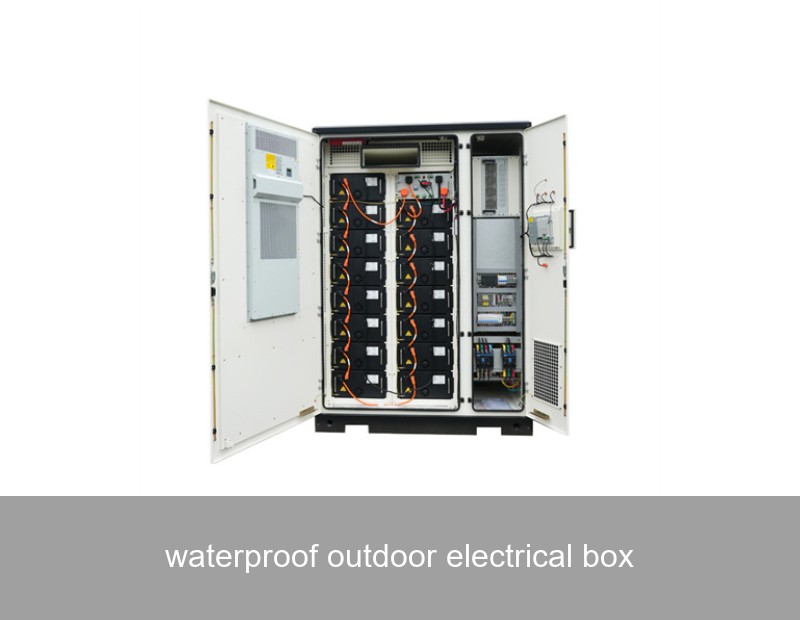
Imagine you've invested in a beautiful solar array for your home or business. The panels are gleaming, the inverter is humming, but what about the critical components sitting outside, exposed to rain, snow, dust, and even curious wildlife? This is where the humble waterproof outdoor electrical box becomes the unsung hero. Far more than just a metal cabinet, it is the essential guardian of connections, switches, and monitoring systems that keep your solar, battery storage, or EV charging installation safe, reliable, and efficient. For system designers and homeowners alike, selecting the right enclosure is not an afterthought—it's a cornerstone of long-term performance and safety.
Table of Contents
- The Phenomenon: Why "Weatherproof" Isn't Enough
- The Data: Understanding IP and NEMA Ratings
- A Case Study: Coastal Solar Farm Resilience
- Expert Insight: Key Features for Energy Applications
- Highjoule's Role: Integrated Protection for Smart Energy
- Your Selection Guide: Choosing the Right Box
The Phenomenon: Why "Weatherproof" Isn't Enough
We've all seen electrical boxes on the outside of buildings. But in the context of modern renewable energy systems, the stakes are much higher. These enclosures protect sensitive components like DC combiners for solar panels, Battery Management System (BMS) terminals, grid-connection points, and communication hubs. A failure here doesn't just trip a circuit; it can lead to significant downtime, costly repairs, or even safety hazards like arc flashes.
The common pitfall is settling for a "weatherproof" box. True protection for outdoor electrical systems requires a waterproof outdoor electrical box designed to specific ingress protection standards. Think about the environmental challenges: driving rain in Scotland, salt-laden air in Florida, desert dust in Arizona, or sub-zero temperatures in Norway. Each condition demands robust sealing, corrosion-resistant materials, and intelligent design.

Image Source: Unsplash (Representative image of a professional enclosure installation)
The Data: Understanding IP and NEMA Ratings
How do you quantify "waterproof"? This is where international standards come in. The IP (Ingress Protection) Code, defined by the International Electrotechnical Commission (IEC 60529), is the global benchmark. For a true waterproof outdoor electrical box, you should look for a rating of IP65 or higher.
- IP65: Dust-tight and protected against water jets from any direction. IP66: Dust-tight and protected against powerful water jets. IP67: Dust-tight and protected against immersion in water up to 1 meter for 30 minutes.
In North America, the NEMA (National Electrical Manufacturers Association) rating is also prevalent. A NEMA 4 or 4X enclosure generally correlates with IP66, offering protection against hose-directed water and corrosion resistance. According to a U.S. Department of Energy report, environmental stress is a contributing factor in long-term system degradation, making proper component housing a direct investment in ROI.
| Standard | Typical Rating | Protection Level | Best For |
|---|---|---|---|
| IP Code | IP65 / IP66 | Dust-tight, strong water jets | General outdoor solar combiners, meter boxes |
| IP Code | IP67 / IP68 | Temporary/continuous immersion | Flood-prone areas, ground-mounted applications |
| NEMA | NEMA 4X | Hose-down water, corrosion-resistant | Coastal sites, industrial campuses |
A Case Study: Coastal Solar Farm Resilience
Let's look at a real-world example. A 2MW community solar farm in the Netherlands, situated near the North Sea coast, faced persistent issues with corrosion and moisture ingress in standard enclosures housing the AC/DC disconnects and monitoring equipment. Within 18 months, several junction boxes showed signs of internal condensation and terminal corrosion, leading to communication faults and two unplanned shutdowns.
The Solution & The Data: The operator replaced all critical enclosures with IP66-rated, stainless steel waterproof outdoor electrical boxes featuring integrated breathable vents (membrane filters) to prevent condensation. The result? Over the subsequent three years, they recorded:
- 0% moisture-related failures.
- A 99.5% system availability rate (up from 96.8%).
- Maintenance costs for those components dropped by an estimated 70%.
This case underscores that the upfront investment in superior protection pays substantial dividends in uptime and total cost of ownership, a principle we at Highjoule embed into every system we design.
Expert Insight: Key Features for Energy Applications
Beyond the rating, what should engineers and installers look for? Here’s our technical checklist:
- Material Matters: Polycarbonate for UV resistance and impact strength, powder-coated steel for durability, or stainless steel (AISI 304/316) for harsh corrosive environments.
- Gasket Integrity: High-quality EPDM or silicone gaskets that maintain seal across temperature cycles (-40°C to +70°C is a good range). Thermal Management: Passive vents, fan kits, or even integrated heat sinks may be needed for boxes containing inverters or power electronics that generate heat. Sealing and cooling must be balanced. Modular Design: DIN-rail mounting, adjustable mounting plates, and plenty of knock-outs for flexible cable entry. This simplifies installation and future modifications.
As a National Renewable Energy Laboratory (NREL) article highlights, system reliability hinges on the interoperability and resilience of all components, down to the enclosure.
Highjoule's Integrated Approach: Protection Built into the System
At Highjoule, we view the waterproof outdoor electrical box not as a separate purchase, but as an integral part of the energy ecosystem. Our philosophy is to engineer resilience from the inside out.
For our commercial and industrial battery energy storage systems (BESS), like the Highjoule H-Cube, critical power conversion and control modules are housed in custom-engineered, IP55/IP54-rated enclosures that are part of a larger, climate-controlled container. This layered protection ensures performance in diverse environments from Swedish winters to Texas heat.
For residential and microgrid applications, our Highjoule PowerHub smart energy management unit is itself designed as a robust, wall-mounted outdoor unit with a high IP rating. It seamlessly integrates inverter, battery controls, and grid interfaces into one securely sealed package, drastically reducing the number of external junction boxes needed and potential failure points. We provide compatible, rated accessory boxes for AC/DC disconnects as part of our system design, ensuring a cohesive, safe, and durable installation.

Image Source: Unsplash (Representative image of professional system maintenance)
Your Selection Guide: Choosing the Right Waterproof Outdoor Electrical Box
Ready to specify or upgrade your enclosure? Walk through this quick decision ladder:
- List the Internal Components: Are they heat-generating? Sensitive to dust? This defines your thermal and IP needs.
- Map the Environment: Coastal (corrosive), high-rainfall, extreme temperature swings, or high UV index?
- Consider Access & Maintenance: How often will technicians need access? Choose a design with easy-open features but uncompromised sealing.
- Plan for Growth: Select a box with extra space (20-30% capacity) and modular mounting for future additions.
- Partner with Experts: Work with suppliers or system integrators like Highjoule who understand the specific demands of renewable energy systems, not just generic electrical applications.
A Final, Critical Question
When you look at your current or planned energy system, can you identify every point where the elements meet your electrical components? What is your plan to ensure those points are not the weakest link in your investment for the next 20 years?
 Inquiry
 Online Chat