


What's the Best Solar Panel System? It's About More Than Just Panels
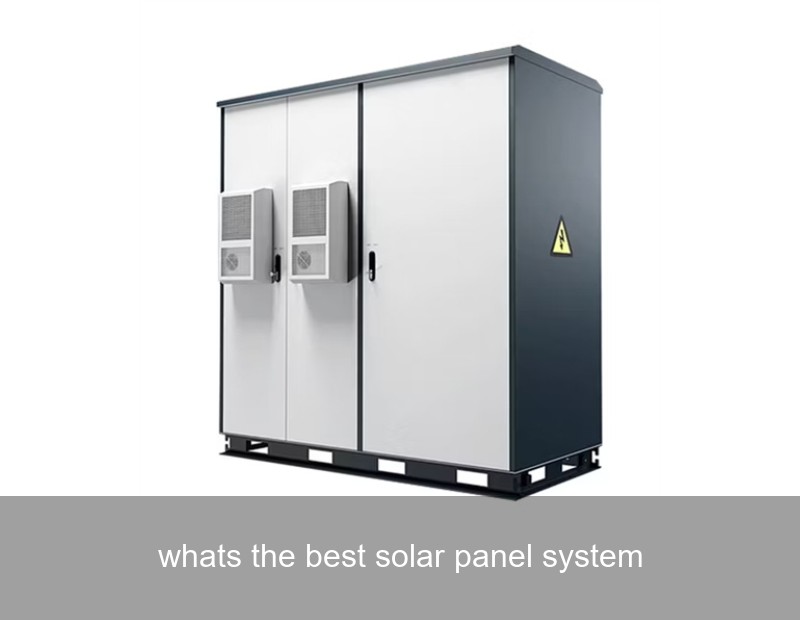
If you're asking, "what's the best solar panel system?" you're already thinking about the right thing. But here's a little secret from the industry: the "best" panel on a spec sheet rarely translates to the best system for your home or business. The true answer lies not in a single brand of solar module, but in a perfectly harmonized ecosystem of components, intelligent software, and long-term support. As energy experts at Highjoule, we've seen that the most successful solar projects are those where every part—from the panels on the roof to the battery in the garage and the software on your phone—works in intelligent unison to deliver reliable, sustainable, and cost-effective power.
The Phenomenon: Why "Best" is a Moving Target
The solar market is dynamic. New panel technologies (like TOPCon and HJT) promise higher efficiencies, battery chemistries are evolving, and energy management is getting smarter. What was "best" 18 months ago might be standard today. Furthermore, a system perfect for a sun-drenched Spanish villa may be terribly inefficient for a family home in Seattle. The "best" system is inherently personalized. It must account for your local climate, your roof's orientation and shading, your household's unique energy consumption patterns, and your financial goals—whether that's maximizing self-sufficiency, achieving the fastest return on investment, or minimizing your carbon footprint.
The Data: What Metrics Truly Define the Best?
Let's move beyond marketing claims. When evaluating a system, you should look at hard data points over its lifetime:
- Levelized Cost of Energy (LCOE): This is the total cost of installing and operating the system over its lifespan, divided by the total energy produced. A lower LCOE means cheaper power for you. According to Lazard's 2023 analysis, the LCOE for unsubsidized rooftop solar has fallen by over 70% in the last decade, making it highly competitive.
- System Uptime & Reliability: A system that's down doesn't save money. Look for components with proven durability and warranties backed by financially stable companies.
- Self-Consumption Ratio: The percentage of solar energy you use directly in your home. Without storage, this is typically 30-50%. With a smart battery system, it can exceed 80%, drastically reducing your reliance on the grid.
These numbers tell a more accurate story than a panel's peak efficiency rating alone.
Case Study: A German Bakery's Recipe for Success
Let's ground this in reality. Consider a mid-sized artisan bakery in Bavaria, Germany. Their challenge: high, fluctuating energy costs for ovens and refrigeration, with solar production peaking at midday, not aligning with their pre-dawn baking schedule.
They installed a 50 kW solar array paired with a Highjoule HES-30 commercial energy storage system. The results, monitored over one year, were compelling:
| Metric | Before System | After System |
|---|---|---|
| Grid Electricity Purchased | 100% | 35% |
| Self-Consumption of Solar | ~40% (exported surplus) | 92% |
| Energy Cost Volatility | High, subject to market spikes | Low, predictable cost structure |
| CO2 Emissions Reduction | Baseline | Approx. 28 tonnes annually |
The "best" system for them wasn't the largest or most efficient panels; it was the integrated solar + storage solution that shifted energy to when it was needed most, turning a cost center into a controlled, sustainable asset.

Image: Commercial solar installations, like on this bakery, benefit immensely from integrated storage. (Source: Unsplash)
The Key Components of a Superior Solar Panel System
Think of your solar system as a team. Every player has a critical role.
Solar Panels: Efficiency vs. Real-World Performance
While mono-PERC, TOPCon, and thin-film panels compete on efficiency ratings (22-24%), real-world factors like temperature coefficient, low-light performance, and degradation rate are crucial. A panel that loses power faster in heat will produce less over 25 years than its spec sheet suggests. We partner with tier-one manufacturers who provide robust performance warranties, ensuring your investment is protected.
The Inverter: The Brain of Your System
The inverter converts DC solar power to usable AC power. String inverters are common, but microinverters or DC optimizers (often called "MLPE") can maximize harvest on partially shaded roofs. The "best" choice depends on your site conditions.
Energy Storage: The Game Changer
This is where the definition of "best" truly evolves. A battery transforms your solar system from a daytime supplement to a 24/7 power source. It unlocks energy independence, provides backup during outages, and allows you to avoid buying expensive peak grid electricity. The Highjoule HomePower series, for instance, uses lithium iron phosphate (LFP) chemistry—known for its exceptional safety, long cycle life, and stability. Coupled with our EnergyOS platform, it doesn't just store energy; it learns your habits and optimizes charging/discharging to maximize your savings, a feature particularly valuable in regions with time-of-use rates.

Image: Modern home battery systems like Highjoule's HomePower integrate seamlessly into residential spaces. (Source: Unsplash)
Monitoring & Control: Your Digital Window
A system you can't understand is a system you can't trust. Advanced monitoring provides real-time and historical data on production, consumption, and battery status. Look for systems that offer intuitive apps and the ability to set custom modes (e.g., "Maximize Self-Consumption," "Storm Watch" for backup readiness).
The Highjoule Approach: Intelligence Beyond Installation
At Highjoule, founded in 2005, we believe the best solar panel system is an intelligent, adaptive energy platform. Our solutions for residential, commercial, and microgrid applications are designed with this synergy in mind. We don't just supply components; we provide a cohesive Highjoule Energy Ecosystem.
- Integrated Design: Our experts model your site to design a system where panels, inverters, and our proprietary battery storage work optimally together from day one.
- Smart EnergyOS: This is the central nervous system. Using AI-driven forecasting and real-time grid data, it automatically manages energy flows to achieve your set goals—saving you money without requiring daily input.
- Scalability: Start with solar, add storage later. Or, expand your battery capacity as your needs grow. Our modular systems are built for the future.
- Global Support: With a presence in Europe and North America, we offer localized service and long-term support, ensuring your system performs for decades.
This holistic approach turns a capital investment into a smart, long-term energy partner.
Future-Proofing Your Investment
The energy landscape is shifting towards bidirectional flow and virtual power plants (VPPs). In some U.S. states and European countries, homeowners can already earn revenue by allowing their battery systems to support the grid during times of stress. The U.S. Department of Energy highlights this as a key grid resilience strategy. The "best" system today is one that is software-upgradable and ready to participate in these new value streams, turning your home into an active node in the modern energy grid.

Image: The future of energy is decentralized, with homes contributing to grid stability. (Source: Unsplash)
So, what's the best solar panel system for you? Perhaps the better question to start with is: what do you want your energy future to look like, and how can we help you build a system intelligent enough to get you there?
 Inquiry
 Online Chat