


Unlocking Reliable Power: The Essential Guide to Modern Wind and Solar Solutions
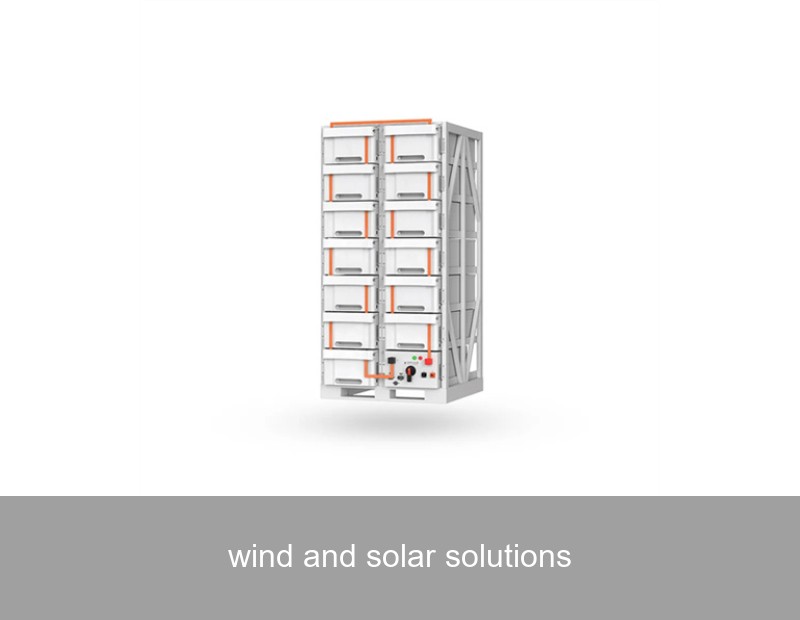
Have you ever watched the wind blow or the sun shine and thought, "What if we could harness all that energy, anytime we need it?" You're not alone. The global shift towards wind and solar solutions is one of the defining stories of our time. But as these variable renewable sources grow, a critical question emerges: how do we keep the lights on when the wind isn't blowing and the sun isn't shining? The answer lies not just in generation, but in intelligent storage and management. This is where the true potential of modern wind and solar solutions is unlocked, transforming them from intermittent sources into the bedrock of a resilient, clean energy grid. Companies like Highjoule, a pioneer in advanced energy storage since 2005, are at the forefront of this integration, providing the smart technology that makes 24/7 renewable power a practical reality for homes, businesses, and communities.
Table of Contents
The Intermittency Challenge: More Than Just Weather
Let's address the elephant in the room. Wind and solar are fantastic, but they are not always "on-demand." This isn't just about cloudy days or calm nights. It's about predictable daily patterns and unpredictable supply swings that can challenge traditional grid infrastructure. This variability creates a mismatch between when energy is produced and when it's most needed—typically in the mornings and evenings. Without a buffer, grid operators must rely on fast-responding fossil fuel plants, often natural gas "peakers," to fill the gaps, which can undermine the carbon reduction goals of the renewable energy itself.
The Data: Understanding Grid Strain
The numbers paint a clear picture. According to the International Energy Agency (IEA), renewables are set to account for almost 95% of the increase in global power capacity through 2026. Solar PV alone is poised to lead this growth. However, a study by the U.S. Department of Energy's National Renewable Energy Laboratory (NREL) highlights that at high penetration levels (think 50%+), the value of additional wind and solar generation begins to decline without storage, due to curtailment and grid congestion issues. This isn't a theoretical problem; it's an economic and operational one happening today.

Image Source: Unsplash. A hybrid renewable landscape showcasing both solar and wind generation.
Case Study: California's Duck Curve in Action
No discussion of renewable integration is complete without mentioning California's famous "Duck Curve." This graph, charted by the California Independent System Operator (CAISO), shows the net load on the grid—total demand minus renewable generation. As midday solar production soars, net load plunges. Then, as the sun sets and people return home, demand spikes rapidly while solar disappears. The shape of this curve resembles a duck, and its "belly" has gotten deeper every year.
In real terms, on a spring day in 2022, CAISO reported that solar generation could meet nearly 100% of daytime demand, but by early evening, grid operators had to ramp up non-solar resources by over 13,000 MW in just a few hours—a massive, costly, and technically challenging feat. This case powerfully illustrates why pairing wind and solar solutions with storage isn't a luxury; it's a necessity for grid stability. The goal is to "shave the head and fill the belly" of the duck, creating a smoother, more manageable load profile.
The Storage Imperative: Beyond the Battery Box
So, how do we solve this? Enter advanced energy storage systems (ESS). Think of storage not as a simple battery, but as the intelligent shock absorber and time-shift mechanism for the entire energy system. A modern ESS does more than just store kilowatt-hours; it provides critical grid services:
- Frequency Regulation: Maintaining the grid's heartbeat at a steady 50 or 60 Hz.
- Ramp Rate Control: Smoothing out the sharp spikes and drops in power supply.
- Peak Shaving: Discharging stored energy during high-demand, high-cost periods.
- Backup Power: Providing seamless electricity during outages.
The right storage technology depends on the application. For fast-response grid services and commercial peak shaving, lithium-ion battery systems are currently the dominant solution due to their high efficiency, energy density, and rapidly declining costs. For longer-duration storage (8+ hours), other technologies like flow batteries are emerging.
Highjoule's Role: Intelligent Energy Management
This is precisely where Highjoule's nearly two decades of expertise becomes crucial. We don't just supply battery hardware; we deliver integrated, smart wind and solar solutions. Our systems are designed to be the brain and brawn behind renewable energy assets.
For a commercial business with a rooftop solar array, our Highjoule Commercio ESS does more than store excess daytime energy. Its AI-driven energy management system (EMS) analyzes weather forecasts, electricity tariffs, and building consumption patterns to autonomously decide the most economical moment to store or discharge energy. This maximizes self-consumption of solar power and dramatically reduces demand charges from the grid.
On a larger scale, for utility or microgrid projects integrating both wind and solar farms, our Highjoule GridMax platform provides utility-grade storage and control. It can aggregate multiple generation sources, manage bi-directional power flow, and ensure grid compliance. A single GridMax system can mitigate curtailment by absorbing excess renewable generation and releasing it when needed, turning lost revenue into a valuable grid asset.
| Challenge | Traditional Approach | Highjoule-Enabled Solution |
|---|---|---|
| Evening Peak Demand | Fire up natural gas peaker plants | Discharge stored solar energy from the Commercio ESS |
| Wind Farm Over-generation at Night | Curtail (waste) wind power | Store excess energy in GridMax for morning use |
| Grid Frequency Drops | Adjust output of large spinning turbines | Provide sub-second frequency response from battery inverters |

Image Source: Unsplash. Advanced control systems are key to managing integrated renewable energy.
The Future: Integrated Hybrid Renewable Systems
The logical endpoint of this evolution is the fully integrated hybrid renewable power plant. Imagine a single facility combining wind turbines, solar panels, and a large-scale battery storage system, all controlled by a unified platform like Highjoule's. According to a report by NREL, such hybrid plants can significantly increase the value and deliverability of the generated power. They provide a more stable and predictable output than any single resource alone, making them more attractive to grid operators and financiers.
For a remote community or an industrial microgrid, this combination is transformative. It reduces reliance on diesel generators, locks in long-term energy costs, and enhances energy security. The wind can complement the solar—often, wind patterns pick up when the sun sets—and the battery bridges all the shorter gaps, creating a near-firm clean power supply.
What Does This Mean for You?
Whether you're a homeowner considering solar panels, a factory manager looking to cut energy costs and carbon footprint, or a municipal planner envisioning a resilient community, the equation has changed. Evaluating wind and solar solutions today must include a conversation about storage and smart management from the start. It's no longer just about the number of panels or the height of the turbine; it's about the intelligence of the system that ties it all together.
As we move towards a future powered predominantly by renewables, the flexibility offered by advanced storage will be the key that unlocks its full potential. The question is no longer *if* we can power our world with wind and sun, but *how reliably and efficiently* we can do it. So, when you look at your next energy project, what will be the first step you take to integrate intelligence into your renewable generation?
 Inquiry
 Online Chat