


Can a Wind Turbine Charge Solar Batteries? The Synergy of Hybrid Renewable Systems
You've invested in solar panels and a battery, enjoying the sun's free energy. But what happens during a string of cloudy days, or at night when demand is high? Meanwhile, you might see the wind blowing, a powerful but untapped resource. This common dilemma leads to an intriguing question: can a wind turbine charge solar batteries? The answer is a resounding yes, and it represents the next logical step in energy independence: the hybrid renewable energy system. By combining wind and solar power to charge a common battery bank, you create a more resilient, consistent, and efficient power supply. This article explores how this synergy works, its compelling benefits, and how companies like Highjoule are making integrated solutions a practical reality for homes and businesses.
Table of Contents
The Challenge: Solar's Intermittency and the Wind Complement
Let's face it, the sun doesn't always shine. In many regions, especially across Europe and the Northern US, winter brings short days and long periods of overcast weather. This is the fundamental challenge of relying solely on photovoltaics (PV). Your solar battery bank, designed to store excess daytime energy, can be depleted, forcing a fallback to the grid—often when electricity prices are at their peak.
This is where wind power enters the picture as a perfect partner. Solar and wind resources often have complementary generation profiles. As the National Renewable Energy Laboratory (NREL) notes, wind speeds can be higher at night and during stormy or cloudy periods when solar output is low. By harnessing both, you significantly smooth out the "lulls" in generation. Think of it as diversifying your energy portfolio: you're not putting all your eggs in one weather-dependent basket.
How It Works: The Technical Symphony of Wind, Solar, and Batteries
So, how do you physically connect a wind turbine to the same batteries charged by your solar panels? It's not about plugging one into the other directly. The process requires intelligent integration through power electronics.
- Energy Harvesting: The solar panels produce Direct Current (DC) electricity, which is sent to a solar charge controller. A small wind turbine generates variable-frequency AC, which is rectified to DC by its own dedicated wind charge controller.
- Smart Regulation: Both charge controllers are crucial. They regulate the voltage and current from their respective sources to match the charging requirements of the battery bank, preventing overcharging and damage.
- Common DC Bus: The regulated DC output from both the solar and wind charge controllers is fed to a common DC bus bar, which is connected to the battery bank. This allows both sources to contribute to charging the batteries simultaneously or independently.
- Inverter & System Brain: A hybrid inverter (or a separate inverter and system controller) draws stored DC power from the batteries, converts it to standard AC for your home or business appliances. The system's brain—an energy management system (EMS)—constantly monitors energy production, consumption, battery state, and weather forecasts to optimize the flow.

Image Source: Unsplash - Illustrating the complementary nature of wind and solar resources.
Key Benefits: Why Combine Wind and Solar for Battery Charging?
Moving beyond theory, the tangible advantages of a hybrid system are what make it a compelling investment.
| Benefit | Explanation | Impact |
|---|---|---|
| Increased Energy Reliability | Wind often peaks when solar dips (at night, in winter, during storms). | More consistent year-round generation, reducing grid dependence. |
| Higher Self-Consumption | You generate and use more of your own power, charging batteries from two sources. | Dramatically lower electricity bills and greater ROI on your storage system. |
| Reduced Battery Cycling | With more consistent charging, batteries aren't deep-discharged as often. | Extends the lifespan of your valuable battery energy storage system (BESS). |
| Optimal Use of Space & Resources | Maximizes energy yield per acre of land or per infrastructure investment. | Ideal for remote locations, farms, and sites with both good wind and solar potential. |
Real-World Case: A Scottish Dairy Farm's Path to 95% Energy Independence
Let's look at a concrete example. A medium-sized dairy farm in the Scottish Highlands faced high energy costs and unreliable grid power, crucial for milking operations and refrigeration. Their existing 50 kW solar array struggled in the long, dark winters.
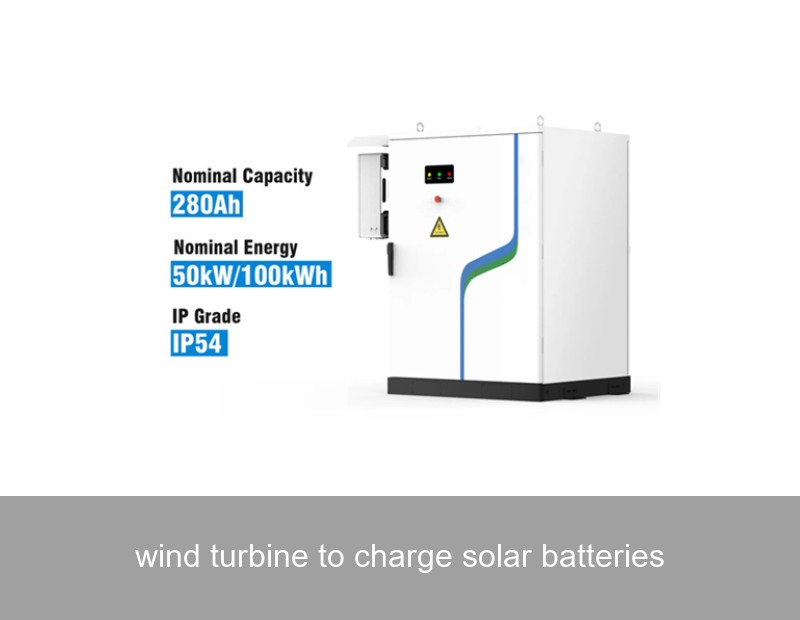
The Solution: In 2022, they integrated two 15 kW wind turbines with their existing solar PV. The new hybrid system was connected to an expanded Highjoule HES-100 commercial battery storage system (100 kWh capacity). The Highjoule system's advanced EMS was programmed to prioritize wind charging during the night and stormy periods, while solar handled daytime loads.
The Data-Driven Outcome (12-month post-installation):
- Grid Import Reduction: 94% decrease in purchased electricity.
- Self-Consumption Rate: Increased from ~40% (solar only) to over 85%.
- System Uptime: Achieved 99.9% power availability for critical farm operations, even during a major 3-day grid outage.
- Payback Period: Estimated at 6-7 years, thanks to UK energy price volatility and government incentives for renewables.
This case, documented in a Carbon Trust report on renewable integration, highlights how using a wind turbine to charge solar batteries transforms energy economics for a business.
Highjoule's Role: Intelligent Storage for Hybrid Systems
As a global leader in advanced energy storage since 2005, Highjoule's technology is uniquely suited to be the core of such hybrid systems. The challenge isn't just connecting different energy sources; it's managing them intelligently to maximize efficiency and battery health.
Our HES Series for commercial/industrial applications and ResiCore for premium residential use are built with this integration in mind. Key features include:
- Multi-Input Ready Controllers: Our systems are designed to accept and manage DC inputs from both solar PV and wind charge controllers seamlessly.
- Predictive Energy Management Software: Highjoule's AI-driven platform goes beyond simple charging. It uses weather forecasting data to predict solar and wind yield, pre-conditioning the battery and scheduling loads to optimize every kilowatt-hour generated.
- Battery Longevity Focus: Our proprietary battery management system (BMS) ensures that charging from variable wind sources is done at the optimal voltage and current, preventing stress and extending the system's life—a critical factor in the system's total cost of ownership.
For a farm, business, or even a remote microgrid, a Highjoule system acts as the intelligent hub that turns separate wind and solar generators into a unified, reliable power plant.

Image Source: Unsplash - Representative of a modern commercial battery energy storage system installation.
Making It Work: Key Considerations for Your Hybrid System
Inspired but wondering where to start? Here are the practical steps and considerations.
Site Assessment is Crucial
Not every location is suitable for wind. A professional assessment of your local wind resource (average speed, turbulence) is the first step. Solar potential is easier to gauge, but both are needed. Remember, even a modest wind resource that complements solar can be highly valuable.
Technology Compatibility
This is where expertise matters. The voltage of your wind turbine's output, the specifications of its charge controller, and the DC input range of your battery system must be compatible. Highjoule's technical team works with certified installers to design these integrated systems, ensuring all components communicate effectively.
Regulations and Incentives
In both the EU and US, permits are required for wind turbine installation (height, noise). The good news? Many regions, from California to Germany, offer attractive incentives, grants, or tax credits for adding storage to renewable systems, which can apply to hybrid setups. The U.S. Department of Energy provides a resource on storage incentives.
 Inquiry
 Online Chat