


Working with Solar Panels: Maximizing Your Investment with Smart Energy Storage
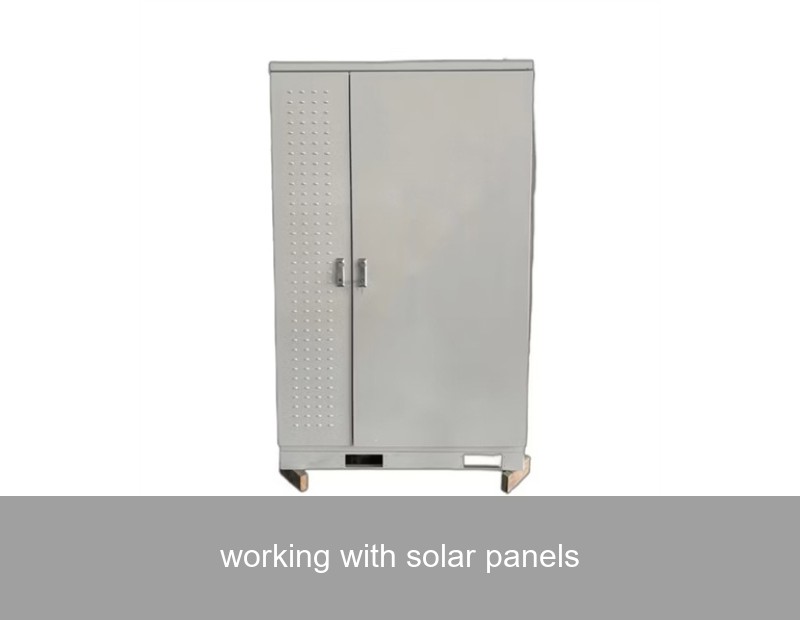
You've made the smart decision. Rooftop solar panels are glistening in the sun, and you're proudly generating your own clean electricity. But have you ever wondered if you're getting the absolute most out of them? For many homeowners and businesses across Europe and the US, simply working with solar panels isn't enough. The real magic happens when you pair them with an intelligent brain: a modern battery energy storage system (BESS). This combination transforms your solar array from a daytime-only power source into a 24/7 energy independence solution, maximizing self-consumption and shielding you from grid volatility.
Table of Contents
The Challenge: Solar's "Duck Curve" and the Evening Energy Gap
Let's paint a common picture. Your solar panels work hardest at midday when the sun is highest. Often, this is when you're at work or your home's energy demand is relatively low. This creates a surplus of solar energy that gets exported to the grid, often for a modest feed-in tariff. Fast forward to early evening. The sun sets, your family returns home, appliances switch on, and demand soars—just as your solar production plummets. You're now forced to buy expensive electricity from the utility grid.
This pattern, famously known as the "Duck Curve," illustrates the growing mismatch between solar generation and typical consumption patterns. It's a fundamental challenge for grid operators and a missed financial opportunity for solar owners. The phenomenon is particularly pronounced in sun-rich regions like California, Spain, and Italy, but it's a global trend as solar adoption increases.

Image Source: U.S. Department of Energy, illustrating the "Duck Curve" net load challenge.
The Data: Why Self-Consumption is the Ultimate Goal
The economics of solar have shifted dramatically. In many markets, the price you get for exporting solar power (feed-in tariff) is now significantly lower than the price you pay to import power from the grid. This makes maximizing self-consumption—using your solar energy directly on-site—the most financially sound strategy.
| Scenario | Solar-Only System | Solar + Storage System |
|---|---|---|
| Daytime Energy Use | Uses self-generated solar, exports excess. | Uses self-generated solar, stores excess. |
| Evening/Peak Energy Use | Imports expensive grid power. | Uses stored solar energy, avoids peak rates. |
| Grid Outage Resilience | System shuts down (in most cases). | Critical loads remain powered via battery. |
| Financial Return | Limited by export rates & time-of-use tariffs. | Maximized via arbitrage and high self-consumption. |
According to analyses from energy research firms, adding storage can increase the self-consumption of a typical residential solar system from 30-50% to 70-90% or more. This directly translates to higher savings on your utility bill and a faster return on your clean energy investment.
The Solution: Intelligent Battery Storage as the Perfect Partner
This is where the concept of working with solar panels evolves. A modern battery storage system is not just a backup power tank; it's an intelligent energy manager. It performs three critical functions:
- Energy Time-Shifting: It automatically stores your midday solar surplus and releases it when you need it most.
- Peak Shaving: It prevents you from drawing expensive grid power during peak rate periods (e.g., 4 PM to 9 PM).
- Grid Services & Resilience: Advanced systems can provide grid stability and, crucially, keep your lights on during an outage.
The key is intelligence. The best systems use sophisticated software to learn your consumption patterns, predict solar generation, and even integrate weather forecasts to optimize every kilowatt-hour.
How Highjoule Elevates the Solar Partnership
At Highjoule, with nearly two decades of experience since 2005, we've built our philosophy around this intelligent partnership. We don't just see storage as an add-on; we see it as the essential component that unlocks the full potential of a solar installation.
Our HPS Series for residential and commercial applications is designed specifically for seamless solar integration. Key features that make working with solar panels more effective include:
- High-Density LiFePO4 Batteries: Offering superior safety, longevity (over 6000 cycles), and stable performance.
- Adaptive Energy Management System (AEMS): Our proprietary software platform that dynamically manages energy flow between solar, battery, home, and grid. It prioritizes self-consumption and can be configured for different utility rate plans.
- Scalable Design: Modular architecture allows customers to start with a base system and expand capacity as their needs grow.
- Grid-Forming Inverter Technology: In the event of a blackout, our systems can create a stable "microgrid" for your home, allowing your solar panels to continue charging the battery and powering loads—a feature not all storage systems offer.
For larger-scale commercial, industrial, and microgrid applications, Highjoule's GridMax solutions provide utility-grade storage that helps businesses manage demand charges, participate in energy markets, and ensure operational continuity.
Case Study: Sustainable Vineyards, Napa Valley, USA
Let's look at a real-world example. A renowned winery in California's Napa Valley installed a substantial 500 kW solar array to power its fermentation tanks, cooling facilities, and tasting room. While solar reduced their daytime energy costs, they faced two major issues:
- High demand charges from short periods of very high power use during processing.
- Vulnerability to Public Safety Power Shutoffs (PSPS) during wildfire season, which could ruin an entire vintage.
The Solution & Results: In 2022, they partnered with Highjoule to integrate a 750 kWh GridMax battery storage system. The system was programmed for dual objectives: peak shaving and backup power.
- Financial Impact: The system reduced their monthly demand charges by an average of 40%, cutting their overall electricity bill by an additional 28% beyond solar savings alone.
- Resilience Impact: During a 36-hour PSPS event in late 2023, the winery's critical cooling and monitoring systems operated without interruption, protecting millions of dollars of inventory.
- Sustainability Impact: Their on-site renewable energy consumption rose from approximately 65% to over 95%, making their operation nearly energy-independent.
This case exemplifies the multi-faceted value of moving beyond solar alone.

Image Source: Agriculture.com, showing solar panels in an agricultural setting.
The Future of Working with Solar: Integrated Smart Homes and VPPs
The evolution continues. The next frontier is the fully integrated, smart energy ecosystem. Imagine your energy storage system communicating with your EV charger, heat pump, and smart appliances. It could charge your car with excess solar, pre-heat your water when battery levels are high, or even participate in a Virtual Power Plant (VPP).
VPPs aggregate the power of thousands of distributed home storage systems to act as a single, flexible power plant for the grid. In return, participants earn financial rewards. Highjoule's systems are being designed with this VPP-ready capability, positioning our customers to be active players in the future energy market.
Is Your Solar System Working as Hard as It Could Be?
Your solar panels are a fantastic asset. But are they part of a complete team? The right energy storage partner transforms them from a contributor into the cornerstone of your energy security and financial savings. What single energy challenge—be it rising bills, outage concerns, or simply wanting to use more of your own green power—would you most want to solve by enhancing how you are working with solar panels?
 Inquiry
 Online Chat