


Demystifying the 1 kW Solar Package Price: A Smart Investment for Your Energy Independence
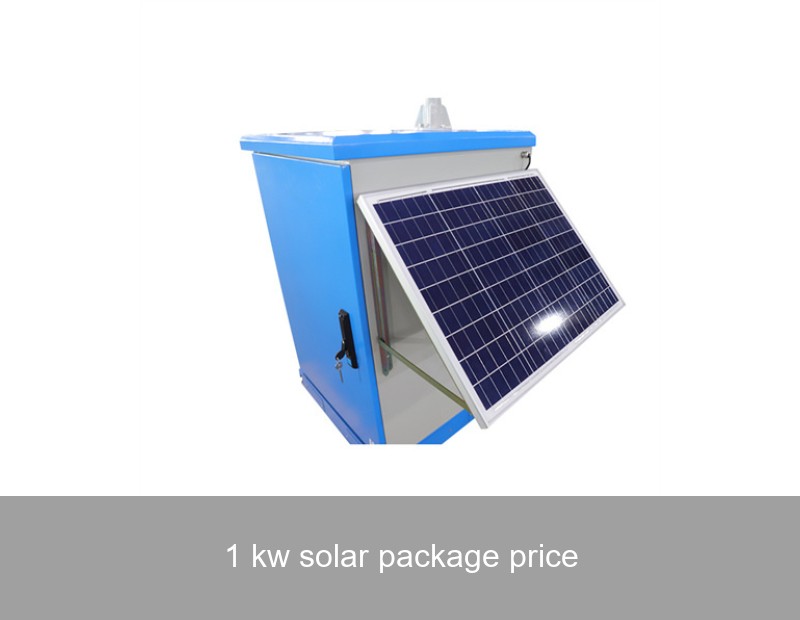
So, you're looking into a 1 kW solar package price. That's a fantastic first step towards taking control of your energy bills and reducing your carbon footprint. But if you've started searching online, you've likely seen figures that vary wildly, leaving you wondering what you're actually paying for. Is it just panels? What about the inverter, the mounting, the "smart" part of a smart home? Let's pull back the curtain. The true value of a solar package isn't in the lowest upfront cost; it's in the long-term performance, reliability, and intelligent integration that turns sunlight into lasting savings and resilience.
Introduction: More Than Just a Price Tag
Thinking about solar power often starts with a simple search: "1 kw solar package price." This query reflects a practical, budget-conscious approach. However, a kilowatt (kW) of solar panels is just the beginning of the story. A 1 kW system, in ideal conditions, can generate roughly 850-1,200 kWh of electricity per year in sunnier parts of Europe like Spain or Southern California, and about 750-950 kWh in regions like Germany or the UK. That's enough to power a refrigerator, run efficient lighting, and charge your devices consistently. But the package price encompasses the ecosystem that makes this generation possible, safe, and efficient for decades.
What's Really in a 1 kW Solar Package Price?
To understand the quote, you need to see the components. A comprehensive package is far more than a box of panels.
- Solar Panels (The Generators): Typically 3-4 high-efficiency monocrystalline panels. Quality here affects longevity and output.
- Inverter (The Brain): Converts the DC power from panels to usable AC power for your home. This is a critical component for efficiency.
- Mounting System & Hardware (The Foundation): Roof attachments, rails, and clamps engineered for your specific roof type and local weather conditions.
- Electrical Components & Safety Gear: Wiring, isolators, conduit, and monitoring systems that ensure safe operation.
- Design, Permits, and Installation: Professional site assessment, system design, securing local permits, and skilled installation labor. This is often where value is created or lost.
In markets like the U.S. and Germany, a fully installed, quality 1 kW solar package might range from $2,500 to $3,500 (€2,300 to €3,200) before incentives. This variance hinges on the factors we'll explore next.
Key Factors Influencing Your Final Cost
Why does the price differ? Consider these variables:
| Factor | Impact on Price & Value |
|---|---|
| Component Quality | Premium, tier-1 panels and a reputable inverter brand (like those used by Highjoule) may cost 10-20% more upfront but offer better degradation rates and longer warranties, protecting your yield over 25+ years. |
| Roof Complexity | A simple, south-facing tile roof is standard. A slate roof or one with multiple angles requires specialized mounting and more labor, increasing the install cost. |
| Local Regulations & Grid Fees | Permit costs and grid interconnection fees vary significantly by municipality and utility company. A knowledgeable installer navigates this efficiently. |
| Installation Company Expertise | A certified, experienced installer ensures optimal placement, wiring, and commissioning, maximizing system performance and safety. This expertise is worth the investment. |
A Real-World Case: The Johnson Household in Bavaria
Let's ground this in reality. The Johnson family in Munich, Germany, wanted to reduce their reliance on the grid and charge their electric vehicle partially with solar. They installed a 6.2 kW system in 2022, but their journey is instructive even for a 1 kW scale.
Their initial quotes varied by over €3,000. The lowest bid used generic components with shorter warranties. They chose a mid-range quote from a certified partner of Highjoule, which included high-efficiency panels and a sophisticated Highjoule H-Energy Hub inverter. This smart inverter was future-proofed for battery storage. The total installed cost was €11,800. After the German federal subsidy (Bundesförderung für effiziente Gebäude - BEG), they paid a net €8,260.
Here's the kicker: in its first year, the system produced 6,850 kWh—10% more than the standard estimate due to optimal positioning and component quality. They used 4,200 kWh directly, achieving a 61% self-consumption rate. Their annual electricity bill dropped by over €1,700. The intelligent monitoring provided by Highjoule's platform showed them exactly when to run appliances to maximize solar use. Fraunhofer ISE, a leading research institute, consistently highlights that system design and component quality are the main drivers of lifetime yield, not just lowest cost.

Credit: Unsplash - A quality installation maximizes production and aesthetics.
Beyond Panels: The Critical Role of Energy Storage
This is where the modern solar story evolves. A traditional solar system exports excess power to the grid, often for a low feed-in tariff. But what if you could store it for use at night or during peak price periods? This dramatically increases your energy independence and savings.
Adding a battery storage system, like the Highjoule H-Cell Home, transforms your solar package from a daytime generator into a 24/7 personal power plant. You might start asking not just about the "1 kW solar package price," but about the "1 kW solar + storage solution value." While it increases the initial investment, in markets with high electricity rates (like much of Europe) or time-of-use billing (common in the U.S.), the payback period can be attractive. You're not just saving money; you're building resilience against power outages and volatile energy markets.
How Highjoule Elevates Your Solar Investment
As a global leader in advanced energy storage since 2005, Highjoule doesn't just sell components; we deliver intelligent, integrated systems. When you choose a Highjoule-powered solution through our network of certified installers, your "solar package" becomes part of a holistic energy management ecosystem.
- Seamless Integration: Our H-Energy Hub inverters are designed to communicate flawlessly with Highjoule battery systems, creating a plug-and-play experience that optimizes every kilowatt-hour.
- Advanced Energy Management: Our AI-driven software learns your consumption patterns, automatically deciding when to store solar energy, power your home, or export to the grid for maximum financial return.
- Scalability for the Future: Start with a 1 kW solar system and a 5 kWh H-Cell battery. As your needs grow—perhaps with an EV—you can easily expand storage capacity. Our systems are designed for residential, commercial, and microgrid applications, all with the same philosophy of robust, sustainable power.
- Unmatched Safety & Warranty: We engineer our lithium iron phosphate (LFP) battery systems with multiple layers of protection and back them with industry-leading warranties, ensuring your peace of mind is part of the package.

Credit: Unsplash - A modern home battery storage system.
Your Path to Power: What's Your Energy Profile?
The journey to energy independence is personal. The right "1 kW solar package price" for you depends on your unique energy goals. Are you looking to offset a specific appliance's load, or is this the first phase of a whole-home electrification plan? Do you live in an area with frequent grid instability? How important is it for you to be prepared for future electricity price hikes?
We encourage you to look beyond the per-watt sticker price. Consider the total cost of ownership over 25 years, the value of resilience, and the intelligence of the system managing your power. The U.S. Department of Energy's guide is a great resource for understanding the broader process.
So, we leave you with this question: When you evaluate your solar options, will you choose based on the cheapest initial cost, or will you invest in an integrated, intelligent energy solution designed to maximize your independence and savings for decades to come?
 Inquiry
 Online Chat